X
wikiHow is a “wiki,” similar to Wikipedia, which means that many of our articles are co-written by multiple authors. To create this article, 33 people, some anonymous, worked to edit and improve it over time.
This article has been viewed 143,800 times.
Learn more...
When writing a story, a convincing character is a must. Nobody likes reading a story where the characters are boring! Make sure you know your characters before you start your story.
Steps
Part 1
Part 1 of 3:Getting Ideas for Your Character
Part 1
-
1People watch. Take note of certain characteristics of the people you know that distinguish them from everyone else. Does that boy who lives across the street have a habit of knocking things over? Does your best friend talk with her hands when she's excited? These could be quirks of a character you create yourself.
-
2Consider basing the character on someone. If this is your first time writing a story, or you're not sure how to make your character believable, base your character on somebody. It could be a friend, a family member, a celebrity, or even you! If you base it on someone you know, you will know how they react to situations, which makes it easier for you.Advertisement


Part 2
Part 2 of 3:Putting the Character Together
Part 2
-
1Get a file folder. Keep everything you'll need to know about your character in this folder. Doing this will keep you organized. Alternatively, you could make a folder on your computer and type everything up on Microsoft Word or any word processing software.
-
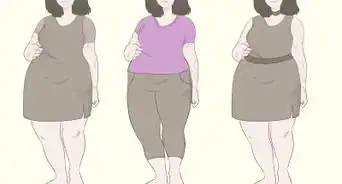
2Know what the character looks like. How tall is the person? Are they of athletic build, slim build or chubby? What colour is their hair and their eyes? How long is their hair? Is it curly, wavy, straight, etc.? Look online for 'face makers' or, if you have a Sims game, make a Sim look like your character and take several screen shots. You could also look through pictures on-line and in magazines and find a person that looks like your character. This will help you get a strong visual of what your character looks like. Put pictures of your character in their file.
-
3Do character sketches. This means recording things like the full name, birthday, ethnic background, and every detail of your character's personality. Search Google for character sketch outlines. Many are quite helpful. Work out and write down the basics, such as:
- When is their birthday? How old are they?
- Who are their friends?
- What are their dreams/goals? What do they want to accomplish?
- What is their past like?
- Who's in their family? Do they have any family? Any pets?
- What are their favourite things?
-
4Select a name for your character. Names are important and must fit the personality of your character (although, as the writer, the name you choose will usually fit eventually, as readers get used to the combination). The name should reflect the time period and location in which your story is taking place, in order to seem fitting and convincing to readers. For example, a boy living in a small town in South Georgia in 1980s isn't going to be named Throckmorton.
- Sometimes, a long, complicated name is appropriate, but keep in mind how many times you will have to write it and your readers will have to read it. There's nothing worse than not being able to pronounce the main character's name!
-
5Give the character fears and secrets. These can form excellent subplots and are a great help when you're stuck. What if Oliver is afraid of heights? What if the only way to save his little sister is to climb across the rickety bridge a mile above the ground? Knowing your characters' secrets can also create a compelling story. Having the secret slowly revealed can help to bring the plot and characters to life even more.
-
6Draw the character. If it helps you, draw your characters. While the personality of characters is far more important than appearance when it comes to being convincing, appearance can help to develop the character as well.Advertisement


Part 3
Part 3 of 3:Understanding Your Character Thoroughly
Part 3
-
1Know your characters inside out. Know their greatest desire, because this will keep the plot alive. Know their past, their biggest fear, their most embarrassing moment, their darkest secrets. Even if some of this doesn't show up in your story, that's okay. Knowing your characters will convince them that they are alive, and will do the same for their reader.
-
2Interview your character. Once you have the essentials down, start interviewing your character. How does she/he look at the world? Pretend that you're someone on a talk show interviewing a celebrity. Watch some talk shows for ideas on questions to ask your character. Ask as many questions as you'd like until you get a real feel for your character.
-
3Make sure that all the aspects of your character have been written up and stuck into the folder. Put the folder in an easily accessible place so that you can continuously go back and take another look at the details of your character while writing. This will ensure that your character is strong from start to finish of your story, instead of starting strong and dwindling away as the story progresses. Now start your story with a strong, convincing character!Advertisement


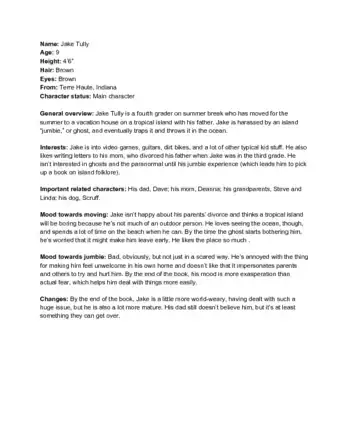
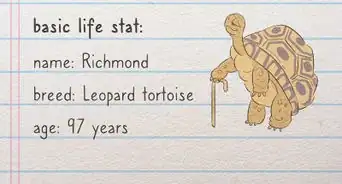
Sample Character Descriptions

Community Q&A
-
QuestionWhat's the difference between using the same archetype and plagiarizing?
 Community AnswerIf there is nothing substantially different about your character and someone else's character then you are plagiarizing. However, if your character falls into a certain archetype, like the hero, young maiden, etc. then you are not plagiarizing. Evaluate your character to see whether he resembles another specific character or just an archetype and if the characters are too similar, make adjustments to make your character unique.
 -
QuestionCan I base my character on an existing fictional character, but not completely copy the original?
 Community AnswerOf course you can. However, it can usually be a fine line to walk across. Try to find what traits you really want your character to share with the character you're basing them on, and try to use a limited amount. If you're comfortable sharing your character idea with another person, you can ask for a second opinion.
 -
QuestionWhere is the "Facemakers" site?
 Community AnswerYou could try Face.co. There you can choose the shape of faces, skin colors, eyes, hair and clothes.
 -
QuestionI imagine my characters in my head, and they look exactly how I want them, but drawing them is so hard and they never look like the character I want. Especially hairstyles. What should I do?Community AnswerYou don't have to draw the characters for your story. If you see your characters clearly in your head in a set way, write about them that way. Use the pen to write descriptive words rather than the pencil to draw images!
-
QuestionWhat are some good fears for kids that are from 12-17 years old?
 RubyTop AnswererOf course there are the basic things some people fear: the dark, heights, certain people, the supernatural, certain places. Around this age most kids worry about not fitting in with others, or they might fear they are not good enough. They might fret about their appearance and might be trying to fit into society's standards. They might also fear getting bullied or teased for being "different" or not maturing physically and/or emotionally at the same pace as their peers (for example, they might be the only one in their friend group who wears bras, or they might be afraid of not being ready for a relationship when it seems everyone else is). Teens tend to care about what others think of them.
Warnings
- If you're basing your character on someone, be sure to change their names so they won't be offended.Thanks!
- Make sure that your character isn't a Mary Sue--someone who is perfect in every way, etc.Thanks!
- Be careful when basing a character off someone you know! While this is a great way to nail the traits of the character, it can just as easily offend someone.Thanks!
Advertisement









About This Article
Advertisement