This article was co-authored by wikiHow staff writer, Jessica Gibson. Jessica Gibson is a Writer and Editor who's been with wikiHow since 2014. After completing a year of art studies at the Emily Carr University in Vancouver, she graduated from Columbia College with a BA in History. Jessica also completed an MA in History from The University of Oregon in 2013.
This article has been viewed 9,338 times.
Learn more...
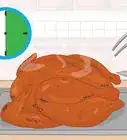
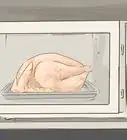
If you want the best flavor from the heritage turkey you bought, forget what you've been taught about cooking commercial turkey. Because heritage turkeys are leaner and smaller, you'll want to cook them at a high temperature for a shorter time. To get you started, try cooking a heritage turkey flavored with herbs and citrus, such as oranges and lemons. Or roast the turkey with a bacon, mustard, and herb butter rub to bring out its rich flavor.
Ingredients
Citrus and Herb Heritage Turkey
- 1/2 cup (113 g) of butter, softened
- 4 oranges
- 2 teaspoons (4 g) of grated lemon zest
- 1 large of bunch fresh sage, minced
- 4 sprigs of fresh sage for the braising liquid
- 2 tablespoons (2 g) of chopped thyme
- 4 sprigs of fresh thyme sprigs for the braising liquid
- 1 tablespoon (18 g) of coarse sea salt or coarse kosher salt
- 1 teaspoon (2.2 g) of freshly ground black pepper
- 1 15 to 18 pounds (6.8 to 8.2 kg) heritage turkey, neck and giblets removed
- 2 cups (470 ml) of dry white wine, such Sauvignon Blanc or Pinot Gris
- 2 1⁄2 cups (590 ml) of water
- Salt and ground pepper, to taste
Makes 8 servings
Bacon, Mustard, and Herb Heritage Turkey
For the seasoned butter:
- 1 cup (225 g) of unsalted butter, at room temperature
- 1⁄2 pound (230 g) of raw bacon slices, coarsely chopped
- 1/3 cup (85 g) of Dijon mustard
- 1/4 cup (5 g) of chopped fresh thyme
- 1/4 cup (5 g) of chopped fresh sage
- 1⁄4 cup (59 ml) of fresh lemon juice
- 1 tablespoon (18 g) of coarse sea salt or coarse kosher salt
- 1 tablespoon (7 g) of freshly ground black pepper
- 1 tablespoon (6 g) of finely grated lemon peel
For the turkey:
- 1 18 to 19 pounds (8.2 to 8.6 kg) heritage turkey, neck and giblets removed
- 2 teaspoons (12 g) of coarse sea salt or coarse kosher salt
- 2 teaspoons (4.5 g) of freshly ground black pepper
- 2 cups (300 g) of coarsely chopped onions
- 2 cups (450 g) of coarsely chopped celery
- 2 cups (175 g) of coarsely chopped fresh fennel bulbs
- 2 cups (255 g) of coarsely chopped peeled carrots
- 2 cups (235 g) of coarsely chopped unpeeled apples, cores removed
- 1⁄2 cup (120 ml) of olive oil
- 3 bay leaves
Makes 10 servings
Steps
Method 1
Method 1 of 2:Citrus and Herb Heritage Turkey
-
1Preheat the oven to 425 °F (218 °C) and move the racks. Since a turkey takes up a lot of space in the oven, you'll need to adjust the rack to the lowest setting. If you have multiple racks in the oven, you may need to remove 1 or 2 of them to make enough space.[1]
-
2Mash the butter with zest, herbs, salt, and pepper. Put 1/2 cup (113 g) of softened butter into a small bowl and add 2 tablespoons (2 g) of chopped thyme. Zest 2 of the oranges and stir it into the butter along with:[2]
- 2 teaspoons (4 g) of grated lemon zest
- 1 tablespoon (18 g) of coarse sea salt
- 1 teaspoon (2.2 g) of freshly ground black pepper
-
3Rub the butter between the skin and meat of the heritage turkey. Get out a 15 to 18 pounds (6.8 to 8.2 kg) heritage turkey and pat it dry with a paper towel. Then loosen the skin between the breast, leg, and thigh meat. Use your fingers to push and spread the seasoned butter under the skin. Then sprinkle salt and pepper over the turkey.[3]
- Check to see that the neck and giblets have been removed from the cavity of the turkey.
-
4Stuff the turkey with oranges and sage. Cut 2 of the oranges into quarters and put them into the turkey's cavity. Add 1 large of bunch minced sage and tie the legs together using kitchen twine. Set the turkey in a roasting pan.[4]
- If the pan has a rack, place it in the pan before setting the turkey on it.
-
5Bring the wine, juice, water, and sprigs of herbs to boil. To make the braising liquid, pour the juice from 2 oranges into a pot along with 2 cups (470 ml) of dry white wine and 2 1⁄2 cups (590 ml) of water. Add 4 sprigs of fresh sage and 4 sprigs of fresh thyme. Then turn the burner to high so the mixture comes to a boil.[5]
- You'll need about 1 cup (240 ml) of orange juice.
- Consider using a dry white wine, such as Sauvignon Blanc, Pinot Gris, or Chardonnay.
-
6Lay a piece of cheesecloth soaked in the braising liquid on the turkey. Turn off the burner and place 1 piece of cheesecloth into the pot. Carefully lift it up and lay it over the turkey. The liquid will protect the turkey breasts from drying out as the turkey cooks.[6]
- If you don't have cheesecloth, you can skip this step, but you may need to lay a sheet of foil over the turkey if it's browning too quickly.
-
7Pour the braising liquid into the pan and roast the turkey for 30 minutes. Pour the rest of the braising liquid into the roasting pan and put it into the preheated oven. Position the pan so the turkey legs are pointing towards the back of the oven. Cook the turkey for 30 minutes.[7]
- Leave the cheesecloth on the turkey as it roasts at this high temperature.
- If you'd like to baste the turkey, spoon the braising liquid over the turkey a few times as it cooks.
-
8Cook the turkey for about 1 1/2 hours at 350 °F (177 °C). Turn the oven temperature down to 350 °F (177 °C), but leave the turkey in the oven. Continue to roast the turkey until it reaches 160 °F (71 °C) when you insert an instant-read thermometer into the thickest part of the thigh.[8]
- If the turkey is getting too dark on the top, tent the top loosely with foil.
Tip: Pay attention to how much braising liquid is in the roasting pan. If it's starting too cook out, pour in enough water to cover the bottom of the pan.
-
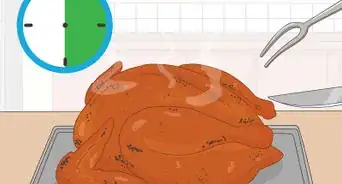
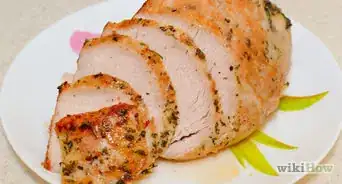
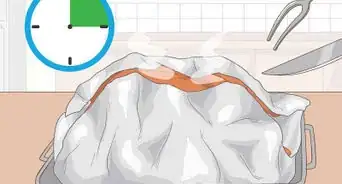
9Rest the turkey for 45 minutes before you serve it. Turn off the oven and remove the roasting pan. Cover the entire turkey loosely with aluminum foil and let it sit for 45 minutes. Then use a serrated knife to carve the turkey. Serve the turkey with your favorite sides, such as mashed potatoes or stuffing.[9]
- Refrigerate the leftover turkey in an airtight container for up to 3 to 4 days.


Method 2
Method 2 of 2:Bacon, Mustard, and Herb Heritage Turkey
-
1Blend all of the seasoned butter ingredients until they're combined. Put 1 cup (225 g) of softened unsalted butter into a food processor along with 1⁄2 pound (230 g) of coarsely chopped raw bacon slices and 1/3 cup (85 g) of Dijon mustard. Add the remaining herbs and 1⁄4 cup (59 ml) of fresh lemon juice. Then put the lid on the processor and pulse it until the bacon is finely chopped. You'll need to add:
- 1/4 cup (5 g) of chopped fresh thyme
- 1/4 cup (5 g) of chopped fresh sage
- 1 tablespoon (18 g) of coarse sea salt or coarse kosher salt
- 1 tablespoon (7 g) of freshly ground black pepper
- 1 tablespoon (6 g) of finely grated lemon peel
-
2Wrap the seasoned butter in plastic wrap and shape it into a log. Tear off a sheet of plastic wrap and lay it on your work surface. Scoop the seasoned butter onto the center of the plastic wrap and fold 1 side over. Use the plastic wrap to roll the butter into a log shape that's about 2 inches (5.1 cm) in diameter. Then refrigerate the butter until it's hard.[10]
- If you want to make the seasoned butter in advance, keep it wrapped in the plastic wrap and refrigerate it for up to 3 days.
Variation: Rosemary Maple Butter
Mix 1⁄2 pound (230 g) of softened butter with 1⁄2 cup (120 ml) of pure maple syrup and 1 tablespoon (2 g) of freshly minced rosemary. Use this in place of the bacon, dijon, and herb butter. -
3Cut the butter into 1⁄4 inch (0.64 cm) rounds and pat the turkey dry. Remove the seasoned butter from the refrigerator and unwrap it. Use a knife to cut the butter into rounds and let the rounds sit out at room temperature for 20 minutes. While the butter softens a little, take a 18 to 19 pounds (8.2 to 8.6 kg) heritage turkey out of the refrigerator and pat it dry with paper towels.[11]
- Ensure that the neck and giblets have been removed from the turkey's cavity.
-
4Spread the butter rounds between the meat and skin of the turkey. Lift up a flap of the turkey's fat near the neck end and push your hand under it so it slides between the skin and breast meat. Keep sliding your hand between the skin and thigh meat. Then slip the seasoned butter rounds between the leg, thigh, and breast.[12]
- The butter will melt and flavor the turkey as it cooks. This will also prevent the turkey from drying out.
-
5Season the turkey with salt and pepper and chill it for at least 1 day. Set the buttered turkey on a rimmed baking sheet and sprinkle 1 teaspoon (6 g) of coarse sea salt and 1 teaspoon (2.2 g) of black pepper into the cavity of the turkey. Then scatter 1 teaspoon (6 g) of coarse sea salt and 1 teaspoon (2.2 g) of black pepper over the top of the turkey. Cover the turkey with plastic wrap and refrigerate it for 1 day.[13]
- If you'd like to prepare the turkey in advance, you can chill it for up to 2 days.
-
6Preheat the oven to 350 °F (177 °C) and put the chopped produce in a pan. Move the oven rack to the lowest position. Then get out a roasting pan and put 2 cups (300 g) of coarsely chopped onions into it. Add 2 cups (450 g) of coarsely chopped celery, 2 cups (175 g) of coarsely chopped fresh fennel bulbs, 2 cups (255 g) of coarsely chopped peeled carrots, and 2 cups (235 g) of coarsely chopped unpeeled apples.[14]
- Use your favorite type of baking apple, such as Granny Smith, Jonagold, or Honeycrisp.
-
7Mix in oil with bay leaves and set the turkey on top of the produce. Pour 1⁄2 cup (120 ml) of olive oil over the vegetables and apples. Toss the vegetables and apples so they're coated with the oil and tuck 3 bay leaves into the pan. Unwrap the seasoned turkey and place it directly onto the produce.[15]
- To help the wings and legs cook evenly, you can tuck the wings under and tie the legs together with kitchen twine.
-
8Roast the turkey until it reaches an internal temperature of 170 °F (77 °C). Put the roasting pan into the preheated oven and cook it for about 4 hours. To tell if the turkey is done, insert an instant-read meat thermometer into the thickest part of the thigh. It should reach 170 °F (77 °C).[16]
- If you'd like the skin on the turkey to crisp up, baste the turkey with the pan juices every 30 minutes as it roasts.
-
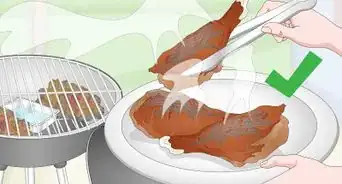
9Rest the turkey for 20 minutes before slicing it. Remove the turkey from the oven and cover it loosely with aluminum foil. Let the turkey rest before carving it with a serrated knife. Serve the turkey and roasted vegetables while they're warm. Refrigerate the leftovers in an airtight container for up to 3 to 4 days.[17]
- The meat will finish cooking as it rests and resting will prevent the juices from running out as you cut it.


Community Q&A
-
QuestionDo I brine the turkey before cooking?Some turkeys are pre-brined; check the packaging for a salt brine content. If there's no mention of a brine, the best bet is to brine the turkey overnight prior to cooking it.

Things You'll Need
Citrus and Herb Heritage Turkey
- Measuring cups and spoons
- Small bowl
- Spoon
- Knife and cutting board
- Instant-read meat thermometer
- Cheesecloth
- Pot
- Serving platter
Bacon, Mustard, and Herb Heritage Turkey
- Measuring cups and spoons
- Knife and cutting board
- Instant-read meat thermometer
- Food processor
- Plastic wrap
- Spoon
- Paper towels
- Rimmed baking sheet
- Roasting pan
- Serving platter


References
- ↑ http://www.frenchrevolutionfood.com/2014/11/a-franglais-thanksgiving-spatchcocked-turkey-with-citrus-and-fresh-herbes-de-provence/
- ↑ http://www.frenchrevolutionfood.com/2014/11/a-franglais-thanksgiving-spatchcocked-turkey-with-citrus-and-fresh-herbes-de-provence/
- ↑ http://thelocalbutchershop.com/how-to-cook-your-heritage-turkey/
- ↑ http://thelocalbutchershop.com/how-to-cook-your-heritage-turkey/
- ↑ http://thelocalbutchershop.com/how-to-cook-your-heritage-turkey/
- ↑ http://thelocalbutchershop.com/how-to-cook-your-heritage-turkey/
- ↑ http://thelocalbutchershop.com/how-to-cook-your-heritage-turkey/
- ↑ http://thelocalbutchershop.com/how-to-cook-your-heritage-turkey/
- ↑ http://thelocalbutchershop.com/how-to-cook-your-heritage-turkey/
- ↑ https://www.localharvest.org/features/heritage-turkey-recipes.jsp
- ↑ https://www.epicurious.com/recipes/food/views/roast-heritage-turkey-with-bacon-herb-and-cider-gravy-350421
- ↑ https://www.epicurious.com/recipes/food/views/roast-heritage-turkey-with-bacon-herb-and-cider-gravy-350421
- ↑ https://www.bonappetit.com/recipe/roast-heritage-turkey-with-cider-gravy
- ↑ https://www.epicurious.com/recipes/food/views/roast-heritage-turkey-with-bacon-herb-and-cider-gravy-350421
- ↑ https://www.epicurious.com/recipes/food/views/roast-heritage-turkey-with-bacon-herb-and-cider-gravy-350421
- ↑ https://www.epicurious.com/recipes/food/views/roast-heritage-turkey-with-bacon-herb-and-cider-gravy-350421
- ↑ https://www.bonappetit.com/recipe/roast-heritage-turkey-with-cider-gravy
About This Article