This article was co-authored by wikiHow staff writer, Hunter Rising. Hunter Rising is a wikiHow Staff Writer based in Los Angeles. He has more than three years of experience writing for and working with wikiHow. Hunter holds a BFA in Entertainment Design from the University of Wisconsin - Stout and a Minor in English Writing.
There are 11 references cited in this article, which can be found at the bottom of the page.
This article has been viewed 3,129 times.
Learn more...
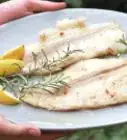
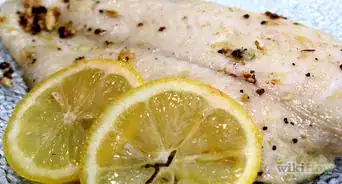
Sea bream is a common ocean fish similar to sea bass.[1] Known for its light flavor and flakiness, sea bream is a lean protein that can enhance any meal. After you clean the fish and remove the scales, you can bake sea bream whole or pan-fry the fillets and have a delicious fish dish!
Ingredients
Baked Whole Sea Bream
- 1 whole sea bream
- 4 sprigs of fresh rosemary
- 3 cloves of garlic
- 1 tablespoon (15 ml) of olive oil
- Salt and pepper to taste
Makes 1 serving
Pan-Fried Sea Bream
- 2 sea bream fillets
- 1 lemon
- 1 tablespoon (15 ml) of olive oil
- 1 tablespoon (3.8 g) of fresh chopped parsley
- 2 tablespoons (28 g) of butter
- 4 tablespoons (59 ml) of white wine
Makes 2 servings
Steps
Method 1
Method 1 of 3:Cleaning the Sea Bream
-
1Snip off all of the fins with a pair of kitchen scissors. Use a sharp pair of scissors to remove the fins on the top, bottom, and sides of your sea bream. Hold the fin up with your fingers and make your cut as close the fish’s body as you can. Throw the fins in the trash as you cut them off.[2]
- Leave the tail on the bream. You can cut a little off the end if you want to make it look cleaner, but it’s not necessary.
- Use caution as you cut the dorsal, or top, fin of the bream since it is spiny.
-
2Scrape off the scales with the top side of your knife. Flip your chef’s knife upside-down and drag the knife across the bream’s skin. Start at the tail and work towards the head in fast strokes to lift the scales up. Wipe them off your knife after they’ve built up. Flip the bream over and descale the other side.[3]
- Purchase a fish scaler from your local kitchen goods store if you want to use a tool just for scale removal.
-
3Cut open the belly starting at the tail, ending at the head. Use a filet knife to open the fish. Start at the base of the tail in the center of the belly and cut towards the head. End your cut at the fish’s gills and remove your knife.[4]
- Place your non-dominant hand on the side of the fish to hold it steady while you cut open the fish.
-
4Use 2 fingers to remove the innards. Hold the fish open with your non-dominant hand and place your fingers inside the fish near the tail to scoop out the inner organs. Throw them out as you remove them from the stomach cavity. Pinch the gills between your fingers and pull them out to get rid of them.[5]
- If you don’t feel comfortable removing the innards of the fish, ask your fishmonger to remove them for you.
-
5Rinse the bream in cold water to clean off the blood. Run the bream underneath the faucet to clean out any excess blood or organs left in the fish. Alternatively, dip the bream into a bowl filled with cold water to rinse it off completely.[6]


Method 2
Method 2 of 3:Baked Whole Sea Bream
-
1Preheat the oven to 400 °F (204 °C). Make sure one of the racks inside your oven is set at the middle position. Let the oven heat entirely before cooking the fish.[7]
-
2Add salt, pepper, and olive oil to the inside of the fish. Drizzle 1⁄2 tablespoon (7.4 ml) of olive oil inside the fish and sprinkle in sea salt and fresh cracked black pepper. Be careful not to over-season the fish. If you think you added too much salt, rinse the fish out with cold water, pat it dry, and start over.[8]
- Substitute any other cooking oil for olive oil if you need to.
-
3Cut the garlic cloves in half and stuff them in the sea bream. Peel the garlic cloves and cut them in half using a chef’s knife. Stuff the inside of the fish with the garlic so it’s evenly dispersed inside.[9]
- Use more or less garlic to change the amount of flavor you want your fish to have.
-
4Stuff fresh rosemary sprigs inside the fish and its gills. Place the entire sprig inside the stomach of the fish in between the pieces of garlic. Lift the gills and place smaller sprigs inside so the flavor can be completely absorbed by the fish while it cooks.[10]
- Dried rosemary purchased from the spice section of your grocery store will work if you don’t have access to fresh rosemary sprigs.
-
5Place the fish on an oiled piece of parchment paper. Use a piece of parchment paper roughly the size of the bream you’re cooking. Drizzle 1⁄2 tablespoon (7.4 ml) of olive oil onto the paper and evenly spread it with your hands or a brush. Set the fish in the middle of the paper.[11]
- Drizzle more olive oil on the fish or use your leftover rosemary sprigs on the outside of the fish if you want added flavor.
-
6Wrap the fish in aluminum foil. Place the parchment paper in the middle of a piece of aluminum foil large enough to fully wrap around the fish. Fold the foil in from each side so it completely seals the fish inside.[12]
- Wrapping the fish in foil will hold in the steam while the fish cooks and trap the flavors.
-
7Cook the fish in the oven on a baking tray for 30 minutes. Set your wrapped fish in the middle of a large baking tray and set it on the middle rack of the oven. Let it cook for 30 minutes and don’t open the oven while it’s cooking. This way, the oven maintains a consistent temperature.[13]
-
8Check with a meat thermometer to see if the bream is at 145 °F (63 °C). Fish needs to be cooked to an internal temperature of 145 °F (63 °C) for it to be safe for consumption. Check the temperature with a meat thermometer when you pull it out of the oven.[14]
- If the fish is under, put it back in the oven and check the temperature for a few minutes.
-
9Unwrap the fish and serve it while it’s hot. Transfer the wrap to a serving plate and unwrap it. Be careful of any steam coming from the wrap as you open it. Open your sea bream and enjoy the meat inside while it’s still warm.[15]
- Heat your serving plate beforehand so the fish doesn’t lose temperature before you eat it.
- Refrigerate leftovers in a resealable plastic container or tightly wrapped in foil for up to 4 days.[16]


Method 3
Method 3 of 3:Pan-Fried Sea Bream
-
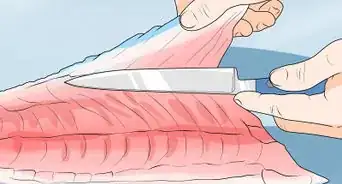
1Cut the fillets off of the fish. Cut off the bream’s head just below the gills using a chef’s knife and throw it in the trash. Slice along the fish’s backbone from the head to the tail to remove the fillet from one side. Flip the fish over and cut the second fillet from the other side.[17]
- Be careful of any pin bones in the fillets. If you notice any, remove them with kitchen tweezers.
-
2Zest the lemon into a bowl. Use a zester or a metal fork to scrape rind of the lemon into a bowl. Remove as much of the yellow skin from the lemon as you can to give your fish the most flavor.[18]
- Squeeze a little bit of the lemon juice into the zest if you want a citrusy fish.
-
3Rub the fillets with the lemon zest and half the parsley. Coat the meat of the fillets with the lemon zest and the parsley. Spread it out evenly across the meat so the fillets have a consistent flavor.[19]
-
4Heat the olive oil in a skillet over medium-high heat. Pour 1 tablespoon (15 ml) of olive oil into the skillet. Coat the entire bottom of the pan with the oil and heat it until it starts to bubble.[20]
- You can replace olive oil with any other cooking oil if you need to.
-
5Cook the fillets skin-side down for 2 minutes. Set the fillets in the middle of the pan and let them cook until the skin is crispy. Don’t move the fillets while they cooking, otherwise the skin may not crisp evenly.[21]
-
6Flip the fillets and cook the other side for 1 minute. Shimmy a spatula underneath the fillets and flip them over. Let the meat of the fillets sear for 1 minute. Once they’re finished, set them aside on a warm plate.[22]
- Cooking the meat of the fillets will seal in the lemon and parsley flavors.
-
7Drain the excess oil and add the white wine to the pan. Remove the oil from the pan and pour in 4 tablespoons (59 ml) of white wine. Simmer the white wine over low heat in the pan to remove the alcohol. Reduce the wine to 2 tablespoons (30 ml) to make the base for your sauce.[23]
- Let the alcohol cook off, or else your sauce will be boozy.
-
8Add the butter and remaining parsley while the wine reduces. Cut the butter into cubes so it melts faster in the pan. Stir the butter into the reduced wine and add the other half of the parsley. Continue mixing the sauce until the butter melts completely.[24]
-
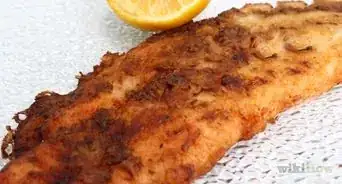
9Serve the sea bream while it’s still hot. Put the bream fillets on a serving plate and drizzle the sauce over them. Warm the plate beforehand so they don’t drop in temperature. Enjoy your meal while it’s still warm.[25]
- Sea bream pairs well with tenderstem broccoli and roasted potatoes.
- Keep any leftovers in the fridge for up to 4 days. Store them in a resealable plastic container or tightly wrap them in foil.


Warnings
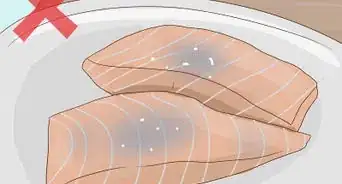
- Cook the fish thoroughly so its internal temperature is 145 °F (63 °C).[26]Thanks!
Things You’ll Need
Cleaning the Sea Bream
- Cutting board
- Kitchen scissors
- Filet knife
- Sink
Baked Whole Sea Bream
- Oven
- Chef’s knife
- Parchment paper
- Aluminum foil
- Baking tray
- Meat thermometer
Pan-Fried Sea Bream
- Filet knife
- Zester
- Chef’s knife
- Skillet
- Spatula
- Wooden spoon
- Serving plate



References
- ↑ http://www.inlandseafood.com/seapedia/sea-bream
- ↑ https://youtu.be/5mwWKwvBfT0?t=1m16s
- ↑ https://youtu.be/5mwWKwvBfT0?t=2m8s
- ↑ https://youtu.be/5mwWKwvBfT0?t=3m23s
- ↑ https://youtu.be/5mwWKwvBfT0?t=3m45s
- ↑ https://youtu.be/yQskLkeXLYI?t=46s
- ↑ https://www.italyum.com/seafood-recipes/124-sea-bream-wrapped-in-cooking-foil-1.html
- ↑ https://www.italyum.com/seafood-recipes/124-sea-bream-wrapped-in-cooking-foil-1.html
- ↑ https://www.italyum.com/seafood-recipes/124-sea-bream-wrapped-in-cooking-foil-1.html
- ↑ https://www.italyum.com/seafood-recipes/124-sea-bream-wrapped-in-cooking-foil-1.html
- ↑ https://www.italyum.com/seafood-recipes/124-sea-bream-wrapped-in-cooking-foil-1.html
- ↑ https://www.italyum.com/seafood-recipes/124-sea-bream-wrapped-in-cooking-foil-1.html
- ↑ https://www.italyum.com/seafood-recipes/124-sea-bream-wrapped-in-cooking-foil-1.html
- ↑ https://www.fsis.usda.gov/wps/portal/fsis/topics/food-safety-education/get-answers/food-safety-fact-sheets/safe-food-handling/safe-minimum-internal-temperature-chart/ct_index
- ↑ https://www.italyum.com/seafood-recipes/124-sea-bream-wrapped-in-cooking-foil-1.html
- ↑ https://www.thekitchn.com/how-long-does-fresh-fish-stay-good-tips-from-the-kitchn-219413
- ↑ https://youtu.be/yQskLkeXLYI?t=1m35s
- ↑ https://cookwithmands.com/recipes/sea-bream-with-lemon-and-parsley
- ↑ https://cookwithmands.com/recipes/sea-bream-with-lemon-and-parsley
- ↑ https://cookwithmands.com/recipes/sea-bream-with-lemon-and-parsley
- ↑ https://cookwithmands.com/recipes/sea-bream-with-lemon-and-parsley
- ↑ https://cookwithmands.com/recipes/sea-bream-with-lemon-and-parsley
- ↑ https://cookwithmands.com/recipes/sea-bream-with-lemon-and-parsley
- ↑ https://cookwithmands.com/recipes/sea-bream-with-lemon-and-parsley
- ↑ https://cookwithmands.com/recipes/sea-bream-with-lemon-and-parsley
- ↑ https://www.fsis.usda.gov/wps/portal/fsis/topics/food-safety-education/get-answers/food-safety-fact-sheets/safe-food-handling/safe-minimum-internal-temperature-chart/ct_index
About This Article