This article was written by Emily Liu. Emily Liu graduated from UCLA in 2021 with a B.A. in Classical Civilization, a B.A. in English, and a minor in Cognitive Science. She has over three years of experience working with students from different backgrounds, ages, and academic interests as a writing tutor and instructor, in subjects ranging from the humanities to sciences to creative work, as well as personal statements and other application materials. She works on the content team at wikiHow and is always excited to discover and learn about new topics.
This article has been viewed 6,011 times.
If you have any gardening experience, you’ve likely discovered that slugs can be extremely pesky and destructive pests. They feed on many kinds of leaves, fruits, vegetables, and other plant matter. After all the hard work you've put into cultivating your plants, you definitely don’t want to let the slugs take away from your effort and care. Luckily, vinegar is a cheap and accessible substance that can control slugs, so read on to find out how you can use it![1]
Steps
Method 1
Method 1 of 6:Fill a spray bottle with white vinegar.
-
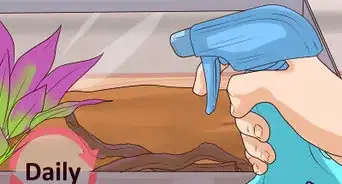
1Vinegar can be used as a natural pesticide. It contains acetic acid, which dries out and kills pests like slugs.[2] To prepare your solution, simply pour the white vinegar into a spray bottle.
- You can also replace the white vinegar with apple cider vinegar.
Advertisement

Method 2
Method 2 of 6:Find slugs in your garden.
-
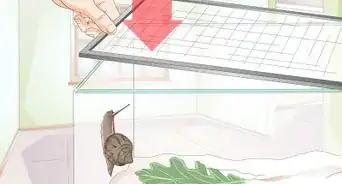
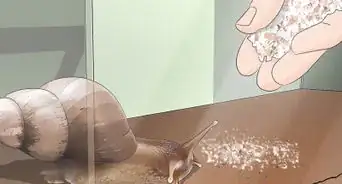
1Slugs like to hide in cool, moist, shaded areas. Try looking under leaves, stones, or logs.[3]
- If you have trouble finding slugs, try looking at night with a flashlight when it is more cool and damp. For the same reason, you might also notice more slug feeding when it is cloudy or rainy.
- If you notice dried slime trails, that's a sign that slugs are in your garden.

Method 3
Method 3 of 6:Spray any slugs you find with the white vinegar.
-
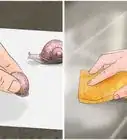
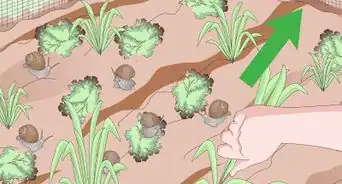
1Spraying the vinegar directly on the slugs will dry them out.[4] If the slugs are gathered under an object like a board or pot, you may want to move them somewhere more accessible before spraying. You can clean up by using a hose to wash away the remains, or just leave them in the garden.
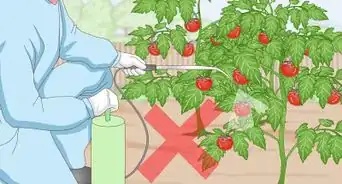
- Vinegar can damage plants if it gets on them, so be careful not to spray any plants in your garden![5]
Advertisement

Method 4
Method 4 of 6:Repeat the process whenever you find new slugs.

Method 5
Method 5 of 6:Spray a vinegar barrier around your plants.
-
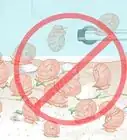
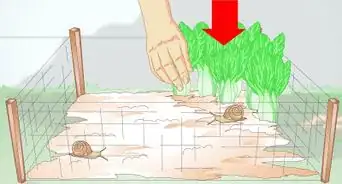
1You can also use vinegar as a preventative solution. Just spray vinegar around the perimeter of any plants you want to protect. This forms a barrier and prevents slugs from crossing.[6]
- Again, try to avoid getting any vinegar on the plants, as this may dry them out.
- Respray the perimeter after it rains to replenish the washed-away vinegar.
Advertisement

Method 6
Method 6 of 6:Try other natural slug remedies.
-
1If vinegar isn’t working for you, you can control slugs in many other ways. Vinegar isn't the only way to keep your garden slug-free. Try one of these other all-natural methods:[7]
- Keep your garden bright and dry by pruning low shrubs, thinning plants, and improving drainage.
- Grow plants that slugs don't like, including ferns, creeping phlox, Grey's sedge, evening primrose, and clematis.
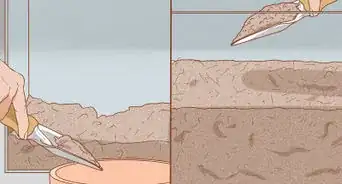
- Bury a container in the ground so the top is level with the soil, and fill it with beer until about 1 inch (2.5 cm) from the top. Slugs will be attracted by the beer and fall into the trap and drown.

References
- ↑ https://extension.umn.edu/yard-and-garden-insects/slugs
- ↑ https://research.wsulibs.wsu.edu/xmlui/bitstream/handle/2376/5263/FS161E.pdf
- ↑ https://extension.umn.edu/yard-and-garden-insects/slugs
- ↑ https://balconygardenweb.com/amazing-vinegar-uses-in-garden
- ↑ https://research.wsulibs.wsu.edu/xmlui/bitstream/handle/2376/5263/FS161E.pdf
- ↑ https://diyeverywhere.com/2017/10/23/7-brilliant-reasons-to-use-vinegar-in-your-garden/
- ↑ https://extension.umn.edu/yard-and-garden-insects/slugs
About This Article