This article was written by Guy Peters and by wikiHow staff writer, Hunter Rising. Guy Peters is the Owner of MOP STARS Cleaning Service, a complete house cleaning service for residential and commercial clients, based in Denver, Colorado. Founded in 2014, MOP STARS provides regular, move in/out, deep, and commercial cleaning services. Guy has a BA in Finance from the California State University - Sacramento and an MBA from Cornell University.
There are 8 references cited in this article, which can be found at the bottom of the page.
Vinyl furniture makes a great durable replacement for leather, but it still gets messy and dries out over time. If you want to hide cracks and restore the look of your vinyl, there are a lot of easy things you can do at home. We'll walk you through the best ways to clean your furniture and make the vinyl look a whole lot better!
This article is based off an interview with our house cleaning professional, Guy Peters. Check out the full interview here.
Steps
Method 1
Method 1 of 11:Clean up spills right away.
-
1Wet spills could absorb into and damage the fabric. Even though your furniture will make water bead up at first, the droplets slowly sink deeper into your furniture over time. Use a clean towel to sop up as much of the spill as you can.[1]

Method 2
Method 2 of 11:Dust off your furniture with a damp rag or duster.
-
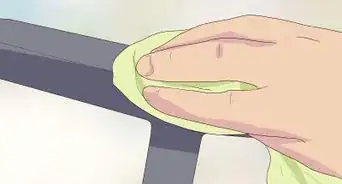
1Remove loose dirt before it has a chance to set in. You can use a damp rag or any duster on your furniture. Wipe the entire surface of your vinyl to lift up any dust or debris that’s built up. Be sure to focus on any tight nooks and crannies between the cushions to get rid of crumbs.[2]
- You could also vacuum your furniture with an upholstery hose attachment.

Method 3
Method 3 of 11:Wipe your furniture with soapy water.
-
1Use a soft sponge or rag to clean off your vinyl. Mix a few drops of mild dish soap in a bucket of water until it makes suds. Spread the soapy water over your vinyl and apply gentle pressure to remove any stuck-on dirt and grime. Be sure to work into all the cracks and crevices so you don’t miss any spots.[3]
- The abrasive side of a sponge could scratch or damage your vinyl, so be careful not to scrub with it.

Method 4
Method 4 of 11:Try vinegar and water for a natural stain remover.
-
1You can use distilled white vinegar that you already have in your kitchen. Mix equal parts of the vinegar and warm water in a container. Dip a clean cloth into the mixture and blot at the stain around the outside edges. Slowly work the vinegar into the stain until you completely remove it.[4]
- Always dilute vinegar before you use it since it could damage the vinyl otherwise.

Method 5
Method 5 of 11:Treat tough stains with rubbing alcohol.
-
1Test the alcohol in an unnoticeable spot first to check for damage. Wet a cotton ball with your rubbing alcohol rather than applying it directly to your furniture. Gently rub at the stain with the cotton ball to lift it up. If the cotton ball gets dirty, throw it away and keep working with a new one until the stain disappears.[5]

Method 6
Method 6 of 11:Resort to a bleach solution for the toughest stains.
-
1Always dilute 1 part bleach with 9 parts water. Work in a well-ventilated area so you don’t breathe in any fumes. Mix your bleach and warm water in a large container. Put on a pair of rubber gloves and dampen a clean cloth into the solutions. Slowly and gently rub at the stain with your cloth until you completely remove it.[6]

Method 7
Method 7 of 11:Rinse all cleaners off your furniture with water.
-
1Any residue could cause your vinyl to crack and dry out. Wet a new cloth with clean water and wipe down all of the areas that you cleaned. Ensure that you wipe off all of the residue so it doesn’t cause damage to your furniture.[9]

Method 8
Method 8 of 11:Dry your furniture immediately.
-
1Liquids will cause damage to your furniture. After rinsing off your cleaners, take a dry towel and pat down your entire piece of furniture. Make sure it feels dry to the touch so there isn’t any liquid soaking into the surface.[10]
- Keep your furniture out of the sun since sunlight could cause the vinyl to crack.

Method 9
Method 9 of 11:Apply vinyl conditioner to soften the fabric.
-
1Use the conditioner once a month to maintain your vinyl. Choose a product that's specifically made for vinyl to ensure you don’t damage your furniture. After you clean your vinyl, spray a thin layer of the conditioner onto it and rub it in with a clean cloth. Let the conditioner dry completely before you sit on it again. Wipe off any conditioner that didn’t soak in with a clean rag.[11]
- You can buy vinyl conditioner at any furniture or big box store.
- You may need to apply vinyl conditioner multiple times until the fabric feels supple again.
- Avoid using any conditioners that contain alcohol or silicone since they could damage vinyl.

Method 10
Method 10 of 11:Fill in tears and cracks with a leather repair kit.
-
1Leather repair kits have patches that match colors and textures. You can buy a leather repair kit from any craft supply store. If there's a tear, cut the backing patch so it’s slightly wider than the hole and stuff it inside. Apply the glue from the kit onto the backing and press the vinyl down to close the gap. Once it’s dry, mix the dye colors to match the color of your vinyl and apply a thin coat over the slit. You can also apply the dye directly onto cracks in your vinyl.[12]
- Most repair kits come with multiple texture pads to match the rest of your furniture. Press the texture down on the dye while it’s still wet and press it down firmly so it dries with the right texture.
- These work best for holes and tears that are only about 1 inch (2.5 cm) long.

Method 11
Method 11 of 11:Buff on furniture wax to restore your vinyl’s shine.
-
1Wax also protects your vinyl from damage. Get a sprayable furniture wax that’s specifically made for vinyl. Apply a thin coat to the surface of your furniture for about 30 seconds. Then, use a clean white cloth to buff the wax into the surface so it forms a smooth, even layer.[13]

Warnings
- Dilute any harsh cleaners before you use them, or else they may damage or dry out your vinyl.[15]Thanks!
References
- ↑ https://barsandbooths.com/wp-content/uploads/2014/04/Caring-and-Conditioning-Vinyl-Restaurant-Furniture.pdf
- ↑ https://youtu.be/9dC2biZknF8?t=18
- ↑ Guy Peters. House Cleaning Professional. Expert Interview. 12 July 2021.
- ↑ https://www.cleanipedia.com/gb/floor-and-surface-cleaning/how-to-clean-faux-leather.html
- ↑ Guy Peters. House Cleaning Professional. Expert Interview. 12 July 2021.
- ↑ https://library.haworth.com/bin/haworth/downloadasset?path=/content/dam/digital/north-american-assets/technical-documents/installation-instructions/furniture/Care%20and%20Maintenance%20Standards.pdf
- ↑ https://www.naugahyde.com/files/faqdownload/CareandCleaningBrochureREV21318180215111752.pdf
- ↑ https://www.cdc.gov/disasters/bleach.html
- ↑ https://library.haworth.com/bin/haworth/downloadasset?path=/content/dam/digital/north-american-assets/technical-documents/installation-instructions/furniture/Care%20and%20Maintenance%20Standards.pdf
- ↑ Guy Peters. House Cleaning Professional. Expert Interview. 12 July 2021.
- ↑ https://barsandbooths.com/wp-content/uploads/2014/04/Caring-and-Conditioning-Vinyl-Restaurant-Furniture.pdf
- ↑ https://youtu.be/hCpvMV3ku-k?t=101
- ↑ https://www.naugahyde.com/files/faqdownload/CareandCleaningBrochureREV21318180215111752.pdf
- ↑ Guy Peters. House Cleaning Professional. Expert Interview. 12 July 2021.
- ↑ https://library.haworth.com/bin/haworth/downloadasset?path=/content/dam/digital/north-american-assets/technical-documents/installation-instructions/furniture/Care%20and%20Maintenance%20Standards.pdf
About This Article