This article was co-authored by Bryan Hamby. Bryan Hamby is the owner of Auto Broker Club, a trusted auto brokerage in Los Angeles, California. He founded Auto Broker Club in 2014 out of a passion for cars and a unique talent for customizing the car dealership process to be on the buyer’s side. With 1,400+ deals closed, and a 90% customer retention rate, Bryan’s focus is to simplify the car buying experience through transparency, fair pricing, and world class customer service.
There are 9 references cited in this article, which can be found at the bottom of the page.
This article has been viewed 1,699 times.
Comparing used cars can be a bit like hunting for buried treasure. Start by brainstorming about what you want and need in a car, determining your budget, and locating potential cars in your area. This will help you construct a “treasure map.” Then gather your “tools:” things like a vehicle history report, information about the car’s warranty (if any), and the advice of a mechanic. By taking the time to perform these actions, you can increase your chances of striking used car gold.
Steps
Part 1
Part 1 of 3:Narrowing Down Potential Cars
-
1Make a list of what’s most important to you. The possibilities for purchasing a used car are nearly endless, so you need to spend some time narrowing them down. Sit down with a pen and paper and make a list of the factors that are important to you in a car.[1] Some factors might include:
- What year the car was made
- The fuel economy
- The way the car looks
- 4-wheel/All-wheel drive
-
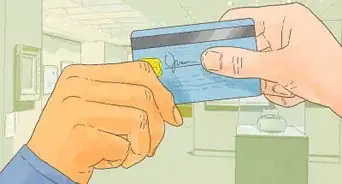
2Determine your budget. There are two ways to buy a used car: either pay the full amount in cash or take out a loan. If you are able to pay cash, then you already know your budget. If you are planning to take out a loan, you can use a car payment calculator to determine the monthly payment you can afford.[2]
- You can find a car payment calculator at https://cars.usnews.com/cars-trucks/financing/car-payment-calculator.
- Set aside some extra money for registration, car insurance, and future repairs.
-
3Use side-by-side comparison tools to find potential cars for you. Numerous websites--including Edmunds, Kelly Blue Book, Autobytel, and others--allow you to plug in different makes of models of car and compare them side-by-side. This is a great way to compare many different factors at the same time, and create a list of cars that could be a good fit.[3]
-
4Seek out potential cars in your area. Once you have compiled a list of possible vehicles that would be a good fit for you, begin locating cars for sale in your area. You might look online (or call) car dealerships. You can look in classified ads, browse Craigslist, or visit online used car databases (such as CarMax, AutoList, or AutoTrader).[4]
- Contact sellers and make sure that the cars you want are still available.
-
5Ask the seller a series of questions. Sometimes you come across a thorough car ad that answers most of your questions. More often, you are going to need to ask the seller a few things. If you do not get all of the information you ask for, it’s a good idea to walk away from that car.[5] Some questions to ask include:
- Are you the original owner?
- Do you have the service records?
- Do you have the title? Is it clear?
- What is the VIN number for the car?
- Is there any other important information that wasn’t listed in the ad?
- May I have the car looked at by a mechanic?


Part 2
Part 2 of 3:Reviewing Your Top Choices
-
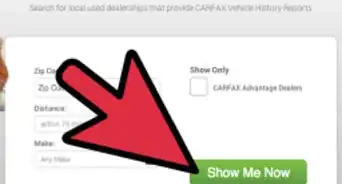
1Get a vehicle history report. Sometimes used car ads will include a link to a vehicle history report. If a car you are interested in does not come with a report, it is a great idea to obtain one. A vehicle history report can tell you if the car has had any major accidents, been in a flood, or was ever totaled.[6]
- You need the vehicle identification number (VIN) to obtain a report.
- The 2 most popular companies who do these reports are CarFax and AutoCheck, and both charge around $40 per report.
- Many used car dealership will provide a free vehicle history report on request.
-
2Find out if there is a warranty. Some used cars will still be covered by some kind of warranty, while others will not. If a used car claims to have a warranty, make sure you get a copy of it, as well as an explanation of what it covers.[7] Warranty possibilities include:
- Merchantability Warranty: This common warranty is an implied warranty, meaning you automatically receive it without having to agree to or sign anything. Merchantability warranties guarantee that the used car functions as promised and is labeled correctly.[8]
- Manufacturer’s Warranty: Newer vehicles may still be warranted under the manufacturer.
- Extended Warranty: This kind is common in certified pre-owned cars.
- “As Is,” meaning the car has no warranty of any kind.
-
3Read reviews and ratings. Spend some time reading everything you can about the cars you might want to buy. In particular read customer reviews, industry reviews, and safety ratings.[9]
- When you're looking at reviews for a vehicle, pay attention to how reliable the vehicle is and whether it holds its value over time. Reliable vehicles that hold their value will be worth more if you decide to sell the vehicle or trade it in in the future.
- You should also look for red flags when you're reading reviews, like whether the car has a lot of problems once it reaches a high mileage, or if replacement parts for the car are expensive.
- You can find reliable vehicle reviews through Kelly Blue Book, Edmunds, and Consumer Reports.


Part 3
Part 3 of 3:Evaluating the Cars in Person
-
1Drive potential cars back-to-back. If at all possible, it best to test drive your potential cars one right after the other. This is the most effective way to compare their comfort and quality. Try making an appointment with a seller who has more than 1 car you might want to buy, or set up appointments with different seller for the same day.[10]
- When you test drive, you may want to bring a friend along to have a second opinion.
-
2Bring a checklist. It can be easy to forget specific elements to look for when you are in the middle of a test drive. To avoid this problem, bring a checklist along with you. Go back to your original brainstorming notes and make a list of what is most important. Also, write down any questions you still have.[11]
- Create your own checklist.
-
3Perform a thorough walk-around. Before you actually drive off in the car, take a close look at the interior and exterior. Take your time and look carefully. Never feel like you need to rush.[12] [13] Some things to think about include:[14]
- Do you like the overall appearance?
- Is the interior clean?
- Does the vehicle provide enough cargo space?
- Is the driver's seat comfortable?
- Do you feel good when you sit in the car?
- Are the controls easy to understand?
-
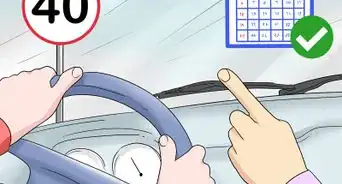
4Evaluate the ride. When performing your test drive, do your best to stay focused and carefully assess the vehicle. Consider how well the car functions, as well as how you feel driving it. Be sure to drive on both city streets and highway.[15] Some things to pay attention to during your test drive include:[16]
- Driving noise
- Mechanical sounds
- Ride comfort
- Handling
- Power/acceleration
- Braking
-
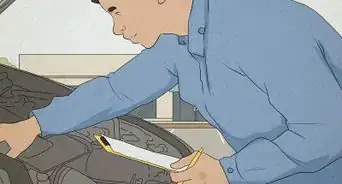
5Seek the advice of a mechanic. When you have narrowed it down to your last 2 or 3 favorite cars, hire a mechanic to take a look at them. A good mechanic should be able to identify any major problems and help you to identify things that may need to be repaired in the near future.[17]
- Although this service is not free, it can save you quite a bit of money in the long run.
- Ask your friends and family for referrals to mechanics in your area.


Community Q&A
-
QuestionWhich is the best car for me?
 Bryan HambyBryan Hamby is the owner of Auto Broker Club, a trusted auto brokerage in Los Angeles, California. He founded Auto Broker Club in 2014 out of a passion for cars and a unique talent for customizing the car dealership process to be on the buyer’s side. With 1,400+ deals closed, and a 90% customer retention rate, Bryan’s focus is to simplify the car buying experience through transparency, fair pricing, and world class customer service.
Professional Auto BrokerThis is such a thoroughly subjective question that it's hard to say. It comes down to your budget, preferences, and needs. A lot of this is going to come down to personal gut feeling as well. Take the car for a test drive and see how it feels! Inspect how it looks and ask yourself, "Does this look right?" You can often learn a lot about whether a car is right for you just by looking carefully and driving it. -
QuestionHow do I set a budget for a used car?Bryan HambyBryan Hamby is the owner of Auto Broker Club, a trusted auto brokerage in Los Angeles, California. He founded Auto Broker Club in 2014 out of a passion for cars and a unique talent for customizing the car dealership process to be on the buyer’s side. With 1,400+ deals closed, and a 90% customer retention rate, Bryan’s focus is to simplify the car buying experience through transparency, fair pricing, and world class customer service.
Professional Auto BrokerIt's easy enough to figure out how much you can spend, so the question is usually what the hidden costs are. First, figure out what a reasonable maintenance schedule for the vehicle is. You can do this by calling mechanics, looking online, and contacting dealerships. Then, you should get quotes for the insurance, since that will depend on you and the type of car you choose. Finally, if you're getting any kind of financing, look up your credit. This will give you a good sense for how high the interest rate on a loan may be. -
QuestionWhat is the best website to buy a used car?Bryan HambyBryan Hamby is the owner of Auto Broker Club, a trusted auto brokerage in Los Angeles, California. He founded Auto Broker Club in 2014 out of a passion for cars and a unique talent for customizing the car dealership process to be on the buyer’s side. With 1,400+ deals closed, and a 90% customer retention rate, Bryan’s focus is to simplify the car buying experience through transparency, fair pricing, and world class customer service.
Professional Auto BrokerIt depends on what you're looking for. If you're looking for an exotic car, a European electric car, a domestic vehicle, or just a cheap used car, you're going to want to check out different sites. The most popular sites I've seen people have success with are Car Gurus, Auto Trader, and Craigslist (for private sales).







References
- ↑ https://www.edmunds.com/car-buying/10-steps-to-buying-a-used-car.html
- ↑ Bryan Hamby. Professional Auto Broker. Expert Interview. 11 June 2019.
- ↑ https://www.edmunds.com/car-buying/10-steps-to-buying-a-used-car.html
- ↑ Bryan Hamby. Professional Auto Broker. Expert Interview. 11 June 2019.
- ↑ https://www.nerdwallet.com/blog/loans/buy-used-car/#budget
- ↑ Bryan Hamby. Professional Auto Broker. Expert Interview. 11 June 2019.
- ↑ https://www.autobytel.com/car-buying-tips/used-car-buying-tips/how-to-compare-used-cars-100439/
- ↑ http://consumer.findlaw.com/consumer-transactions/what-is-the-warranty-of-merchantability.html
- ↑ https://www.consumerreports.org/cars/
- ↑ https://www.npr.org/2017/05/09/527574528/buying-a-car-what-to-look-for-when-you-take-a-test-drive
- ↑ https://www.npr.org/2017/05/09/527574528/buying-a-car-what-to-look-for-when-you-take-a-test-drive
- ↑ https://www.caranddriver.com/reviews/how-to-test-drive-a-car-shopping-advice
- ↑ https://www.kbb.com/car-advice/car-buying/step-10-get-the-most-out-of-your-test-drive/
- ↑ Bryan Hamby. Professional Auto Broker. Expert Interview. 11 June 2019.
- ↑ Bryan Hamby. Professional Auto Broker. Expert Interview. 11 June 2019.
- ↑ https://www.kbb.com/car-advice/car-buying/step-10-get-the-most-out-of-your-test-drive/
- ↑ https://www.autobytel.com/car-buying-tips/used-car-buying-tips/how-to-compare-used-cars-100439/
About This Article