This article was co-authored by wikiHow Staff. Our trained team of editors and researchers validate articles for accuracy and comprehensiveness. wikiHow's Content Management Team carefully monitors the work from our editorial staff to ensure that each article is backed by trusted research and meets our high quality standards.
There are 10 references cited in this article, which can be found at the bottom of the page.
This article has been viewed 1,257 times.
Learn more...
Losing a loved one can cause financial strain, but Social Security death benefits can help. If your spouse or parent dies, you might be eligible for a lump-sum death benefit drawn from their Social Security account.[1] As of 2020, the lump-sum death benefit is a one-time payment of $255.[2] In addition to the lump-sum death benefit, you might also be able to get monthly payments of survivors benefits.[3]
Steps
Method 1
Method 1 of 2:Lump-Sum Death Benefits
-
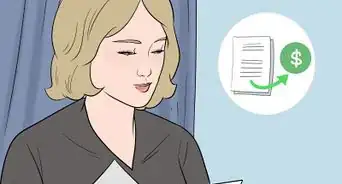
1Confirm or check your eligibility for lump-sum death benefits. Generally, you must be the surviving spouse of the deceased to get the lump-sum death benefit. If you weren't living with the deceased at the time of their death, you're only eligible if you were already receiving benefits based on their Social Security record.[4]
- If there isn't an eligible spouse, a child of the deceased might be eligible if they were receiving benefits based on the deceased's Social Security record.
- You can also use the online screening tool at https://ssabest.benefits.gov/benefit-finder/ if you're not sure what benefits you might be eligible for.
-
2Call the Social Security Administration (SSA) if you're already getting benefits. If you're already receiving Social Security benefits of any kind, the SSA typically automatically sends you the death benefit. However, you should still call to make sure.[5]
- When you call, you can also find out roughly when you should expect to receive the benefit.
- If you're not already receiving benefits, you have to apply for the lump-sum death payment to get it. The SSA must receive your application within 2 years of the person's death.[6]
Advertisement -
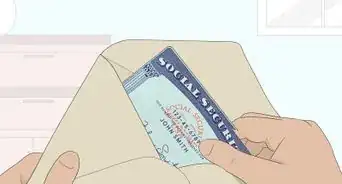
3Gather documents to prove your identity and relationship to the deceased. When you submit your application form to get the death benefit, Social Security requires original documents (not photocopies) to prove your identity. If you don't have these documents, you might have to order them from your state's vital records office. The following documents are acceptable:[7]
- Your birth certificate
- A marriage certificate, if you're the spouse of the deceased
- Your passport or green card, if you're a permanent resident
- The deceased's death certificate
-
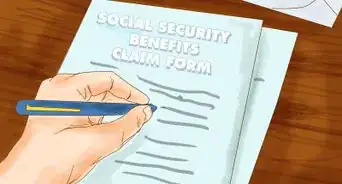
4Complete the Application for Lump-Sum Death Payment. Download the application at https://www.ssa.gov/forms/ssa-8.pdf. You can either type your answers on the computer or print it and fill it out by hand.[8]
- Answer the questions as completely as you can. If you don't have the necessary information to fill out the form, leave it blank. The SSA will help you find this information, although it might delay your benefits.
- If you have difficulty filling out the form, you can also apply over the phone. Just call 1-800-772-1213 (TTY 1-800-325-0778) between 8 a.m. and 5:30 p.m. (your local time) Monday through Friday.
- Make copies of the deceased's most recent tax return or W-2. These will help you answer some of the questions on the application.
-
5Sign up for direct deposit to get your benefits. You can provide the account and routing numbers for your bank account directly on the application, or over the phone. You can also set up direct deposit online through your MySocialSecurity account or directly at your bank.[9]
- The law requires you to receive your benefits electronically in most circumstances. However, the Treasury does occasionally grant waivers. Call 855-290-1545 if you want to request a waiver.[10]
-
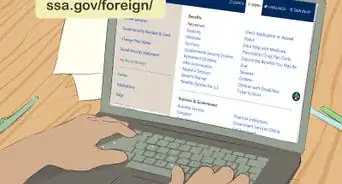
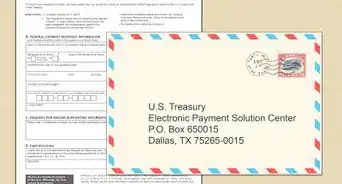
6Mail your application and supporting documents to Social Security. Go to https://secure.ssa.gov/ICON/main.jsp and enter your ZIP code to find the address for the SSA field office nearest you. Mail your application and documentation to that address.[11]
- Your original documents will be mailed back to you after SSA has reviewed them.
- If you applied over the phone and are only sending documents, write the deceased's Social Security number on a separate sheet of paper and include it with the documents so SSA can match them to the correct application.[12]
-
7Give the SSA a few weeks to process your application. When the SSA receives your application and documents, they'll mail the receipt back to you certifying that your application has been received. Expect to wait a few weeks to get it. The receipt includes your claim number and an estimation of how many days it'll be before you hear from SSA again regarding your benefits.[13]
- You'll get another notice from SSA letting you know whether the benefits were approved and when they'll be paid.
- If you apply over the phone, you'll get a claim number right then. Write it down and hang on to it in case you need to call with questions about your application or when you can expect to receive your benefits.
Advertisement


Method 2
Method 2 of 2:Survivor Benefits
-
1Confirm that you're eligible for benefits before you apply. You can check online at https://ssabest.benefits.gov/benefit-finder/ to see if you're eligible for survivor benefits following the death of a loved one. Generally, the following family members are eligible for benefits:[14]
- A widow or widower 60 or older (50 or older if disabled)
- A surviving divorced spouse
- A widow or widower of any age caring for the deceased's child who is under 16 or disabled and receiving benefits on the deceased's record
- An unmarried child under 18 (22 if disabled)
- Parents over 62 who were dependent on the deceased for more than half of their support
-
2Report the death to Social Security. Usually, the funeral home reports the death to Social Security. You can ask there and find out if it was done. If it wasn't, call 1-800-772-1213 (TTY 1-800-325-0778) to do this yourself. The number is staffed from 8 a.m. to 5:30 p.m. (your local time) Monday through Friday.[15]
- Typically, you'll need to send in a copy of the death certificate to confirm the death to Social Security. When you call, they'll give you the address you can mail it to.
-
3Call the Social Security Administration (SSA) as soon as possible to apply. Call 1-800-772-1213 (TTY 1-800-325-0778 anytime between 8 a.m. and 5:30 p.m. (your local time) Monday through Friday. An SSA employee will ask you questions to complete an application for you. Call as soon as possible after the death of your loved one — benefits often aren't retroactive to the date of death but are instead paid from the date you apply.[16]
- You can also apply in person at your local Social Security office when the offices are open to the public. Visit https://secure.ssa.gov/ICON/main.jsp to find the nearest SSA field office. This website also gives you contact information for your local office, if you want to call a local number instead of the 1-800 number.
-
4Provide information about yourself and the deceased. When you call, an SSA employee will ask you questions about yourself, the deceased, and your relationship to them. They'll also ask questions about the deceased's employment and any benefits they might have received before they passed. Questions they'll ask include:[17]
- Your name, Social Security number, and date of birth
- The deceased's name, Social Security number, date of birth, and date of death
- When you got married, if you're a widow or widower
- If the deceased was previously married, the date that marriage ended
- The work history of the deceased, including whether they were still working up to their death and their most recent income
- Whether you or the deceased were receiving Social Security benefits in any form
- Whether the deceased had any surviving children under the age of 18
-
5Mail original documents to support the information you provided. The SSA employee you talk to will tell you what documents you need to send so they can process your application. Usually, you'll need to send original documents, which will be sent back to you after your application has been processed. Documents you're asked to provide may include:[18]
- Your birth certificate
- Your marriage certificate, if you were married to the deceased
- The deceased's death certificate
- Your divorce papers, if you're applying as a divorced widow or widower
- The birth certificates of any dependent children
- The most recent W-2 or tax return of the deceased
-
6Sign up for direct deposit if you're not already getting benefits. Give your bank account and routing number to the SSA employee who takes your call to sign up for direct deposit of your benefit payments when you call to apply. You also have the option of signing up using your MySocialSecurity account on the SSA website or setting direct deposit up at your bank.[19]
- Social Security requires direct deposit of benefits. However, they do make exceptions. If you don't have a bank account and can't get one, call the Treasury at 855-290-1545 and request a waiver.
-
7Wait to get a benefit verification letter in the mail with more details. The SSA mails you a benefit verification letter after processing your application and verifying your documentation. This letter spells out exactly how much you're getting in benefits and when those benefits will start.[20]
- If your benefits are denied, the letter will explain the reason why. You have the right to appeal that decision. The letter will tell you what you need to do to start that process.
Advertisement


Warnings
- As of October 16, 2020, SSA offices remain closed to the public in response to the COVID-19 pandemic. You can still apply for benefits over the phone.[22]Thanks!
References
- ↑ https://www.benefits.gov/benefit/4392
- ↑ https://www.ssa.gov/benefits/survivors/ifyou.html
- ↑ https://www.ssa.gov/benefits/survivors/
- ↑ https://fas.org/sgp/crs/misc/R43637.pdf
- ↑ https://www.ssa.gov/benefits/survivors/
- ↑ https://www.ssa.gov/pubs/EN-05-10084.pdf
- ↑ https://www.ssa.gov/forms/ssa-8.html
- ↑ https://www.ssa.gov/forms/ssa-8.pdf
- ↑ https://www.ssa.gov/deposit/
- ↑ https://www.ssa.gov/deposit/
- ↑ https://www.ssa.gov/forms/ssa-8.html
- ↑ https://www.ssa.gov/benefits/survivors/
- ↑ https://www.ssa.gov/forms/ssa-8.pdf
- ↑ https://www.ssa.gov/benefits/survivors/ifyou.html
- ↑ https://www.ssa.gov/benefits/survivors/
- ↑ https://www.ssa.gov/benefits/survivors/
- ↑ https://www.ssa.gov/pubs/EN-05-10084.pdf
- ↑ https://www.ssa.gov/forms/ssa-10.html
- ↑ https://www.ssa.gov/deposit/
- ↑ https://www.ssa.gov/pubs/EN-05-10084.pdf
- ↑ https://www.ssa.gov/benefits/survivors/
- ↑ https://secure.ssa.gov/ICON/main.jsp
About This Article