This article was co-authored by Jon Gholian and by wikiHow staff writer, Megaera Lorenz, PhD. Jon Gholian is a Cleaning Specialist and the Founder of Cleany, a home and office cleaning concierge service based in New York City, New Jersey & Miami. Cleany specializes in providing quality cleaning and handyman services to all their customers. All Cleany employees are insured, bonded, and professionally trained. Cleany has been featured in the New York Times, Bravo & Redfin.
There are 12 references cited in this article, which can be found at the bottom of the page.
If you’ve spilled oil or grease on your vinyl flooring, or if you have a set-in, oily stain, you might be worried about how to clean it up without damaging the floor. Fortunately, vinyl is pretty durable stuff, and a little soap and water is all you need to handle most grease spills. In this article, we’ll talk you through a few different ways to tackle oil or grease stains on your vinyl floor.
Steps
Method 1
Method 1 of 11:Wipe up fresh spills right away.
-
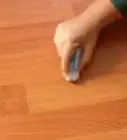
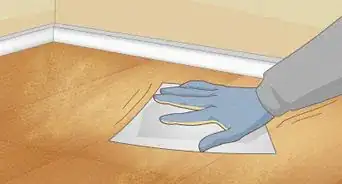
1Acting fast will help prevent staining. If you spill oil on any kind of floor surface, don’t wait around for it to set in.[1] Grab a paper towel or sponge and use it to soak up the excess oil. If you use a sponge, toss it in the trash when you’re done so the grease doesn’t go down the drain.[2]Advertisement

Method 2
Method 2 of 11:Clean the area with water and mild dish soap.
-
1Soap will help break down the grease.[3] No matter what kind of floor you’re cleaning, soap and water is a good place to start when you’re dealing with an oil spill.[4] Mix 1 part mild dish soap with 10 parts water and dip a soft cloth or sponge in the mixture. Use the cloth to wipe away the grease or oil. Rinse away any soap residue with clean water when you’re done.[5]
- Avoid using harsh detergents, which could damage your floor or leave a dull residue behind.[6]
- This might work for some greasy stains as well as fresh spills. However, if the grease has really hardened or soaked into the vinyl, you may need something stronger, like ammonia or mineral spirits.


Method 3
Method 3 of 11:Soak up big spills with corn flour.
-
1The powder will absorb the oil quickly. If you’ve spilled a lot of oil, pour some cornstarch, corn flour, or baking soda on the spill first. Let it sit for at least 15 minutes to soak up as much oil as possible. Then, wipe the spot with a clean paper towel.[7]
- You can also sweep the stain away with a broom after letting the corn flour sit for a few hours.[8]
Advertisement

Method 4
Method 4 of 11:Bust grease with vinegar, castile soap, and baking soda.
-
1This DIY formula is gentle and effective. Combine 1 cup (240 mL) of distilled white vinegar, 1⁄8 teaspoon (0.62 mL) of castile soap, 1 tbsp (14 g) of baking soda, and 3 cups (0.71 L) of warm water. Pour the mixture into a spray bottle. Shake the mixture well, then spray it onto the oil or grease spot. Let it soak for about 10 minutes, then scrub the area with a cloth or soft-bristled brush.[9]
- Vinegar, baking soda, and gentle soap are all safe for vinyl floors.[10]
- Rinse the spot with clean water when you’re done.

Method 5
Method 5 of 11:Try ammonia on tough oil stains.
-
1Ammonia is a powerful degreaser. It also won’t leave streaks or residue on your floor.[11] First, clean the stained area with mild dish soap and water. Rinse the spot and dry it thoroughly. Mix 1 tablespoon (15 mL) of ammonia with 1 US quart (0.95 L) of warm water and pour it on the stain. Only use enough to cover the stained area. Let it sit for 10 minutes, then gently scrub the spot with a soft-bristled brush. Rinse the spot with clean water.[12]
- Never mix ammonia with bleach or other household cleaners! Doing so can cause toxic gases to form.
- Ammonia can sometimes cause cracks to form in vinyl flooring, so use it with caution and only clean small areas with it.[13] If you’re not sure how your floor will react, test the ammonia solution in an inconspicuous area first.
Advertisement

Method 6
Method 6 of 11:Spray WD-40 on set-in grease.
-
1WD-40 also works on scuff marks. Spray a bit of this powerful degreaser directly on the stain, then gently rub it away with a paper towel or soft cloth. When you’re done, clean up the residue with a mixture of 1 cup (240 mL) of apple cider vinegar and 1 gallon (3.8 L) of hot water.[14]

Method 7
Method 7 of 11:Use rubbing alcohol for greasy makeup stains.
-
1Alcohol is great for oily lipstick smudges. It’s also a good general-purpose degreaser.[15] Pour a little rubbing alcohol on a soft cloth and rub it firmly against the oily mark or stain on the floor.[16] Rinse the area with clean water and wipe it dry when you’re done.[17]
- Most cleaning experts agree that alcohol is safe to use on vinyl in small amounts. However, it’s possible that rubbing alcohol could damage the surface finish of some types of vinyl flooring. Test the alcohol in an inconspicuous area before you use it to clean up stains on your floor.
Advertisement

Method 8
Method 8 of 11:Clean greasy or waxy stains with mineral spirits.
-
1This cleaner is also called white spirt or mineral turpentine. Mineral spirits are safe for vinyl floors and can remove a wide variety of stains.[18] They’re also excellent for cutting through oil and grease.[19] Pour a small amount of mineral spirits onto a soft cloth and use it to gently rub the area until the grease stain is gone.
- Use a damp rag and a couple drops of mild dish soap to wipe the area when you’re done.[20]

Method 9
Method 9 of 11:Lift discolored stains with bleach.
-
1Some stains can linger after the grease is gone. If you’ve spilled something like spaghetti sauce on your floor, you may need something that can cut through discoloration in addition to grease. After wiping up the spill and using a solvent (such as dish soap) to clean up any oil, thoroughly rinse and dry the area. Mix 1 part bleach with 4 parts water, dip a rag in the solution, and let the wet rag sit on the stain for 1 hour. Rinse the area with clean water when you’re done.[21]
- Never mix bleach and ammonia, since this will produce a highly toxic gas. If you used other cleaners on the area, rinse them away thoroughly before using bleach.
- Some cleaning experts and flooring professionals warn that too much bleach could damage a vinyl floor. To minimize possible damage, always dilute bleach before using it, and test it in an inconspicuous area to make sure it doesn’t stain or discolor your floor.
Advertisement

Method 10
Method 10 of 11:Steer clear of spirit solvent floor waxes.
-
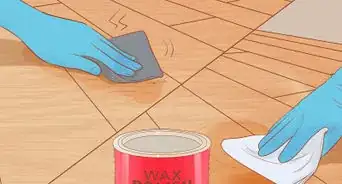
1These floor treatments can damage vinyl. Spirit solvent waxes may seem like an ideal solution for a greasy vinyl floor. These products are designed to break down oils and grease while also giving your floor an attractive sheen. Unfortunately, these waxes are unsafe for use on vinyl. If you want to clean your vinyl floor with a wax-based cleaner, check the label to make sure it doesn’t contain spirit solvents.[22]
- Some floor waxes are safe to use on a vinyl floor. Look for a water-emulsion wax, or one that’s labeled for use on vinyl, PVC, or “resilient flooring.”
- Some spirit solvents, such as mineral spirits, are okay on their own for minor cleanup jobs. However, they’re damaging to vinyl in leave-on products like floor waxes.

Method 11
Method 11 of 11:Avoid scraping your floor or using abrasive cleaners.
-
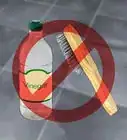
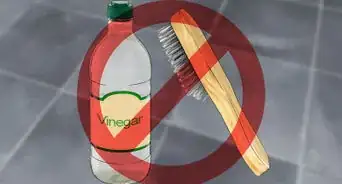
1Anything too abrasive will scratch up your floor. If you’re scrubbing away an oil stain on vinyl, stick to a soft cloth, sponge, or soft-bristle brush. Never use steel wool, hard-bristle brushes, or abrasive liquid cleansers.[23]
- Some websites suggest scraping up oily or greasy stains with the edge of a butter knife or spoon. However, scraping your floor with a metal tool could cause damage. If you need to loosen sticky residue, try scrubbing the spot with a soft nylon brush, instead.[24]
- Some chemical cleansers may also be too harsh for your floor. For instance, some vinyl flooring manufacturers recommend against using acetone on their floors. When in doubt, consult the manufacturer or another flooring expert to find out what’s safe.
Advertisement



References
- ↑ Jon Gholian. Cleaning Specialist. Expert Interview. 19 April 2021
- ↑ https://www.surpriseaz.gov/3733/Fat-Oil-Grease-FOG
- ↑ Erik Bakirov. Cleaning Specialist. Expert Interview. 7 January 2021.
- ↑ Jon Gholian. Cleaning Specialist. Expert Interview. 19 April 2021
- ↑ https://cleaning.lovetoknow.com/how-remove-stubborn-stain-from-vinyl-flooring
- ↑ https://www.bobvila.com/articles/how-to-clean-vinyl-flooring/
- ↑ https://foodandnutrition.org/may-june-2017/kitchen-kersplat-tips-reduce-splatter/
- ↑ https://www.thisoldhouse.com/home-safety/21018605/5-of-the-best-nontoxic-cleaners-you-aren-t-using
- ↑ https://www.bobvila.com/articles/homemade-degreaser/
- ↑ https://www.bobvila.com/articles/how-to-clean-vinyl-flooring/
- ↑ https://aces.nmsu.edu/pubs/_g/G304/welcome.html
- ↑ https://cleaning.lovetoknow.com/how-remove-stubborn-stain-from-vinyl-flooring
- ↑ https://www.bobvila.com/articles/how-to-clean-vinyl-flooring/
- ↑ https://www.bobvila.com/articles/how-to-clean-vinyl-flooring/
- ↑ https://web.extension.illinois.edu/stain/staindetail.cfm?ID=122
- ↑ https://www.bobvila.com/articles/how-to-clean-vinyl-flooring/
- ↑ https://cleaning.lovetoknow.com/how-remove-stubborn-stain-from-vinyl-flooring
- ↑ https://www.bhg.com/homekeeping/house-cleaning/surface/how-to-clean-resilient-floors/
- ↑ https://aces.nmsu.edu/pubs/_g/G304/welcome.html
- ↑ https://www.bobvila.com/articles/mineral-spirits-uses/
- ↑ https://cleaning.lovetoknow.com/how-remove-stubborn-stain-from-vinyl-flooring
- ↑ https://aces.nmsu.edu/pubs/_g/G304/welcome.html
- ↑ https://www.bhg.com/homekeeping/house-cleaning/surface/how-to-clean-resilient-floors/
- ↑ https://www.bobvila.com/articles/how-to-clean-vinyl-flooring/
About This Article