This article was co-authored by Jean Franco Vergaray and by wikiHow staff writer, Amber Crain. Jean Franco Vergaray is a Professional Dance Instructor specializing in salsa dancing. Jean Franco is also the owner of Salsa In Queens, a community, dance-oriented studio for beginners and experienced dancers alike, based in Queens, New York City. He has over 13 years of dancing experience and over eight years of dance instruction experience.
There are 16 references cited in this article, which can be found at the bottom of the page.
wikiHow marks an article as reader-approved once it receives enough positive feedback. This article received 16 testimonials and 90% of readers who voted found it helpful, earning it our reader-approved status.
This article has been viewed 589,287 times.
Choreographing a dance is a beautiful and creative experience. There are so many decisions to make, though, so the process can be a bit overwhelming if you've never done it before. Don't worry—we'll walk you through the basic process from start to finish. You'll be creating your own dance routine in no time!
Steps
Part 1
Part 1 of 3:Music
-
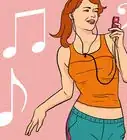
1Pick a song for your routine that inspires you. The music guides most of your choices, so pick a song first. You can choose any song that you want! Go with your new favorite jam, browse music streaming sites for inspiration, or ask your friends and family for recommendations.[1]
- If you’re having trouble choosing a song, think about what kind of dance moves you like the most. For example, if you love expressive, modern movements like popping and locking, a hip-hop song would be perfect.
- Try doing a Google search that includes some of your basic preferences and see what comes up. For example, search “mid-tempo beat-driven R&B songs."
-
2Play the song repeatedly until you fully absorb it. Listen to it every chance you get—on the bus, at home, on your daily jog, before bed, etc. As you listen, try to identify the emotions you’re feeling.[2] Jot down your thoughts and ideas so you can refer to these early brainstorming sessions later.[3]
- Does the song tell a story? If so, try to describe the plot in your own words.
Advertisement -
3Choose a short section of the song for your routine. Most songs are 3 minutes or longer, which is way too long for a routine. Songs usually have sections that won’t work well for a dance routine–maybe there’s an awkward tempo shift, a repetitive instrumental section, or a rhythm change you aren’t crazy about. Eliminate what you don’t like until you have about 1 ½–2 minutes of music.[4]
- To keep your routine interesting and hold the audience's attention, don’t go beyond 2 ½ minutes.[5]
Advertisement


Part 2
Part 2 of 3:Dance Moves
-
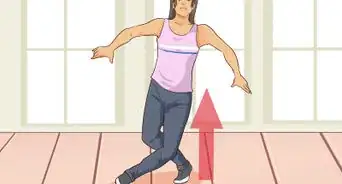
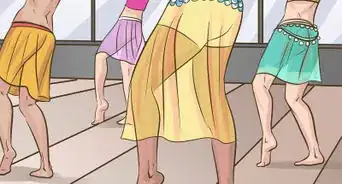
1Select a dance style that matches the vibe of the music. There are hundreds of styles to choose from! Start by considering the tempo and instruments in the song first. For example, ballet or jazz would best complement a slow, orchestral song. If your song is R&B or Latin, a dance style like hip-hop, break dancing, or a fiery flamenco would work well.[6]
- It's also important to pick a dance style that suits your skills. What are your strengths as a dancer? Play to those strengths!
- If you’re feeling daring, try combining multiple dance styles into one stellar routine.[7]
-
2Map out the basic sections of your song. You don’t need to get super technical, just grab a pen and paper and chart the basic structure and flow of the song. This will help you narrow down dance moves for different parts of the song later on.
-
3Break the song down into 8-count sections. Grab a sheet of lined paper and a pen and play the song. Start counting after the introduction when the vocals start. Every time you count 8 beats, write down an 8. When you’re done, you’ll know exactly how many 8-count sections you need to choreograph.[10]
-
4Select dance moves that fit your 8-count sections. Listen to the song and freestyle a bit so you can try out different steps, moves, and sequences. Remember that you’re working with 8-count sections, so count out loud if you need to. Experiment with combining moves in different patterns until the routine starts to fall into place.[11]
- Keep the purpose of your dance, the song’s vibe, and your audience in mind. For example, dramatic or provocative moves are great for a solo recital, but if you're performing the routine at your grandma's birthday party, twerking probably isn't a great option![12]
-
5Choreograph smooth transitions between the main sections. Transitions link the sections together seamlessly; they should never disrupt the piece. Transitions aren't the stars of your piece, but they should never be boring or dull! Find creative ways to move from section to section.[13]
- For example, in your hip-hop routine, you could use the same body roll and clap sequence to transition between each section for a cohesive flow.
Advertisement


Part 3
Part 3 of 3:Finishing Touches
-
1Make sure your routine has a beginning, middle, and end. Give each section a unifying theme or character so they don’t feel disjointed or disconnected. Repeating certain sections, or variations of themes, can help your routine feel cohesive and bring everything together.[14]
- For example, a hip-hop routine might begin with high-energy step work, transition smoothly into a break-dancing section, and then flow into a dramatic finale of floor work.
-
2Write down the routine so you won’t forget it. Include as many details about the steps as you can. Feel free to use shorthand for this since no one else will see this early draft. Note the names of the moves for each section or even scribble little stick figures showing different moves. Whatever works for you![15]
- If stopping to write breaks your concentration, record yourself during these sessions. Then, review the footage later and write everything down.
- If you plan to teach the routine to other dancers, note any particularly tricky passages that could take extra time to explain and demonstrate.[16]
-
3Practice your routine every day until it’s polished. Once the choreography is finished, make sure everything flows well by practicing your routine as frequently as possible. As you do this, certain moves or sections might not work as well as you envisioned. That’s normal! Here's your chance to edit and perfect those areas. Keep practicing until your routine is polished and perfect.[17]
- Don’t forget to write down your edits so you don't forget them.
Advertisement


Community Q&A
Did you know you can get expert answers for this article?
Unlock expert answers by supporting wikiHow
-
QuestionHow do you dance to any song?
 Jean Franco VergarayJean Franco Vergaray is a Professional Dance Instructor specializing in salsa dancing. Jean Franco is also the owner of Salsa In Queens, a community, dance-oriented studio for beginners and experienced dancers alike, based in Queens, New York City. He has over 13 years of dancing experience and over eight years of dance instruction experience.
Professional Dance InstructorChoose a dance style that works well for that song. For instance, you might do ballet if the song is classical. If you're using a modern song, you might do a hip-hop dance.
Support wikiHow by unlocking this expert answer.
-
QuestionHow do you prepare for choreography?Jean Franco VergarayJean Franco Vergaray is a Professional Dance Instructor specializing in salsa dancing. Jean Franco is also the owner of Salsa In Queens, a community, dance-oriented studio for beginners and experienced dancers alike, based in Queens, New York City. He has over 13 years of dancing experience and over eight years of dance instruction experience.
Professional Dance InstructorListen to the song you plan to choreograph several times before you start dancing. Notice what emotions you feel and how your body wants to express them.Support wikiHow by unlocking this expert answer.
-
QuestionWhere do choreographers get ideas for dances?Jean Franco VergarayJean Franco Vergaray is a Professional Dance Instructor specializing in salsa dancing. Jean Franco is also the owner of Salsa In Queens, a community, dance-oriented studio for beginners and experienced dancers alike, based in Queens, New York City. He has over 13 years of dancing experience and over eight years of dance instruction experience.
Professional Dance InstructorEvery dancer has their own way of choreographing, but one common one is to listen to choose a song that inspires you to dance and then listen to it on repeat. While listening, try to find what emotions or feelings the song gives you and then put those thoughts into your choreography.Support wikiHow by unlocking this expert answer.
-
QuestionHow do I come up with a dance on short notice?
 Community AnswerIf you are on your own, you can improvise. Try to keep it simple, so that you have enough time to memorize it; more complex moves take longer to memorize.
 -
QuestionWhat can I do to make sure a dance is not repetitive?
 Community AnswerIf you really can't think of any moves, it is OK to repeat previously used moves. Dance them in different positions, or perform them on the other side (if you start by putting your right hand in the air, try starting with your left instead).
 -
QuestionWhat do I do if the group isn't listening to me and that leads to an argument?Community AnswerThis depends on what the argument is about. If it's about your choreography, then let them incorporate what they want into it and see for themselves because there is always more creativity in two minds combined than one alone. Also, don't dominate them too much. Be a leader not a dictator. Don't treat the other team members like lackeys who are expected to do your will.
-
QuestionHow long will it usually take to choreograph a dance?Community AnswerIt usually takes 2 to 3 days for a intermediate level dancer to choreograph a 3 to 4 minute track, depending on the dance type and the choreographer. Select a sound track (the track may consist of different songs). Then divide this into different sections. Choreograph the dance section by section.
-
QuestionHow can I incorporate moves from the 60s, 70s and 80s into my dance?Community AnswerSearch YouTube for inspiration on popular dance moves from the decade. Mashup songs from each area and choose a few iconic moves to represent each decade.
-
QuestionWhat should I do for repeated sections that I do not want repeated dance moves in?Community AnswerDon't repeat them. Ask your group and together come up with something different to do for the portions you do not want to repeat. Everyone has their own mind to create a move. You can slightly adjust the dance to your style.
-
QuestionHow can I make my dance religious in nature?
 Community AnswerChoose music that has religious tones. Be modest in your dance moves, and really tell a story.

-Step-19-Version-2.webp)
References
- ↑ https://www.youtube.com/watch?t=80&v=5YSiupSgo2k&feature=youtu.be
- ↑ Jean Franco Vergaray. Professional Dance Instructor. Expert Interview. 20 May 2020.
- ↑ https://www.youtube.com/watch?t=102&v=5YSiupSgo2k&feature=youtu.be
- ↑ https://www.youtube.com/watch?t=123&v=5YSiupSgo2k&feature=youtu.be
- ↑ https://www.danceinforma.com/2013/12/03/choreographing-for-competitions/
- ↑ https://qcc.libguides.com/c.php?g=818979&p=6267812
- ↑ Jean Franco Vergaray. Professional Dance Instructor. Expert Interview. 20 May 2020.
- ↑ https://www.youtube.com/watch?t=51&v=aGhVekAy9kE&feature=youtu.be
- ↑ https://www.elementsofdance.org/energy.html
- ↑ https://www.worldlinedancenewsletter.com/information/chor_article_max_perry.pdf
- ↑ https://www.youtube.com/watch?t=194&v=5YSiupSgo2k&feature=youtu.be
- ↑ https://www.youtube.com/watch?t=10&v=aGhVekAy9kE&feature=youtu.be
- ↑ https://www.britannica.com/art/dance/The-three-phase-choreographic-process
- ↑ https://www.win.tue.nl/~wstomv/quotes/Dance_Composition_by_Smith-Autard.html
- ↑ https://www.youtube.com/watch?t=240&v=5YSiupSgo2k&feature=youtu.be
- ↑ http://jodysperling.com/process/how-do-you-write-down-choreography/
- ↑ https://www.youtube.com/watch?t=281&v=5YSiupSgo2k&feature=youtu.be
- ↑ Jean Franco Vergaray. Professional Dance Instructor. Expert Interview. 20 May 2020.
- ↑ Jean Franco Vergaray. Professional Dance Instructor. Expert Interview. 20 May 2020.
About This Article

To choreograph a dance, put on the song you’ve chosen and try out different steps, moves, and sequences to see what fits the music the best. Combine different moves into sections, then choreograph transitions to link the different sections seamlessly. If you like, you can incorporate props, costumes, and even sound effects like yelling or stomping into your dance. When you have a routine you like, make sure to write it down so you can show the dancers all of the moves! For tips on practicing your dance, keep reading!