This article was co-authored by wikiHow staff writer, Madeleine Criglow. Madeleine Criglow is a wikiHow Staff writer based in the Pacific Northwest. She has over six years of experience working in copywriting, editing, and journalism. In addition to her work for wikiHow, she writes a monthly film column for Tigard Life and Tualatin Life newspaper. Madeleine graduated from the University of Puget Sound with a BA in English with an emphasis in Creative Writing.
There are 8 references cited in this article, which can be found at the bottom of the page.
This article has been viewed 6,579 times.
Learn more...
An e-bike is a fantastic means to speed up your bicycling adventures. There are a variety of makes and models, with different motors, speeds, and prices that vary depending on how you want to use the bike. This article will explore the many different varieties of e-bikes, from commuter bikes for everyday use to mountain bikes meant for the ultimate wilderness excursion! No matter what you’re looking for, the varied options mean that that the perfect bike for you is certainly out there.
Steps
Method 1
Method 1 of 10:Choose an e-bike meant for street biking if you plan to commute.
-
1A commuter bike with slick tires is the best option for street biking. If you plan on biking to work each day, for example, a slicker tire will work best on the concrete roads you come across.[1] You may also have a few different goals for your e-bike usage. If that’s the case, go with the bike that works best with what you will be using it for most often.
- Alternatively, purchase a model with tires that have a little more tread, as these can accommodate mixed terrain.[2]
Advertisement

Method 2
Method 2 of 10:Pick a bike meant for rocky terrain if you're an avid mountain biker.
-
1Biking on loose terrain requires tires with more traction. If you plan on mountain biking or biking in the wilderness, pick an e-bike model that’s tires have enough tread to withstand rocky, unpredictable terrain.[3] Additionally, a model with wider tires works best for mountain biking, as these are better suited to withstand trails.[4]
- Visit a bike shop and talk to an expert if you’re still not sure what model will work best for you. They can help you determine the kind of bike that will align with your goals.

Method 3
Method 3 of 10:Choose a pedelec e-bike if you're interested in the standard model.
-
1This model adds motor assistance according to your pedaling rate. These are the most common models of e-bike, and give you more choice in how fast you ultimately want to go.
- Pedelec e-bikes are limited to a specific speed, which may vary depending on where you purchase your bike. Standard models are usually capped to about 25 km/h or 15 mph.[5]
Advertisement

Method 4
Method 4 of 10:Pick a twist-n-go bike if you’re looking for something speedier.
-
1A twist-n-go bike prompts motor assistance through a switch. These models are not as common as pedelec models, and may even have additional riding requirements depending on where you are. For example, you may need a license and additional insurance, as places such as the U.K. classify many twist-n-go bike models as mopeds.[6]
- Twist-n-go models may be able to go faster than the standard 15 mph limit, which may make the additional requirements worth it if speed is your priority.[7]

Method 5
Method 5 of 10:Go with a hub-drive motor if you’re on a budget.
-
1Hub drive motors are affordable and versatile. e-bikes with a hub-drive motor feature a motor located in the center of the front or rear wheel. These models are the most common and are great if you’re looking to use your bike for a variety of purposes.[8]Advertisement

Method 6
Method 6 of 10:Choose a mid-drive motor if you plan on biking on rocky terrain.
-
1Mid-drive motors are light, efficient, and great for uphill trails. These models include a motor located in the middle of the bike between the pedals. The motor itself is smaller and will get you more torque without using as much battery power, making it a great choice for mountainous terrain.[9]
- Pick a e-bike mode with a mid-drive motor if you plan on biking uphill often or exploring the wilderness.

Method 7
Method 7 of 10:Check the max power to see if it meets your needs.
-
1Multiply battery voltage by amp-hours to figure out watt-hours. The battery voltage and continuous amperage (amp-hours) of the e-bike you’re considering will most likely be listed in the model's features. Multiply those 2 numbers together to determine the watt-hours, which is how far and how long you can ride that model without charging the battery.[10]
- Let's say a bike has a power rating of 750 watts, a 48-volt battery pack, and 14 amp-hours. The equation to determine the bike's range would look like 48 x 14 = 672 watt-hours. Each mile uses roughly 20 watt-hours, so this bike could go about 34 miles before needing a charge.[11]
- A power rating of 750 watts is a great choice for a daily commute or relaxed bike rides of about 8 miles round-trip. If you are interested in longer bike rides that might surpass that 34 mile mark, consider a bike with a higher power rating and a longer battery life.[12]
- Talk to an expert at a bike shop if you can’t find this information, as they’ll be able to help you locate it and ultimately determine the energy efficiency of your potential e-bike.
Advertisement

Method 8
Method 8 of 10:Check out what battery the model uses.
-
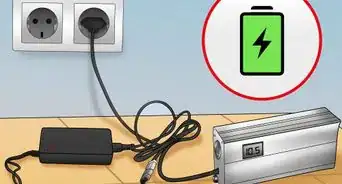
1You want a battery that will last long and run efficiently. A typical e-bike battery is a lithium-ion battery. These last about three years of weekday commuting before running out or being in need or replacing.[13] Over time, batteries can hold less charge, so you want to find a model that uses a good battery to get as much use as you can.

Method 9
Method 9 of 10:Get a cargo bike if you plan to have passengers or carry things.
-
1Are you the only person that’s going to ride the bike? You may have children that would like to tag along! If that’s the case, you may just want to get a standard e-bike that can fit a bike seat. If you’ve got a few kids you’d like to take with you on your bike ride, though, e-bike models like cargo bikes can accommodate that extra seating.[16]
- Even if you’re the only person riding the bike, you may be interested in some extra space if you make deliveries on your bike or need to carry a lot of things on your commute. A cargo bike may still be your best bet if that’s the case.[17]
Advertisement

Method 10
Method 10 of 10:Buy your bike at a specialty shop with knowledgeable staff.
-
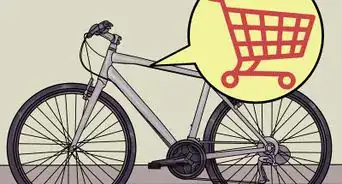
1You can buy an e-bike in person at the store and online. Though the decision is up to you, buying an e-bike at a local bike shop has some definite benefits. Bike shops have a specialized selection and experts on hand to help answer questions and give you more information on how to ride and take care of your new bike. If you are new to riding e-bikes, going into a bike shop may be your best option.[18]
- You can also buy e-bikes online. Though these models may be cheaper, be careful about this option. Bikes sold online may not come from companies with any helpful customer service, which can really leave you feeling lost if your bike is damaged during delivery or any questions come up.[19]



References
- ↑ https://youtu.be/T7uhlB_BIwU?t=260
- ↑ https://youtu.be/T7uhlB_BIwU?t=260
- ↑ https://www.welovecycling.com/wide/2016/04/15/7-things-you-should-know-before-you-buy-your-first-e-bike/
- ↑ https://youtu.be/T7uhlB_BIwU?t=260
- ↑ https://www.welovecycling.com/wide/2016/04/15/7-things-you-should-know-before-you-buy-your-first-e-bike/
- ↑ https://www.cyclingweekly.com/group-tests/best-electric-bikes-need-know-e-bikes-322613
- ↑ https://eriderbikes.com/twist-and-go-electric-bikes/
- ↑ https://www.theverge.com/2019/10/10/20904414/electric-bikes-ebike-guide-rideables-battery-how-to-buy-price
- ↑ https://www.theverge.com/2019/10/10/20904414/electric-bikes-ebike-guide-rideables-battery-how-to-buy-price
- ↑ https://www.theverge.com/2019/10/10/20904414/electric-bikes-ebike-guide-rideables-battery-how-to-buy-price
- ↑ https://www.theverge.com/2019/10/10/20904414/electric-bikes-ebike-guide-rideables-battery-how-to-buy-price
- ↑ https://www.cyclevolta.com/understanding-e-bike-power-range-and-energy/#:~:text=It's%20a%20measure%20of%20how,steeper%20hill%20without%20slowing%20down.&text=Instead%2C%20eBikes%20are%20generally%20rated,250%20to%20about%20900%20watts.
- ↑ https://www.welovecycling.com/wide/2016/04/15/7-things-you-should-know-before-you-buy-your-first-e-bike/
- ↑ https://www.welovecycling.com/wide/2016/04/15/7-things-you-should-know-before-you-buy-your-first-e-bike/
- ↑ https://www.welovecycling.com/wide/2016/04/15/7-things-you-should-know-before-you-buy-your-first-e-bike/
- ↑ https://youtu.be/T7uhlB_BIwU?t=101
- ↑ https://youtu.be/T7uhlB_BIwU?t=120
- ↑ https://www.theverge.com/2019/10/10/20904414/electric-bikes-ebike-guide-rideables-battery-how-to-buy-price
- ↑ https://www.theverge.com/2019/10/10/20904414/electric-bikes-ebike-guide-rideables-battery-how-to-buy-price
About This Article