X
wikiHow is a “wiki,” similar to Wikipedia, which means that many of our articles are co-written by multiple authors. To create this article, volunteer authors worked to edit and improve it over time.
This article has been viewed 33,621 times.
Learn more...
Meat or poultry are important parts of a balanced nutritional diet, as they contain powerful proteins and other vitamins your body needs to be healthy. Some meats, however, also contain unnecessary fat and cholesterol, and choosing meat with these components can add inches to your waistline and clog your body with unwanted waste. Knowing how to choose low-fat meat can be done if you follow a few guidelines and learn how to get the most from your protein.
Steps
-
1Read the labels of the meat you are purchasing. Look for words such as "lean cut" or "reduced fat." Many manufacturers have pre-trimmed unnecessary fat, which can help make it easier to choose healthier cuts.
-
2Choose cuts of protein that are naturally less fatty. Great options for beef include whole chuck or round, beef tenderloins, and sirloin. Healthier poultry selections are always skinless white meat, and low-fat pork choices include loin chops, leg pieces, and pork tenderloins.
-
3Avoid pre-ground meat whenever possible. Most manufacturers include portions of meat from fattier sections of the animal because they are less expensive, which can quickly add more fat to your diet than you intended. If you require ground meat, choose a whole piece of lean beef, chicken, or pork, and ask the butcher to grind it on the spot for you.
-
4Substitute ground red meat with lean turkey or ground white breast meat from a chicken. These lower fat meats can make an ideal meal at a fraction of the cholesterol or fat content.
-
5Consider swapping whole beef or pork for venison. While slightly gamier in flavor, it contains less fat, which makes it a viable option for healthier eating.
-
6Purchase steaks labeled "choice" or "select" when you require the occasional indulgence. The "prime" grade indicates that the meat is more marbled with fat.
-
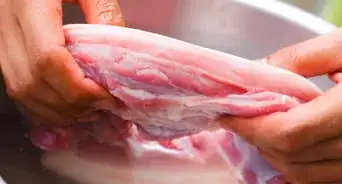
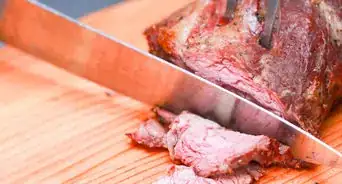
7Slice any visible fat off of your selected meat with a kitchen knife before preparing. Even the leanest cuts from a butcher can be hand trimmed further.
-
8Remove skin from chicken or turkey before serving. It is considered acceptable to cook these meats with the skin on for flavoring, but it should be removed before eating.
-
9Reduce your portion sizes. The proper serving of protein at any meal should equal 3 ounces (85 g) or roughly the equivalent to the size of a deck of cards. Keeping to this measurement insures that you are not overeating.
-
10Drain ground meat from the fatty liquid it cooks in before serving. Strain the meat through a colander, and run it under hot water before mixing with other ingredients or stirring.
-
11Bake poultry in the oven for your meal. Place the meat on a rack inside a baking dish before roasting, which allows unhealthy fats to drip away from your meat.


Community Q&A
-
QuestionWhat about sausages?
 Community AnswerSausages tend to be high in sodium due to their curing process, and require a certain amount of fat to grind and cook properly. Either ask the deli where it was made, or pay attention to the nutrition information on the package.
Things You'll Need
- Kitchen knife
- Colander
- Meat rack
- Baking dish
- Marinade




-Step-25-Version-2.webp)