X
wikiHow is a “wiki,” similar to Wikipedia, which means that many of our articles are co-written by multiple authors. To create this article, volunteer authors worked to edit and improve it over time.
This article has been viewed 68,571 times.
Learn more...
For those people who are required to wear pull-up diapers nonstop, you'll occasionally find the need where you'll need to know how to change your diaper. If you've ever been presented with this puzzling situation, this article will try to guide you in the right direction.
Steps
Method 1
Method 1 of 2:Sitting or Lying Down
Method 1
Part 1: Preparation
-
1Grab a new diaper from the package and prepare it for use, by separating the cling at the diaper's containment zone. Place it nearby when this step is complete.[1]
-
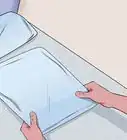
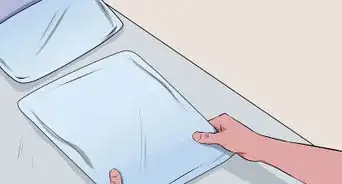
2Try to prevent overuse or overspray during diaper changing times. Use a waterproof changing pad when changing a disposable adult diaper. These precautionary extra measures may be purchased at most supermarket chain stores, where adult disposable diapers are sold.
- For those wearers who are super cost-conscious, as long as you don't mind doing a few more items in your washing machine, spread out some bath towels on the changing surface you'll be using in lieu of these underpadding layers. Kitchen and hand towels tend to cover a smaller surface area, so avoid these at all costs.
Advertisement -
3Remove the diaper using the same method as described in the similar-styled (toddler-like) bedwetting diaper removal method, all while substituting the adult for the child.
-
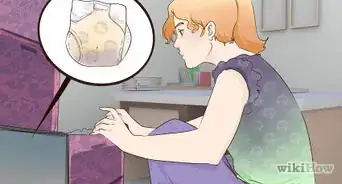
4Identify the status of whether or not the wearer's diaper needs changing.Advertisement


Part 2: Removal of Old Diaper
-
1Hold onto the wearer's diaper front panel with both of your hands. Keep your hands next to one another near the center of the diaper with a 5-fingered pinching grasp.
-
2Pull the diaper forcibly outward. You should hear a ripping sound. At this point, this sound is normal.This sound will later become a sound you don't want to hear, but for now, the ripping sound is A-Okay!).[2]
-
3Let go of the diaper, when the diaper is laying flat in front of the wearer on the surface of the changing area.Advertisement


Part 3: Transition
-
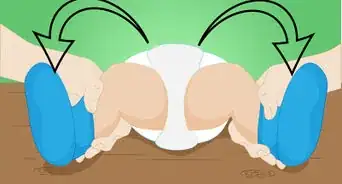
1Lift the wearer's legs with the ankle-hold technique, or if the wearer is capable of doing this by themselves, ask them to lift only their rear-end up and off of the diaper-changing surface. You can't bring the feet up as far as when the wearer was when they were children, but if you can get them up more than a few inches, it's okay.
- If you can't bring them up far enough, you may need to roll them over.
-
2Wipe their genital area with a bathroom wipe or toilet paper, or even a soft paper towel or bathroom washcloth.
-
3Continue holding onto the wearer's legs as you slide (with your other hand), the diaper out) from underneath the wearer.
-
4Lower the wearer's feet down onto the changing surface again, when the old diaper has been fully placed to the wearer's one side.
-
5Set this old diaper to the side, as the caregiver will be cleaning up the mess a bit later. No need to complete that step now.
-
6Ask the wearer to stand up on their feet. If you other problems require you to not stand up, you may help guide the pull-up styled adult diaper, over the adults body, much like the method you used when you changed the last pull up diaper on other toddler/kids, as you'll be found hanging your feet over the edge of the changing surface's outer side and sliding the diaper up into position.Advertisement


Part 4: Replacement with New Diaper
-
1Insert one of the wearer's legs into one of the foot holes of the diaper.
-
2Repeat the previous step by substituting the opposite leg for the one you previously used, into the other hole of the diaper.
-
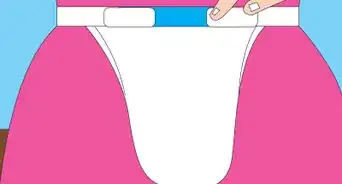
3Pull up the pant just like any other pair of underwear.
- Make sure the taller side is facing the wearer's rear-end as you pull up the diaper. If you realize that this is not the case after pulling the pant all the way up, you won't need a new diaper; just pull the pant all the way downwards, step out of the diaper, turn the diaper around, and step back into this pant and re-apply.
Advertisement


Method 2
Method 2 of 2:Standing
Method 2
Part One: Preparation
-
1Ask the wearer to stand up or lean against a wall. The solid wall must be able to hold the diaper as you are applying it on the wearer.
-
2Unruffle the static cling of the new disposable pull-up diaper. Take it out of the package and un-ruffle the static cling from the siderails of the diaper's containment zone.Advertisement


Part Two: Removal of Old Diaper
-
1Remove the old diaper from the wearer's body. It really doesn't matter if the old diaper rips by its tapes or not at this point. Pull the diaper tapes off from the front of the old diaper, in any way possible. Rip it off the person's body, if needed.
-
2Step forward for a second, while not holding onto the old diaper. It will fall off of the wearer. If the wearer would like, you may hold the diaper on the outside down near the crotch of their diaper, and let it drop. After it has dropped to about knee-length height, you may pull the diaper gently out from under them.
-
3Wipe the wearer to ensure they are clean and make sure they are dry before applying the new diaper.Advertisement


Part Three: Transition
-
1Grab a new diaper and place it up against the same wall from which you used to remove the old diaper. Make sure it is propped up against the wall, so that the back of the pant is shown to be on top of the front, and so that only the outer plastic isn't seen.
- Don't allow the wearer to step backward quite yet. The adjustment of the diaper to the wall is a critical step in getting just the right fit of the diaper to the wearer.
- Make sure the pant is hanging freely.
- Allow a caregiver to assist if one is available.
-
2Place a clean diaper in front of the wearer on the floor and open it so it's easy to step into. The placement doesn't have to be perfect, but it can help better acquaint the wearer to the placement of their new diaper.
- Locate the back of the pant with the tag-like icon/strip mentioning the back of the pant. Notice that many adult disposable diapers will have a tag-like icon or strip that will indicate which portion of the pant is the back of the pant.
Advertisement


Part Four: Replacement with New Diaper
-
1Have the wearer step into both of the foot-sized holes in one of the sides of the garment. But don't pull the pant up the person's legs just yet.
- If you need to, you can pull the diaper up a little to help steady it, but pulling it up shouldn't be needed often and too much so go easy on this.
-
2Pull the diaper up just a bit using both hands in a synchronous form. The caretaker might have to pull the diaper up about an additional two to three inches from the default position, to ensure they can properly see the effective area of the diaper's strip that might be facing them.[3]
- Hold both sides of the diaper firmly onto the wearer's body as you pull them up the person's body, the remainder of the way.
-
3Make some final adjustments to the diaper's containment zone if you see the diaper is not quite situated correctly or the diaper's side ruffles near the zone aren't correctly situated on the wearer's body. If you don't do this, it can cause the diaper's chemicals to not "activate" if and when the wearer urinates into them (and thereby will allow the water to flow out of the diaper and onto the surrounding surfaces and that can cause a big mess).
- To prevent leakage in the diaper, always remember to unruffle the sides of the diaper using one of your hands' thumbs and pinkies, as you push the side ruffles outward a bit (no matter what type of diaper you wear (whether it be pull-up style or not)).
Advertisement


Warnings
- Be sure to make an appointment with a urologist or physician to get a diagnosis of what you can do to seek treatment (if needed). Your diagnosis will help you select the best possible protective undergarment and solution that will fit your needs. Don't skip your appointments. Always be on time.Thanks!
- Bladder leakage of only a few drops is normal! Don't always assume that if you leak anything while wearing underpants that it will make you think that you have just become an incontinent person and that you must wear disposable diapers now! Any more than that, and you can be considered incontinent.[4]Thanks!
- No matter what type of removal and changing style you must use most often, never flush an adult disposable diaper (or any diaper that is neither used nor clean) into any toilet. Major damage to the sewer/septic line may occur, as it will become lodged into the toilet's line. The pressure of the new water will build up and may cause the pipes from the toilet to burst!
- Any type of diaper doesn't naturally disintegrate. If the septic/sewer line company doesn't spot the diaper, it won't disintegrate and may clog this line up very quickly.
Thanks!
Advertisement
Things You'll Need
- Soiled person wearing the diaper
- Pull-up style disposable adult diaper
- baby wipes or adult toilet wipes
- Diaper rash ointment/cream or a Zinc Oxide-based cream/ointment or A & D Ointment (optional, only if needed)


-Step-12-Version-2.webp)
References
- ↑ https://www.parentgiving.com/elder-care/change-soiled-adult-diapers/
- ↑ http://www.shieldhealthcare.com/community/caregivers/2017/06/01/how-to-remove-an-adult-diaper/
- ↑ https://youtu.be/hdo1a-GwZ2k
- ↑ https://www.webmd.com/urinary-incontinence-oab/womens-guide/bladder-control-menopause#1
- https://www.youtube.com/watch?v=NMlw5dBk9LE
- https://www.youtube.com/watch?v=1S5zawjCcQQ
About This Article
Advertisement