This article was co-authored by Amy Harrison, a trusted member of wikiHow's volunteer community. Amy Harrison has over five years of experience working directly with poultry. She has worked on a rural chicken farm built around marketing free-range eggs, where she managed the care for the poultry year-round. She has experience breeding chickens and quail, caring for newborn poultry, handling their health issues, and managing their dietary needs.
Learn more...
Common quail are a species of quail native to wild Asia. They are also commonly sold as aviary birds, game, or poultry at pet stores and farm stops. Quail are low maintenance and relatively inexpensive to house and feed. If you're interested in raising these small birds, this article will provide you with the basics of caring for Asian common quail.
Steps
Part 1
Part 1 of 3:Setting Up a Cage
-
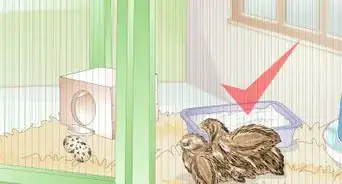
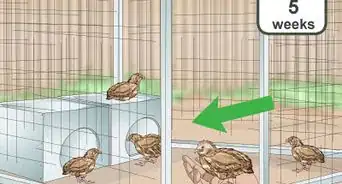
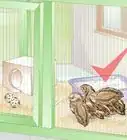
1Purchase adequate housing. Common quail can live in most forms of shelter, including aviaries, hutches, guinea pig or rabbit cages, and/or chicken coops. Asian common quail are roughly twice the size as button quail, so you won't have to necessarily be concerned about how large the gaps are in the wiring of the cage unless you plan on breeding.
- Domestic quail do not require much space, as long as they can freely move and eat. As a rule of thumb, you'll need at least 1 square foot of floor space per bird.
- You can house quails outdoors or indoors. If you choose to keep them inside, be aware of any ammonia build up, as you may have to clean their cage more often.
Warning: Quail produce high amounts of ammonia. It's important to ensure adequate ventilation to prevent respiratory issues.[1]
-
2Reinforce their home. Predators are a common problem for outdoor quail, including rats, snakes, raccoons, and outdoor cats. Such animals are capable of entering your housing set-up if it isn't secured properly.
- Regularly check your quail' enclosure for cracks, weakened material, holes, and digging. Block off gaps and repair damaged material using strong resources.
- Purchase an enclosure made of sturdy material. Bury fencing deep into the ground to prevent predators from digging underneath.
Advertisement -
3Choose the right bedding. Shredded paper, hay, and wood shavings are preferable materials due to their absorbency and ability to contain odours. Be aware that some wood shavings are dangerous to animals and can cause upper respiratory infections. Stay clear from cedar and pine shavings, as these contain aromatic hydrocarbons that can cause potential health issues.
- Aspen is the safest choice of wood shavings, as they don't possess aromatic hydrocarbons and are dust-free. Otherwise, CareFresh is a popular renowned pet bedding made of wood fibre pulp and paper waste. It's free from nasty chemicals, dust, aromatic hydrocarbons, and ink.
-
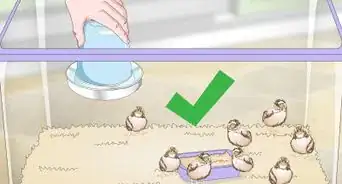
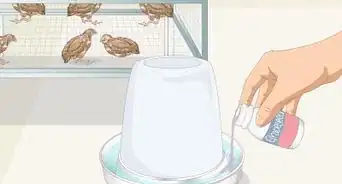
4Acquire a feeder and drinker. Feeder and drinkers are different to water and feed bowls, as they hold more food/liquid and refill on their own, meaning you won't have to feed your quail as often. You can purchase a poultry feeder/drinker from a farm store or pet shop. However, since quail are much smaller than chickens, you will have to purchase a chick feeder/drinker to ensure they are low enough for your quail to access.
- You can also purchase a food and water dish instead, but your quail are more prone to getting dirt into the water and food.
-
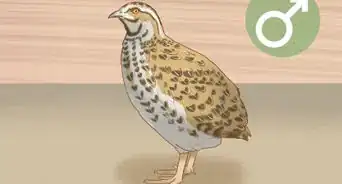
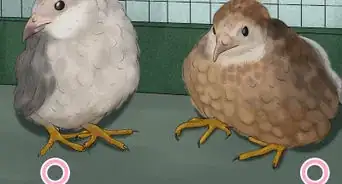
5House your quail in groups of three. Ideally, you should have a trio of female hens, otherwise you can have one male to every two to three female. Males are very territorial when it comes to space and other females within the flock, so it's important not to intermix them with other males.
- Quail are sociable birds that do best in group-settings. You should never intend on keeping quail on their own.
Advertisement


Part 2
Part 2 of 3:Feeding Your Quail
-
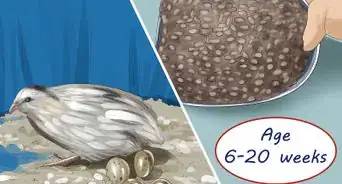
1Purchase a high-protein game bird mix. Quail require plenty of nutrition and protein to grow at a healthy rate. Check the labels to know exactly what you are feeding your quail. Look for at least 20% protein in the quail feed. If you cannot find any game-bird feed, you can alternatively purchase a turkey chick crumble.
-
2Supplement your quail' diet with grit and calcium. Grit is especially important for indoor birds as it helps them digest their food. Calcium supplements, such as crushed egg shells, encourage healthy egg production.
-
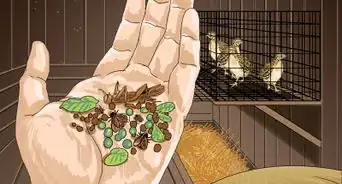
3Feed your quail vegetables and table scraps. In a similar way to chickens, quail can digest quite an array of food, from pasta, rice, and noodles, to vegetables, fruit and cooked eggs.[2] Of course there are some things they can't eat, such as avocado, tomato stems, raw potato, and sweet/salty foods, but generally this list is mild.
-
4Provide fresh and clean water at all times. Replenish your quail' drinker routinely each day or whenever necessary to prevent bacteria build-up. 5-6 quail will require 1 gallon of water a day.Advertisement


Part 3
Part 3 of 3:Providing Routine Care
-
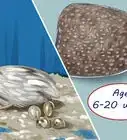
1Collect eggs every day. In captivity, quail rarely sit on their eggs, so if left in the cage they could develop a habit of eating them. Similar to other poultry birds, quail hens lay 4-5 eggs a week, which must be collected every other day to prevent them from spoiling.
-
2Clean your quail enclosure at least once every week. Quail produce a high amount of ammonia that can lead to respiratory issues if left to build up. It's advised to thoroughly clean your quail enclosure once a week and spot-clean every few days.
- Begin by emptying the contents from the cage, such as the feeder, drinker, nesting boxes, and additional items.
- Dispose of the bedding accordingly and sweep down the base of the floor.
- Spray the enclosure and base with one part vinegar to nine parts water. Rinse the cage thoroughly and allow to dry.
- Disinfect accessories with a pet-friendly disinfectant or vinegar solution.
- Add fresh bedding and place the contents back inside of the cage.
-
3Provide dirt or sand for your quail to dustbathe with. Quail enjoy bathing themselves in dry dirt, and it allows them to prevent mite/lice infestation. Fill a shallow but wide dish with dirt or sand and place it in a dry spot in their cage.
-
4Check on your quail regularly. Quail require regular upkeep and maintenance checks. Replenish your quail' food and water sources and monitor their behaviour to watch for any abnormality.
- Look for signs of sluggishness, ruffled coat, huddling, low alertness, decreased eating and drinking, and reduced egg production, which are common signs of illness in quail.
-
5Socialise with your quail. Taming your quail will take some patience due to their skittish nature, however, they are generally easy to handle. Visit your quail routinely and socialise with them to allow them to acclimate to your presence. Try hand-feeding them and gently, but firmly, holding them until they become use to you.[3]
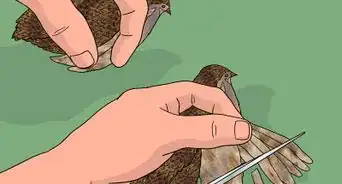
- When you are handling your quail, check for signs of health issues or illness. Examine their eyes, their feet, and under their wings.[4]
Advertisement


Warnings
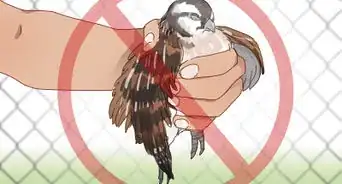
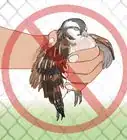
- Avoid grabbing your quail from their cage unnecessarily, as they become scared easily an are capable of taking sudden flight.Thanks!
- Never keep two males inside the same cage as they will fight and potentially kill each other.Thanks!
- Never raise quail with chickens, as the chickens will harm the quail.Thanks!
- Avoid giving your quail city water, as they often contain high amounts of chlorine.Thanks!