This article was co-authored by wikiHow staff writer, Hannah Madden. Hannah Madden is a writer, editor, and artist currently living in Portland, Oregon. In 2018, she graduated from Portland State University with a B.S. in Environmental Studies. Hannah enjoys writing articles about conservation, sustainability, and eco-friendly products. When she isn’t writing, you can find Hannah working on hand embroidery projects and listening to music.
There are 9 references cited in this article, which can be found at the bottom of the page.
This article has been viewed 10,804 times.
Learn more...
If you’re dealing with a few gray hairs (or a whole head of them), that’s okay! Going gray is natural, and it’s a normal part of aging. While you may not be able to reverse gray hair entirely, there are some ways you may be able to prevent it. We’ve answered some of your common questions so you can learn more about going gray.
Steps
Question 1
Question 1 of 5:Can graying hair be reversed?
-
1It can’t be reversed, but it can be slowed. Unless you want to dye your hair, what’s already gray is going to stay gray. However, there are a few things you can do to slow down the process. Keep in mind, though, that the biggest factor that influences gray hair is genetics, so different people will have different levels of success.[1]
- Most people start to get gray hair in their 30s or 40s, with a few people even going gray in their 20s or teens.
Advertisement

Question 2
Question 2 of 5:What vitamins help with gray hair?
-
1
-
2Copper might play a role. Copper is an essential nutrient in your body, and it helps produce melanin, or the pigment that colors your hair.[4] Try to eat peanuts, almonds, lentils, beef liver, crabmeat, and white mushrooms to ensure you’re getting enough copper in your daily diet.[5]
- Experts recommend getting around 900 mcg of copper every day.
-
3More research is needed about zinc and iron. Although some studies suggest that those nutrients can play a role in graying hair, they aren’t all conclusive.[6] However, it can’t hurt to double check that you’re getting enough zinc and iron in your diet. Aim for 8 to 11 mg of zinc every day.[7] Try to get 8.7 mg of iron per day if you’re a man, and 14.8 mg of iron per day if you’re a woman.[8]Advertisement


Question 3
Question 3 of 5:Can you naturally reverse gray hair?
-
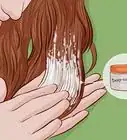
1No, but you may be able to prevent it with lotus flower oil. Some studies show that the acids in lotus flower oil helped hair produce more melanin, which could be helpful in gray hair prevention. While these studies haven’t been reproduced, it won’t hurt you to add lotus flower oil into your hair care routine. You can find lotus flower oil at most drug stores.[9]
- Try putting lotus flower oil on your hair once a day. Remember that it won’t help reverse your gray hair, but it may slow down the graying of hairs that still have color.

Question 4
Question 4 of 5:Does smoking cause gray hair?
-
1One study says that it does. In 2013, scientists discovered that people who smoked cigarettes went gray around 3 years before their non-smoking counterparts. While these results haven’t been reproduced in other studies, if you do smoke, it won’t hurt to quit.[10]
- Smoking may cause chemical changes to your body that damage the melanin-producing cells in your hair.
Advertisement

Question 5
Question 5 of 5:Can stress cause gray hair?
-
1Constant, long-term stress may contribute to gray hair. Some studies show that your stress levels may damage the chemicals that produce melanin in your hair. However, more research is needed, so these studies aren’t conclusive.[11]
- If you’re feeling stressed and you’d like to lower your stress levels, try exercising daily, practicing meditation, and getting at least 8 hours of sleep every night.
- Some studies suggest that oxidative stress, or breathing in toxins like pollutants and heavy metals over a long period of time, may also contribute to gray hair.[12]




References
- ↑ https://health.clevelandclinic.org/why-hair-turns-gray/
- ↑ https://www.health.harvard.edu/blog/hair-turn-gray-2017091812226
- ↑ https://ods.od.nih.gov/factsheets/VitaminB12-Consumer/
- ↑ https://pubmed.ncbi.nlm.nih.gov/21979243/
- ↑ https://lpi.oregonstate.edu/mic/minerals/copper
- ↑ https://pubmed.ncbi.nlm.nih.gov/21979243/
- ↑ https://www.hsph.harvard.edu/nutritionsource/zinc/
- ↑ https://www.nhs.uk/conditions/vitamins-and-minerals/iron/
- ↑ https://pubmed.ncbi.nlm.nih.gov/19322028/
About This Article