This article was co-authored by Jaimie Scott. Jaimie Scott has been training dog owners as the Owner of Jaimie Scott Dog Training in Sacramento, California for the past 15 years. Jaimie meets clients for 1-on-1 training, group classes (owners only, no dogs), as well as live video classes. Jaimie has published videos, blog articles, and eBooks to share tips for training and his personalized insight into dog behavior. With a focus on training the owners, Jaimie believes that dogs need to know who’s in control at any given time in order to feel secure and be happy. Jaimie holds a BS in Mathematics and Computer Science from Pacific University.
There are 9 references cited in this article, which can be found at the bottom of the page.
This article has been viewed 68,826 times.
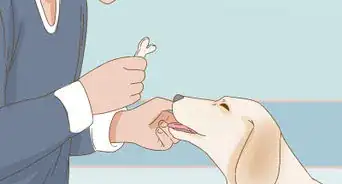
When your dog is nervous or anxious, you can calm it down naturally, without the use of any medications or other artificial means. In general, dogs are happy and can feel calm and relaxed when they are treated well, fed and watered frequently, kept in a stress-free environment, and receive plenty of exercise. Once you have accomplished those basic steps, you can learn to calm your dog down using gentle herbal treatments and other natural techniques, including socializing your dog so it feels comfortable in public settings.
Steps
Method 1
Method 1 of 3:Calming a Dog with Herbal Treatments
-
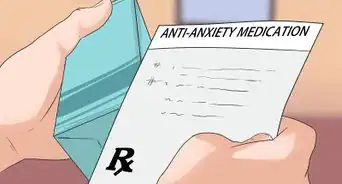
1Give the dog an herbal supplement orally. Lots of all-natural herbal supplements are available commercially, whether in pill form or in tinctures. You can give them directly to your dog or mix them into a regular meal. Many of the same herbal supplements that have a soothing effect on humans will work on dogs as well.[1] However, consult your veterinarian before giving your dog herbal supplements for proper dosage instructions and any warnings.
- Often, mixed-herb supplements are sold with names like “Dog Calm” or other brands, and will involve some mixture of St. John’s wort and valerian. Also look for products which include calming ingredients such as oats, skullcap, and echinacea.[2]
-
2Administer valerian to calm an excitable dog. This is a sedative herb that is effective in treating excitability and dog anxiety.[3] Generally, you can buy valerian in dried or capsule form and give it to the dog orally, wrapped in a piece of cheese, or with a treat. Treat dogs before situations during which they’re likely to become excited.[4]
- Apply herbal tinctures or dried herb in an amount between 0.25 and 0.5 milliliters for every 30 pounds that your dog weighs. Administer 2-3 times a day over the course of several days.
-
3Calm your dog with other herbal oils. Oil mixtures often include the herb skullcap, which is used for similar calming purposes.[5] Most commercial herbal mixtures involve some combination of ingredients, and they’re much cheaper while still being an effective way to calm dogs.
- Passionflower has calming properties, but isn’t a sedative. It is effective in calming frightened animals quite quickly, and is good for travel and other stressful situations during which the dog is likely to get excited. Look for passionflower in pill or essential oil form at your local pet-supply or natural goods store.
-
4Use a topical ointment. A few drops of all-natural essential oils on the back of the neck can help to calm dogs. Other people like applying a bit of oil to the bare skin inside the ear, but not in the ear canal itself. A variety of different oils and mixtures are used to calm down excitable dogs. Look for ointments that include sedative herbs including red clover, dandelion root, hawthorn, and echinacea.[6]
- Your local pet-supply store should have useful ointment options, made up of a mixture of different natural oils, which are excellent for calming any animal.[7]
- Lavender oil is commonly used for calming purposes, since it has aromatic therapeutic properties common to people and pets.
-
5Use a pheromone diffuser. A plug-in diffuser or collar pheromone diffuser releases a scent that’s undetectable to the human nose, but which the powerful nose of the dog is able to pick up. These pheromones help to make the dog feel “mothered” and calm by releasing chemicals similar to those produced by lactating females.[8]
- Effective brands of pheromone diffusers will encourage calmness, and should be available at your local pet store in plug-in or spray delivery systems.


Method 2
Method 2 of 3:Providing a Calm Environment for Your Dog
-
1Create a safe space for your dog. Give your dog a quiet, safe place to retreat to. Place soft blankets and chew toys in a bedroom corner, a closet, or a covered kennel. Encourage your dog to go there when feeling anxious or afraid. Check on the dog periodically, but keep quiet and leave the animal alone as much as possible.
- This type of safe space will let the dog retreat and calm down when it is stressed or afraid.
-
2Take the dog for more frequent walks. If your dog won’t settle down, or seems anxious and you can’t figure out why, it could be a sign that the animal isn’t being taken outside frequently enough and is not receiving enough exercise.[9] Dogs, especially young puppies, should be allowed to run regularly, at least 3-4 times a day.
- If your dog is panting loudly or won’t stop bothering you, it might be sick or need to go out urgently. Until you figure out your specific dog’s typical behavior, assume that any excited behavior may indicate a need to go outside and go to the bathroom. Unless you want a mess on the floor, take the dog outside promptly.
-
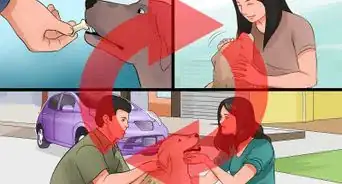
3Socialize your dog properly. It’s normal for dogs to get excitable when meeting new people or new dogs. But if your dog doesn’t calm down or is hyperactive around new people and dogs, it is a sign that you need to start increasing your dog’s socialization as soon as possible. Let the dog meet as many new people and dogs as possible on a regular basis.
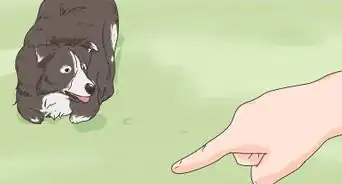
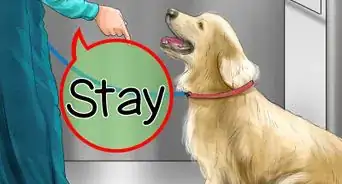
- Take your dogs for walks and ask permission to greet other dogs that you meet. When the dog behaves, reward it with a treat. Use clear verbal commands and keep the dog under control.
-
4Keep your house quiet. Loud noises, shouting, and music can be very stressful for animals, especially dogs. Dogs have very sensitive hearing, so music at a moderate level for you may be stress-inducing for a sensitive dog. Try to keep your space quiet, especially if you have a dog that gets nervous or excited easily.
-
5Buy the dog a thunder-shirt. Thunder-shirts are like snug blankets that wrap around your dog. These are commonly used during thunderstorms and during travel to calm anxious pets.[12] They’re commonly available at pet stores. If you prefer to make your own, you can fashion one out of a snug t-shirt for medium to large dogs. Cut extra room into the neck hole so the animal’s neck isn’t constricted.
- There isn’t much definitive evidence to show that these actually work. Some dog owners swear by it while others have found it useless. The effectiveness of a thunder-shirt may depend on the personality of each specific dog.


Method 3
Method 3 of 3:Interacting with Your Dog to Calm It
-
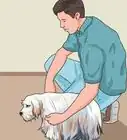
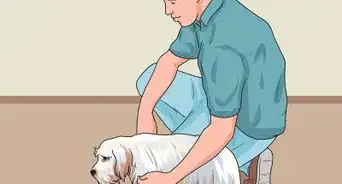
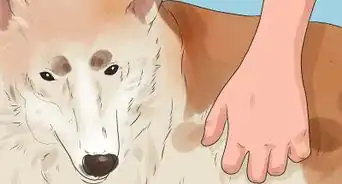
1Pet and massage your dog more. It’s important to be affectionate and kind to your animal, and sometimes simply petting your dog can help reduce lots of stress and anxiety. You can also gently massage your dog to calm it—focus on massaging your dog’s pressure points: the feet, ears, and top of its head. This massage will sooth and calm your dog, much like people are soothed by a relaxing massage.[13]
- Dogs are social animals and thrive on contact and affection. Make sure to spend at least 30 minutes each day—preferably more—petting your dog, playing with it, and spending time with the animal.
- Be calm when you’re around your dog. Speak in a quiet and soothing voice, and pet the dog very calmly and slowly.
-
2Spend more time around your dog. Lots of different things can stress out a dog. If you’re traveling, or frequently absent, dogs can become anxious. Many breeds of dogs need to be reassured by humans regularly, or they’ll become stressed out.
- Your dog will look to you for behavioral cues: be calm and assertive in situations the dog finds stressful. Your own nervous moods can transfer to your dog, so stay calm and your dog will mirror that mood.[14]
-
3Change the dog’s diet. Like humans, dogs are greatly affected by their diets, and their moods can suffer as a result of poor nutrition. Commercial dog treats often contain additives and ingredients that can overstimulate a dogs system. Buy natural treats or make your own. If you choose to make your own treats, you can use oats, which give energy but through complex carbs that are slowly released.
- Don’t’ feed dogs from the table. Dogs need a balanced diet, rich in protein, complex carbs, and vitamins, just like you do. Don’t feed them on treats and bones.
-
4Take the dog to the vet if it exhibits signs of illness. If a dog is panting or drooling heavily, or eating lots of grass, this might be a sign that it’s sick or otherwise injured. Dogs that are ill will often struggle to sleep, and may pant heavily in the night. Make sure to pay close attention, so you don’t interpret signs of illness as regular nervousness.
- Vomiting or diarrhea is common in dogs, and might just be a sign of nervousness, or that you need to change the dog’s diet. If it persists for more than two days, call your vet.


Community Q&A
Did you know you can get expert answers for this article?
Unlock expert answers by supporting wikiHow
-
QuestionCan I train a dog to be calm?
 Jaimie ScottJaimie Scott has been training dog owners as the Owner of Jaimie Scott Dog Training in Sacramento, California for the past 15 years. Jaimie meets clients for 1-on-1 training, group classes (owners only, no dogs), as well as live video classes. Jaimie has published videos, blog articles, and eBooks to share tips for training and his personalized insight into dog behavior. With a focus on training the owners, Jaimie believes that dogs need to know who’s in control at any given time in order to feel secure and be happy. Jaimie holds a BS in Mathematics and Computer Science from Pacific University.
Dog Owner TrainerA lot of my clients come to me and ask if they can train their dog to be calm because it's overly excited. Unfortunately, you don't train dogs to be calm. You give them other outlets for the energy they're putting into the behavior you don't like. If they have a lot of pent-up energy or they don't have adequate outlets for all of that energy, it may not be reasonable to expect them to change. You might be asking your dog to do something it's not capable of doing.
Support wikiHow by unlocking this expert answer.
-
QuestionHow can I help a 6-year-old dog, who spent her whole life so far in a cage, relax and trust us?
 Community AnswerThis process will take time, and you may need to involve a professional trainer. Give your dog a safe space in your house where it can go and not be bothered by people or other animals, and let the dog slowly acclimate to you and other members of your family. Move slowly and deliberately around the dog, and let it sniff your hands before petting it.
 -
QuestionWhy does my dog go wild with barking when my husband leaves the house?
 Community AnswerIt's anxiety. Try having your husband talk to the dog in a calm, soothing voice for a few minutes before he leaves so your dog is in a more relaxed state.
 -
QuestionMy dog is panting very heavily because of fireworks. What can I do?Community AnswerDogs don`t like fireworks because fireworks are loud and hurt their ears. You should put your dog inside the house in a room where they won't be able to hear the fireworks as intensely.
-
QuestionMy dog barks almost all day for everyone passing by?
 Community AnswerThis may be a sign that your dog needs more exercise and has pent-up energy. Take your dog walking at least twice a day, or let it run in a field or backyard for an hour or so. If this doesn't help, try socializing your dog more so that new people are no longer unexpected or surprising to it. You may need to take your dog to a professional trainer for help with this issue.
 -
QuestionMy dog is scared of the noise coming from mice under the floors. How can I help him?Community AnswerWhenever he shows he's scared, give him a treat to show him everything's fine. Set up some mousetraps (where your dog can't reach them) where you think the mice are.
-
QuestionMy dog is social but suffers terrible social anxiety if left alone. What should I do?
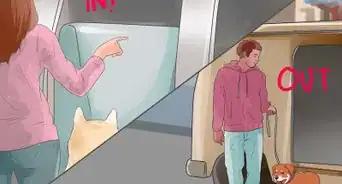
 Isabel WillemsCommunity AnswerBuy a large crate for your dog. This will become your dog's "safe space." Never crawl inside of it or drag your dog out of it when she is inside. If there is anything that comforts your dog (besides you, of course), then place it in the kennel, along with a blanket for her to lie on. If you think that she would try to eat anything in the crate, however, and would be in danger of choking, keep it bare. Whenever you leave, cage her in the kennel. At first it will seem cruel, but eventually she'll run into the kennel willingly whenever you put on your shoes and grab your car keys!




References
- ↑ http://www.natural-dog-health-remedies.com/dog-anxiety.html
- ↑ http://www.natural-dog-health-remedies.com/dog-anxiety.html
- ↑ http://www.takingcharge.csh.umn.edu/common-questions/how-can-i-calm-my-pet-when-going-veterinarian
- ↑ https://www.petmd.com/dog/wellness/valerian-root-dogs-does-it-work
- ↑ http://www.natural-dog-health-remedies.com/dog-anxiety.html
- ↑ http://www.takingcharge.csh.umn.edu/common-questions/how-can-i-calm-my-pet-when-going-veterinarian
- ↑ http://www.mnn.com/family/pets/stories/7-natural-remedies-for-anxious-dogs
- ↑ http://www.mnn.com/family/pets/stories/7-natural-remedies-for-anxious-dogs
- ↑ Jaimie Scott. Dog Trainer. Expert Interview. 16 June 2020.
- ↑ http://www.petmd.com/dog/slideshows/8-ways-calm-your-pet-naturally
- ↑ http://www.cesarsway.com/dog-behavior/anxiety/Dealing-with-Separation-Anxiety
- ↑ http://www.mnn.com/family/pets/stories/7-natural-remedies-for-anxious-dogs
- ↑ http://www.petmd.com/dog/slideshows/8-ways-calm-your-pet-naturally
- ↑ https://www.cesarsway.com/dog-behavior/hyperactivity-overexcitement/5-tips-for-calming-a-hyperactive-dog
- ↑ http://www.aspca.org/pet-care/animal-poison-control/toxic-and-non-toxic-plants/chamomile
About This Article