This article was co-authored by wikiHow Staff. Our trained team of editors and researchers validate articles for accuracy and comprehensiveness. wikiHow's Content Management Team carefully monitors the work from our editorial staff to ensure that each article is backed by trusted research and meets our high quality standards.
There are 9 references cited in this article, which can be found at the bottom of the page.
This article has been viewed 54,529 times.
Learn more...
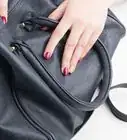
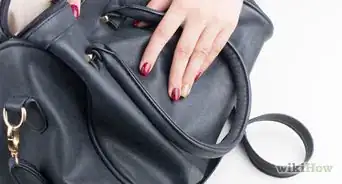
Faux leather is a synthetic polyurethane fabric, which is created to mimic genuine leather. Faux leather is commonly used for upholstery, bags, jackets, and other accessories that get a lot of use. Faux leather can be an inexpensive, fashionable, and vegan-friendly alternative to real leather.
Steps
Method 1
Method 1 of 3:Selecting a High-Quality Faux Leather Item
-
1Decide to purchase a faux leather item. Leather is beautiful and fashionable for both furniture and clothing. There are several benefits to choosing faux leather for your body or home.[1]
- Faux leather is less expensive.
- Faux leather is easier to maintain.
- Faux leather is vegan-friendly.
- Some faux leather items are made to be indistinguishable from the genuine article.
- Other faux leather items play up their artificiality for a bold and funky effect.
- Some negative aspects include: faux leather is not breathable, it doesn’t look quite as nice, it does not age as well as real leather, it may not be biodegradable.
-
2Look for good texture. When choosing a quality faux leather item, the first feature you should look for is texture. Genuine leather has a grainy texture, and so do high-quality fakes. Whether you are going for a realistic or more outlandish look, avoid an overly smooth surface. This can be indicative of lower quality.[2]
-
3Choose your colors. When it comes to faux leather items, the sky is the limit regarding color. Bright colors, funky patterns, imitation animal skin looks, and natural blacks and brown are all available in faux items.[3]
- Basic black or brown faux leathers will be more likely to pass as the real thing.
- Bright bold colors, funky patterns, or metallic finishes will give off a dramatic effect.[4]
-
4Compare the level of “sheen.” Faux leather items will range from very shiny to very matte, and everywhere in between.[5] To choose a real-looking faux item, select something with a little less sheen. True leather is not shiny, but matte. Alternatively, go for a trendy look by choosing high-gloss patent leather.
-
5Select items with mixed materials. Whether you are going for realistic or bold appeal, items that mix faux leather with other materials (like wool or cotton) can be great choices. Clothing items (like jackets with faux leather patches) or furniture pieces that integrate multiple materials give off an organic feel. The contrast between materials often gives the faux leather a genuine look.[6]


Method 2
Method 2 of 3:Purchasing Faux Leather by the Yard
-
1Decide what type of faux leather you would like. If you are choosing your leather based on a certain type of real leather, then try to decide the color scheme and pattern you would like. Research examples of names, colors, and patterns.
- Faux leather fabric is available in styles that mimic a number of animal hides, such as ostrich, reptile, calf, bison, gator, or pigskin.
- Patterns, such as tooling, are common to faux leather fabric. Choose floral designs, paisley designs, cowboy motifs, symbol designs or a woven look as alternative textures.
- Faux leather also comes in a few different finishes. You can choose shiny, pearl or metallic finishes. Micro-suede is a type of faux leather that is prized for its finish.
-
2Determine the amount of faux leather you need. Before you purchase faux leather, you will need figure out exactly how much you will need. This will enable you to accurately price your project in advance. An average sofa will require around 16 yards (15 m), while a typical loveseat will need approximately 11.
- As a precaution, always purchase just a little bit more than the minimum needed. [7]
-
3Visit a fabric store. Depending on the particular store, craft or fabric store may have anywhere from 5 to 20 different faux leather options, available by the yard. A craft or fabric store is the best choice if you want to touch and examine faux leather options before buying. Shop around at a few different stores to find the best product and price.
-
4Shop online. Shopping online will give you the widest variety of options in terms of both selection and quantity. The major disadvantage of buying online is that you cannot actually see or touch the product. Additionally, depending on the size of your order, the shipping costs may be high.
- An online upholstery fabric outlet will have large quantities of upholstery fabric in different colors, patterns, and finishes.
- Search for eco-friendly faux leather options.
-
5Shop at interior design outlets or conferences. If you are an interior decorator or designer, you may qualify for discounts from certain retailers. Attend an interior designers conference or search for online retailers that offer discounts for designers. Speak to other designers to ascertain tips and industry bargains.[8]


Method 3
Method 3 of 3:Distinguishing Faux Leather from Real Leather
-
1Read the label. Though it may seem obvious, reading the label on an item is a sure fire way to identify the type of leather. Products made of real leather will proudly say so on the label. If the label says, "vinyl" or "manmade materials," the item is faux.[9]
-
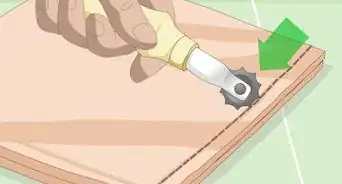
2Inspect the edge. Examine the edges of the furniture or garment. Look at any place where the material has been sewn. Fake leather products will have a smooth, pristine edge that can feel almost plastic. Genuine leather will have a rougher, imperfect look around the edges.[10]
-
3Examine pores. Take a close look at the pores (or small dots) of the fabric. You may have to look closely to see them. Faux leather will have pores in a perfect, consistent pattern. Real leather will have irregular, sporadically placed pores.
-
4Trust your touch. Genuine leather can feel coarse, smooth, or somewhere in-between. Real leather is also flexible and soft. If the product in question feels very smooth or feels like plastic, it is probably faux leather. Synthetic leather can also be a bit stretchy.[11]
- Familiarize yourself with leather textures by visiting a reputable leather store and getting a feel for both products.
-
5Smell the item. Real leather has a very distinct smell. It really cannot by replicated by faux materials.[12] Real leather smells earthy. Faux leather may have no odor, or smell a bit like plastic.
- Once again, you can familiarize yourself by visiting a reputable leather store and getting a smell of both kinds of products.


Community Q&A
-
QuestionWhat is the best brown faux leather to reupholster kitchen chairs?
 T. ChinsenTop AnswererSelect fabric that feels dense and flexible. This will give the best wear, but may be a little harder to work with. Check out the fabric store's closeout section; you may find fabric at less than half the price of the regular priced product on the floor. Look for a coupon for the store to save on the regular price if you need a specific color of fabric.





References
- ↑ https://www.wilsonsleather.com/category/news-trends/buying-guides/faux-leather-jackets.do
- ↑ http://www.cosmopolitan.com/style-beauty/fashion/advice/a16112/faux-leather-pieces/
- ↑ http://www.ebay.com/gds/Your-Guide-to-Buying-a-Faux-Leather-Bag-/10000000177748117/g.html
- ↑ http://www.cosmopolitan.com/style-beauty/fashion/advice/a16112/faux-leather-pieces/
- ↑ http://www.ebay.com/gds/Your-Guide-to-Buying-a-Faux-Leather-Bag-/10000000177748117/g.html
- ↑ http://www.cosmopolitan.com/style-beauty/fashion/advice/a16112/faux-leather-pieces/
- ↑ https://www.fabric.com/SitePages/Reupholstery.aspx
- ↑ http://www.hospitalitydesign.com/index.shtml
- ↑ http://www.sofasofa.co.uk/blog/how-to-identify-if-a-sofa-is-made-from-real-leather/
About This Article

If you’re interested in buying a faux leather item, such as a piece of furniture or an article of clothing, start by thinking about the texture you want. High-quality faux leather typically has a grainy or bumpy texture, while lower-quality fakes may be more smooth or shiny. Don’t feel restricted to natural colors, like brown or black—go for pastels, metallic finishes, or even a funky pattern, if you like! However, if you prefer a more realistic look, opt for an item with a neutral color and a matte finish instead of a glossy sheen. For information on how to buy faux leather by the yard or spot the difference between faux leather and the real thing, read on!