X
wikiHow is a “wiki,” similar to Wikipedia, which means that many of our articles are co-written by multiple authors. To create this article, volunteer authors worked to edit and improve it over time.
This article has been viewed 43,002 times.
Learn more...
Have you ever wanted to plant a green roof? Rooftop vegetation improves urban ecology by retaining storm water, helps to reduce peak flow and total runoff volume. It also reduces energy usage by keeping your home both warmer and cooler and can muffle noise. When properly constructed, vegetative roofs actually contribute to improving storm water runoff quality.
Steps
Method 1
Method 1 of 6:Ensuring the Roof Can Handle Plant Life
Method 1
-
1Consult with a structural engineer to ensure that the joist can handle the changed use for the roof. You must determine from the outset whether the added weight of the plants will be something the roof can withstand. You should also find out whether there are any council or municipal vegetative roof restrictions.
- With vegetation and full saturation, expect the roof to weigh another 20 pounds per square foot of additional weight.[1]
-
2Check the slope. The roof will require an incline to ensure that water runs off naturally and doesn't water log the roof. In general, any roof with a slop of up to 40 degrees is safe to use (providing the previous step's restrictions have been observed.[1]


Method 2
Method 2 of 6:Adding Drainage
Method 2

Method 3
Method 3 of 6:Waterproofing the Roof
Method 3
-
1Choose a waterproof layer to go over the existing roof. This must be laid first and unless you're absolutely certain of what you're doing, it should be fitted by a professional roofer.
-
2Add the water retaining and soil retention layer next. This also serves as a drainage layer. While the materials used will vary depending on your location, typical layers used include pumice, peat, clay, mulch (spray mulch), florist foam, polymers, etc.[1] Ask the roofer for advice.


Method 4
Method 4 of 6:Adding the Growing Medium
Method 4
-
1Use a lightweight growing medium. Topsoil (soil from the garden) is not used for green roofs because it's usually too heavy and tends to become too compacted.
- Use a mixture of organic and inorganic materials. Focus on keeping the elements lightweight but water retaining.
- Roof growing mediums are usually fabricated from variances of primarily expanded shale, perlite, coconut husk, and/or peat moss.


Method 5
Method 5 of 6:Adding the Plants
Method 5
-
1
-
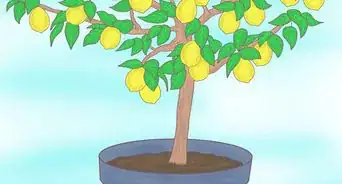
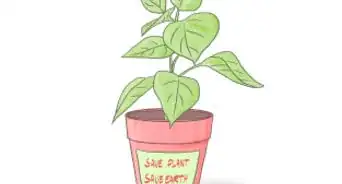
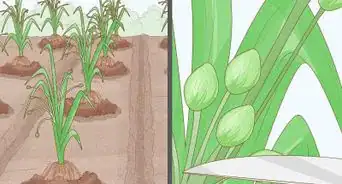
2Buy plants in plug form from a local grower, to reduce upfront costs and increase even roof coverage.
- Reference a zone guide to ensure that the plants you select are locally hardy to the lowest expected minimum temperatures.
-
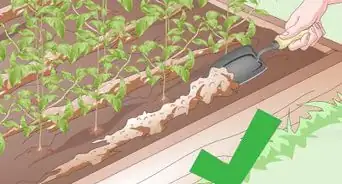
3Add plants with a mind to good spacing. Rooftop plants are added in "plugs".[1]


Method 6
Method 6 of 6:Keeping the Green Roof Watered
Method 6
-
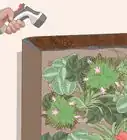
1Water only if needed. Hopefully your heat-tolerant, drought resistant varieties won't clamor for water. While the plants are getting established on the rooftop though, they will probably need more water than for the remainder of their growing life.
- If it's raining, assume that's the watering done for you.
-
2Keep a regular check on drainage. Check blockages quickly and mend them; any backup of water being unable to escape can result in roof landing inside your home.


Warnings
- Before building anything, on any roof, consultation by a structural engineer is mandatory in most jurisdictions, and wise even where it's not required.Thanks!
- Initial installation of a green roof can be quite expensive. But you'll reap the rewards with reduced energy costs, less runoff and a quieter home in little time. Plus, you're doing your bit to absorb some CO2.Thanks!







References
- ↑ 1.01.11.21.3Joshua Piven, This Green House, pp.148-150, (2009), ISBN 978-1-58479-786-9
- Joshua Piven, This Green House, pp.148-150, (2009), ISBN 978-1-58479-786-9
- Berndtsson, J. C., Bengtsson, L., Jinno, K. (2008). First flush effect from vegetated roofs during simulated rain events. Hydrology Research, 39(3), 171-179.
- Bliss, D. J., Neufeld, R. D., Ries, R. J. (2009). Storm water runoff mitigation using a green roof. Environmental Engineering Science, 26, 407-417.
- Sailor, D. J. (2008). A green roof model for building energy simulation programs. Energy and Buildings, 40, 1466-1478.
- Wong, H. W., Chen, Y., Ong, C. L., Sia, A. (2003). Investigation of thermal benefits of rooftop garden in the tropical environment. Building and Environment, 38, 261-270.