This article was medically reviewed by Cristian Macau, DDS and by wikiHow staff writer, Hannah Madden. Dr. Macau is an oral surgeon, periodontist, and aesthetician at Favero Dental Clinic in London. He received his DDS from Carol Davila University of Medicine in 2015.
There are 8 references cited in this article, which can be found at the bottom of the page.
This article has been viewed 437,514 times.
Whether you’re out traveling or you’re stuck at home, running out of toothpaste can be a huge bummer. Fortunately, there are a few ways you can “brush” your teeth even if you don’t have the essentials nearby. Take a look at this list to learn how you can keep your teeth clean for a few days until you can go out to grab some toothpaste again.
Steps
Method 1
Method 1 of 9:Brush with water.
-
1Brushing with water is better than nothing. Run your toothbrush under the sink and vigorously scrub your teeth, tongue, and gums. If you don’t have a toothbrush, simply swish water around your mouth to loosen up plaque and bacteria. This isn’t a great long-term solution, but it can help you out for a night or two.[1]
- Unfortunately, brushing with water probably won’t freshen your breath.
Advertisement

Method 2
Method 2 of 9:Brush with baking soda.
-
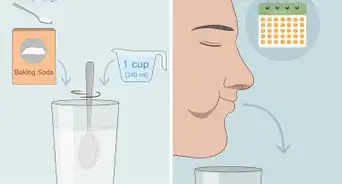
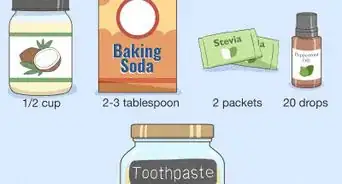
1It’s a mild abrasive that can scrub off plaque and bacteria. Simply sprinkle a bit of baking soda onto your toothpaste, get it wet, then start brushing! It’s not quite as good as regular toothpaste, but it will help freshen your teeth and get rid of any buildup.[2]
- If you don’t have a toothbrush available, just sprinkle the baking soda onto your finger and brush your teeth like that instead.

Method 3
Method 3 of 9:Scrub with sea salt.
-
1It’s another mild abrasive that can get rid of plaque. Add a pinch of sea salt to a cup full of warm water, then let it dissolve. Dip your toothbrush into the mixture and brush your teeth with it to freshen up your mouth when you don’t have toothpaste.[3]
- Always dilute sea salt with water before brushing. Scrubbing your teeth with straight sea salt can damage the enamel on your teeth.
Advertisement

Method 4
Method 4 of 9:Try mouthwash.
-
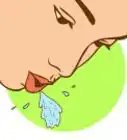
1Give your mouth a quick pick-me-up with minty mouthwash. Simply pour a capful into your mouth, swish it for 60 seconds, and spit it back out. It will help freshen your breath and tide you over until you can get some toothpaste again.[4]
- Try not to use mouthwash as a long-term replacement for brushing your teeth. It can help in the short-term, but nothing beats a good scrubbing with a toothbrush and toothpaste.
- Rinsing with mouthwash is better than nothing, especially if you don’t have a toothbrush around. It will help to freshen your breath and get rid of some of the bacteria that builds up on your teeth.

Method 5
Method 5 of 9:Floss if you can.
-
1It will help remove food particles and plaque. If you don’t have toothpaste but you do have access to floss, go through and clean out in between each individual tooth. It’s not quite as good as brushing with toothpaste, but it can tide you over for a little bit.[5]
- It’s always a good idea to keep some floss with you in a travel or overnight bag.
Advertisement

Method 6
Method 6 of 9:Irrigate your mouth with a water flosser.
-
1Water flossers clean between and around your teeth. Fill up the base of your water flosser with water and point it inside of your mouth. Turn the flosser on and slowly work your way across each tooth, focusing on the spaces in between each one.[6]
- You can buy water flossers at most drugstores. They’re great to use if you’re at risk for cavities or gum disease.

Method 7
Method 7 of 9:Chew sugarless gum.
-
1Gum helps freshen your breath and loosen up food particles. If you don’t have toothpaste, pop a piece of sugarless gum in your mouth. You’ll feel refreshed and make your breath smell great![7]
- Make sure the gum you choose is sugarless. Chewing gum with sugar in it can add plaque and bacteria to your mouth.
Advertisement

Method 8
Method 8 of 9:Eat some veggies.
-
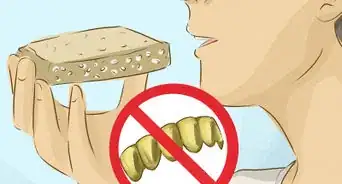
1Fiber-rich vegetables can help clean your teeth. If you’re really in a pinch, reach for some celery, carrots, or even an apple to scrub away plaque and clean your gums. Be aware, though, that eating fruits and veggies probably won’t freshen your breath.[8]
- Fiber-rich fruits and vegetables also help get your saliva flowing, which can wash away plaque and bacteria.

Method 9
Method 9 of 9:Drink green or black tea.
-
1Both teas help to kill or hold off bad bacteria. Brew a pot of green or black tea and drink a cup after a meal to prevent bacteria from growing or stop it from making it worse. While drinking tea isn’t a replacement for brushing your teeth, it can be a nice way to freshen up your mouth during the day.[9]Advertisement

Expert Q&A
-
QuestionShould I hold my nose while brushing?
 Cristian Macau, DDSDr. Macau is an oral surgeon, periodontist, and aesthetician at Favero Dental Clinic in London. He received his DDS from Carol Davila University of Medicine in 2015.
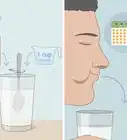
Doctor of Dental SurgeryHolding your nose while brushing is not necessary. Having a clear view in the mirror and being able to feel every area of your teeth and gums while brushing it is more important. If you don't like the taste of your toothpaste, try looking for a different flavor or making your own, adding flavors you enjoy. -
QuestionIt's good to brush my teeth with coconut oil?Cristian Macau, DDSDr. Macau is an oral surgeon, periodontist, and aesthetician at Favero Dental Clinic in London. He received his DDS from Carol Davila University of Medicine in 2015.
Doctor of Dental SurgeryCoconut oil is a natural ingredient which has many advantages when it is used as a toothpaste. Besides an antibacterial and whitening effect, it provides a lasting protection of enamel. You should though avoid using it if you are allergic to coconut.


References
- ↑ https://www.colgate.com/en-us/oral-health/brushing-and-flossing/hacks-forget-toothpaste
- ↑ https://jada.ada.org/article/S0002-8177(17)30822-X/fulltext
- ↑ https://www.smilepointdentalcare.com/what-can-i-use-instead-of-toothpaste/
- ↑ https://www.padentalimplants.com/how-to-clean-teeth-without-a-toothbrush/
- ↑ https://www.padentalimplants.com/how-to-clean-teeth-without-a-toothbrush/
- ↑ https://www.mouthhealthy.org/en/az-topics/w/water-flossers
- ↑ https://www.ada.org/en/member-center/oral-health-topics/chewing-gum
- ↑ https://www.urmc.rochester.edu/encyclopedia/content.aspx?contenttypeid=1&contentid=4062
- ↑ https://www.urmc.rochester.edu/encyclopedia/content.aspx?contenttypeid=1&contentid=4062
About This Article

Medical Disclaimer
The content of this article is not intended to be a substitute for professional medical advice, examination, diagnosis, or treatment. You should always contact your doctor or other qualified healthcare professional before starting, changing, or stopping any kind of health treatment.
If you need to brush your teeth but you don’t have any toothpaste, try brushing with items you find around the house instead. For instance, if you have sea salt, you could dip your wet toothbrush into 1/2 teaspoon of sea salt, then gently brush your teeth. Sea salt has antibacterial properties and can neutralize acids that cause tooth decay, but it can also be very abrasive, so don’t use it on your teeth regularly. Other household ingredients you could use include baking soda, natural soap, and coconut oil. Keep reading to learn advice from our dental reviewer on how to make your own toothpaste or tooth powder!