This article was co-authored by David Nazarian, MD and by wikiHow staff writer, Hannah Madden. Dr. David Nazarian is a board certified Internal Medicine Physician and the Owner of My Concierge MD, a medical practice in Beverly Hills California, specializing in concierge medicine, executive health and integrative medicine. Dr. Nazarian specializes in comprehensive physical examinations, IV Vitamin therapies, hormone replacement therapy, weight loss, platelet rich plasma therapies. He has over 16 years of medical training and facilitation and is a Diplomate of the American Board of Internal Medicine. He completed his B.S. in Psychology and Biology from the University of California, Los Angeles, his M.D. from the Sackler School of Medicine, and a residency at Huntington Memorial Hospital, an affiliate of the University of Southern California.
There are 17 references cited in this article, which can be found at the bottom of the page.
Dealing with the flu is always an unpleasant experience—thank goodness you’ve recovered! Boosting your immune system can help your body fight infections off in the future so you (hopefully) won’t have to deal with the flu again for a while. Thankfully, boosting your immune system only requires a few small changes to your daily life, so you can recover from your illness and increase your immune system in no time.
Steps
Question 1
Question 1 of 12:How can I boost my immune system quickly?
-
1Get enough sleep to let your body rest. Sleep helps your body rest and recover, especially after you’ve been sick. Try to get at least 8 hours of sleep every night, and stick to a regular sleep schedule to repair your immune system.[1]
- You probably slept a lot when you had the flu, which is great! You might feel more tired or lethargic as you recover.
-
2
-
3


Question 2
Question 2 of 12:What lowers your immune system response?
-
1High stress levels can weaken your immune system. Try meditating, doing yoga, writing in a journal, or practicing self-care to boost your immune system and feel better overall.[6]
- Lowering your stress levels looks different for everyone, so don’t be afraid to try out a few different methods.
-
2Smoking can disrupt the balance of your immune system. If you are a heavy tobacco smoker, it may be lowering your immune system’s ability to fight infections. Try to cut back or stop smoking to increase your overall health.[7]
-
3Certain medications can temporarily weaken your immune system. This is especially common in medication to treat cancer or right after an organ transplant. If you’re taking any of these medications, talk to your doctor if you get sick.[8]

Question 3
Question 3 of 12:Does Vitamin C help your immune system?
-
1Yes, eating Vitamin C is one of the best ways to boost your immune system. Incorporate oranges, grapefruits, tangerines, strawberries, bell peppers, spinach, kale and broccoli into your diet to get enough Vitamin C.[9]
- Your body doesn’t produce or store Vitamin C on its own, so it’s important to have some every day.
- Try to get about 64 to 90 mg of Vitamin C per day.
- It’s not really possible to get too much Vitamin C via fruits and veggies. However, if you’re taking supplements, too much Vitamin C can cause nausea, vomiting, and diarrhea.[10]

Question 4
Question 4 of 12:Which vitamins help boost your immune system?

Question 5
Question 5 of 12:Which drinks help boost your immune system?
-
1Water is the best drink for your immune system. Water helps carry your immune system cells around your body to fight off infections.[15] Without water, your immune system can’t function at its full capacity, so make sure you’re drinking around 8 glasses per day.[16]
- Stay away from dehydrating liquids like coffee and alcohol.
- Try keeping a water bottle with you so you can take a drink anytime you’re thirsty.

Question 6
Question 6 of 12:Which foods help boost your immune system?
-
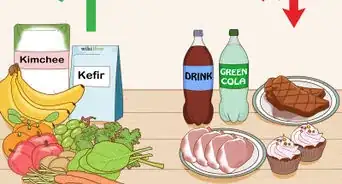
1Fruits and vegetables are great for your immune system. Fruits and veggies contain vital nutrients that are important for your immune health. Try to eat 4 servings of vegetables and 5 servings of fruit per day to get all the nutrients that you need.[17]
- Getting vitamins and minerals through fruits and veggies is much better than taking supplements.

Question 7
Question 7 of 12:Which food and drinks weaken your immune system?
-
1Processed foods don’t give you enough nutrients. While they may not “weaken” your immune system, they don’t do you any favors, either. Empty calories will fill you up without adding any nutrients to your body.[18]
- Processed foods usually come in a package and have long shelf-lives.
-
2Alcohol can weaken your immune system. Studies have shown that large amounts of alcohol can kill the healthy bacteria in your gut, which can have an adverse effect on your immune system. If you’re going to drink alcohol, try to do it in moderation, especially if you’re recovering from the flu.[19]
- Alcohol also dehydrates you, which can lower your immune system.

Question 8
Question 8 of 12:Are there supplements to boost your immune system?
-
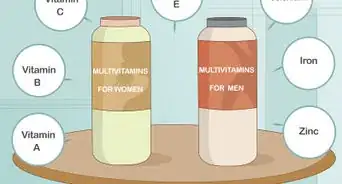
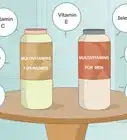
1Yes, but it’s better to get vitamins from food than supplements. Vitamin C, E, and B6 are all available in supplement form. However, your body absorbs them better when they come from actual food. If you can, try to get everything you need from fruits, vegetables, and protein.[20]
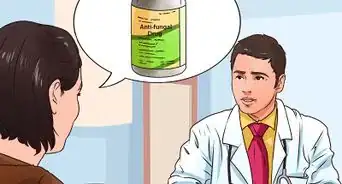
- If you think you’re vitamin-deficient, talk to your doctor before starting a supplement.
- If you are taking a supplement, follow the dosage directions carefully. Taking too much can lead to vomiting, nausea, and diarrhea.
- If you can’t eat a balanced diet, try a multivitamin.[21]

Question 9
Question 9 of 12:Does getting the flu make your immune system stronger?
-
1No, not necessarily. Getting the flu protects you from that strain of the flu in the future. It doesn’t necessarily make your immune system “stronger,” but it does provide your body with the antibodies it needs to fight off that flu later on. It’s kind of like getting the flu shot, except you got the actual flu.[22]
- However, if you encounter a different strain of the flu, you might still catch it. Antibodies are only good for one strain, not multiple.

Question 10
Question 10 of 12:What are some signs of a strong immune system?
-
1You probably don’t get sick often. When your immune system works well, it’s able to fight off infections right away. If you only get sick once or twice a year, you probably have a strong immune system.[23]
-
2You might be able to fight off colds quickly. When you do get sick, you’re probably only experiencing symptoms for about a week. This shows that your body is actively fighting off the infection the entire time.[24]
- Getting a cough or a runny nose are actually signs that your immune system is working.

Question 11
Question 11 of 12:What happens if your immune system is weak?
-
1You might get sick fairly often. Your immune system fights off infections. If it can’t do that, you may have recurring issues with flus, colds, or other severe infections.[25]
- While it does vary widely, most people get sick 2 to 4 times per year.
-
2You may have some digestion issues. Cramping, loss of appetite, vomiting, and nausea are all common with weakened immune systems. The bacteria in your gut play an important role in immune system health; when they’re out of whack, it can lower your immune system.[26]
-
3You could experience stunted or delayed growth. This is often a sign of a weakened immune system in children. If your child is short or small for their age, it could be a sign that their immune system isn’t working correctly.[27]
- Delayed growth can be a symptom for a number of things, so you should talk to your doctor for a diagnosis.

Question 12
Question 12 of 12:How can you test your immune system strength?
-
1Ask your doctor for a blood test. They can check the levels of immunoglobulin in your blood. They can also look at the number of blood cells and immune system cells you have in your blood. If any of these are abnormal, you may have a weakened immune system.[28]
- Doctors usually use blood tests like these to test for immunodeficiency.
-
2Use prenatal testing on a fetus. If you have a child with an immunodeficiency, your doctor can test your amniotic fluid to see if your fetus has any issues with it as well. In some cases, they may also test your DNA.[29]
- Immunodeficiency can be genetic, which is why you’d want to test your future child.










-Step-13-Version-2.webp)
References
- ↑ https://www.health.harvard.edu/staying-healthy/how-to-boost-your-immune-system
- ↑ David Nazarian, MD. Diplomate, American Board of Internal Medicine. Expert Interview. 26 March 2020.
- ↑ https://www.houstonmethodist.org/blog/articles/2020/mar/5-ways-to-boost-your-immune-system/
- ↑ David Nazarian, MD. Diplomate, American Board of Internal Medicine. Expert Interview. 26 March 2020.
- ↑ https://www.houstonmethodist.org/blog/articles/2020/mar/5-ways-to-boost-your-immune-system/
- ↑ https://www.health.harvard.edu/staying-healthy/how-to-boost-your-immune-system
- ↑ https://www.cdc.gov/tobacco/data_statistics/sgr/50th-anniversary/pdfs/fs_smoking_overall_health_508.pdf
- ↑ https://www.urmc.rochester.edu/encyclopedia/content.aspx?ContentID=123&ContentTypeID=134
- ↑ https://health.clevelandclinic.org/3-vitamins-best-boosting-immunity/
- ↑ https://www.mayoclinic.org/healthy-lifestyle/nutrition-and-healthy-eating/expert-answers/vitamin-c/faq-20058030
- ↑ https://health.clevelandclinic.org/3-vitamins-best-boosting-immunity/
- ↑ https://ods.od.nih.gov/factsheets/VitaminB6-Consumer/
- ↑ https://health.clevelandclinic.org/3-vitamins-best-boosting-immunity/
- ↑ https://www.mayoclinic.org/drugs-supplements-vitamin-e/art-20364144
- ↑ David Nazarian, MD. Diplomate, American Board of Internal Medicine. Expert Interview. 26 March 2020.
- ↑ https://www.houstonmethodist.org/blog/articles/2020/mar/5-ways-to-boost-your-immune-system/
- ↑ https://www.adventisthealth.org/blog/2020/august/give-your-immune-system-a-boost-/
- ↑ https://www.hsph.harvard.edu/nutritionsource/nutrition-and-immunity/
- ↑ https://www.ncbi.nlm.nih.gov/pmc/articles/PMC4590612/
- ↑ https://health.clevelandclinic.org/3-vitamins-best-boosting-immunity/
- ↑ https://www.hsph.harvard.edu/nutritionsource/nutrition-and-immunity/
- ↑ https://www.kqed.org/stateofhealth/152601/better-immunity-from-flu-vaccine-or-flu-itself
- ↑ https://medlineplus.gov/ency/article/000821.htm
- ↑ https://medlineplus.gov/ency/article/000821.htm
- ↑ https://www.mayoclinic.org/diseases-conditions/primary-immunodeficiency/symptoms-causes/syc-20376905
- ↑ https://www.womenshealth.gov/a-z-topics/autoimmune-diseases
- ↑ https://www.mayoclinic.org/diseases-conditions/primary-immunodeficiency/symptoms-causes/syc-20376905
- ↑ https://www.mayoclinic.org/diseases-conditions/primary-immunodeficiency/diagnosis-treatment/drc-20376910
- ↑ https://www.mayoclinic.org/diseases-conditions/primary-immunodeficiency/diagnosis-treatment/drc-20376910













































Medical Disclaimer
The content of this article is not intended to be a substitute for professional medical advice, examination, diagnosis, or treatment. You should always contact your doctor or other qualified healthcare professional before starting, changing, or stopping any kind of health treatment.
Read More...