This article was co-authored by wikiHow Staff. Our trained team of editors and researchers validate articles for accuracy and comprehensiveness. wikiHow's Content Management Team carefully monitors the work from our editorial staff to ensure that each article is backed by trusted research and meets our high quality standards.
There are 10 references cited in this article, which can be found at the bottom of the page.
This article has been viewed 10,935 times.
Learn more...
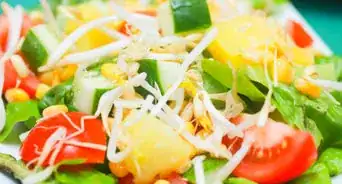
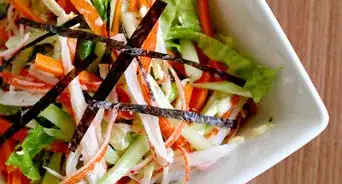
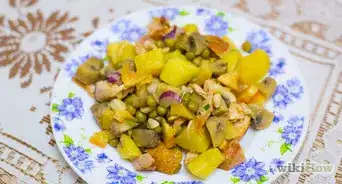
Eating salads regularly is a great way to incorporate healthy vegetables into your diet. To give your salads a nutritional boost, toss in some fiber-rich whole grains like barley or brown rice. Grains can help prevent heart disease, promote digestive health, and help with weight management. If you mix in cooked grains into your favorite green salads, replace other ingredients for whole grains, and store them in a dry environment, you can easily boost your salads with whole grains.
Steps
Method 1
Method 1 of 3:Adding Whole Grains to Your Favorite Salads
-
1Add quinoa for a protein boost. Quinoa is an ancient seed from South America that has recently surged in popularity. It can be found in many supermarkets and health food stores, and you may frequently see it listed on restaurant menus. Quinoa is one of the few plant-based foods that contains complete proteins, which means it contains all nine of the essential amino acids. Add a cup of cooked quinoa to your salad to add 8 grams of protein to your meal.
- Combine cooked quinoa, spinach, olive oil, and your favorite vegetables for a nutrient-dense, protein-filled salad.
-
2Mix in cooked farro for a chewy texture. Farro is another ancient grain that originated in the Fertile Crescent in Egypt.[1] This grain has a chewy texture and an earthy flavor, and it is full of fiber, zinc, and magnesium. This grain is also an excellent source of plant-based protein, which is a great for vegetarians.
- Toss cooked farro with kale, pine nuts, carrots, and a lemon vinaigrette for a nutty, satisfying side salad.[2]
-
3Incorporate more fiber with barley and amaranth. Add some extra fiber to your salad by mixing in some of your favorite whole grains with fresh vegetables. Whole grains are an excellent source of fiber, which can help promote digestive health and prevent heart disease, diabetes, and cancer.[3] A cup of cooked amaranth (200 g), a nutty grain from South America, has 5 grams of fiber, while barley packs 13 grams of fiber per cup (200 g).[4]
- Mix amaranth with black beans and a dash of cayenne pepper to add a Southwestern kick to your favorite garden salad.
- Try mixing barley with a sprinkling of feta, tomatoes, olives, and greens to make a delicious Mediterranean salad.
-
4Experiment with other grains. Browse your local specialty food shop or an online vendor and look for grains that are less common. Kamut, for example, is a nutritious whole grain with a buttery taste. Freekeh is a smoky, chewy grain that is high in protein and fiber.[5] Mix one of these grains into your favorite salad to discover what flavors and textures you enjoy.


Method 2
Method 2 of 3:Replacing Ingredients for Whole Grains
-
1Substitute croutons for whole wheat toast. Croutons are a popular add-on to many salads, but they can add calories without offering much nutritional value. If you want your salad to have a crunchy texture, substitute the croutons with diced pieces of toasted whole grain bread instead.
-
2Swap bacon bits for freekeh. Processed meats like bacon add a salty, smoky flavor to a salad, but they are high in fat and sodium.[6] Try mixing in some cooked freekeh next time you are tempted to add bacon to your salad. This grain has a smoky aroma and taste and is full of fiber and B vitamins, making it a healthy addition to any salad.[7]
-
3Replace noodles for whole grains in a pasta salad. Next time you make a dish for a cookout, a potluck, or a picnic, skip the refined grains in your favorite pasta salad recipe. Create a healthy, whole grain salad instead. Toss cooked whole wheat pasta, quinoa, or bulgur with a traditional mayonnaise-based pasta salad, and pack it with fresh vegetables, grilled chicken, and a lite vinaigrette for a lower calorie option.
- Swap refined pasta with whole grains in a bean salad. Toss farro or brown rice with cannellini beans, basil, and parmesan cheese for a fresh and nutrient-dense side dish.[8]


Method 3
Method 3 of 3:Buying and Storing Whole Grains
-
1Check for freshness. Because whole grains contain both the germ and the bran, they can become rancid over time. When buying grains from your local grocery store or specialty food store, make sure the package is secured and sealed. Also take a moment to check the expiration date. When buying in bulk, make sure the grains look and smell fresh.[9]
-
2Store grains in sealed container in a pantry. To keep your grains fresh and safe from pests, store them in a sealed container. Keep the containers away from heat, light, and water on a pantry shelf.
- Barley, amaranth, farro, kamut, oats, and quinoa can be kept for a year or more if they are sealed properly and kept away from sunlight.
- Grains like oats and wild rice can last for several years if properly sealed and stored.
- Buckwheat has a shorter shelf life of 2 to 3 months.[12]
-
3Keep grains in the refrigerator during warmer months. Grains can absorb moisture from the humid air during warmer months, which may cause them to go rancid. Keep your grains in an airtight container and store them in the fridge or the freezer to keep them fresh during hot, summer days.[13]
-
4Review the cooking tips. Most whole grains can be prepared in a pot of boiling water, but some whole grains take longer to prepare than others. Be sure to review the labels on your whole grain products to see how long they take to prepare.





References
- ↑ http://www.npr.org/2013/10/02/227838385/farro-an-ancient-if-complicated-grain-worth-figuring-out
- ↑ http://www.npr.org/2013/10/02/227838385/farro-an-ancient-if-complicated-grain-worth-figuring-out
- ↑ http://www.nhs.uk/chq/pages/1141.aspx?categoryid=51
- ↑ http://www.whfoods.com/genpage.php?tname=foodspice&dbid=128
- ↑ https://www.realsimple.com/food-recipes/cooking-tips-techniques/preparation/whole-grains
- ↑ http://www.sixwise.com/newsletters/06/08/30/the-top-8-unhealthy-things-people-love-to-ruin-their-salads-with.htm
- ↑ http://globalnews.ca/news/2158648/sporting-a-smoky-taste-and-aroma-freekeh-is-a-grain-to-know/
- ↑ http://relish.com/recipes/bean-and-pasta-salad/
- ↑ http://www.recipetips.com/kitchen-tips/t--1009/grain-storage-guide.asp
- ↑ http://www.recipetips.com/kitchen-tips/t--1009/grain-storage-guide.asp
- ↑ https://www.eatbydate.com/grains/rice-shelf-life-expiration-date/
- ↑ http://www.recipetips.com/kitchen-tips/t--1009/grain-storage-guide.asp
- ↑ http://www.recipetips.com/kitchen-tips/t--1009/grain-storage-guide.asp
- ↑ https://www.realsimple.com/food-recipes/cooking-tips-techniques/preparation/whole-grains
- ↑ http://www.wholefoodsmarket.com/recipes/food-guides/whole-grains
- ↑ https://www.realsimple.com/food-recipes/cooking-tips-techniques/preparation/whole-grains
About This Article