wikiHow is a “wiki,” similar to Wikipedia, which means that many of our articles are co-written by multiple authors. To create this article, volunteer authors worked to edit and improve it over time.
There are 15 references cited in this article, which can be found at the bottom of the page.
This article has been viewed 36,234 times.
Learn more...
Epidemiologists study the route that diseases take through a given population and the associated effects. Most epidemiologists are divided into two basic groups: research and clinical. Research epidemiologists perform highly specified study on specific infectious diseases for the sake of prevention and control. Clinical epidemiologists work to stop or prevent infectious outbreaks and most often work in medical facilities. Both groups require similar training, but at some point in your education, you will need to take additional clinical or research-type classes relative to your chosen specialty.
Steps
Part 1
Part 1 of 4:Preparing to Enter an Epidemiology Program
-
1Know the educational requirements of the job. At present, few schools offer undergraduate programs that train epidemiologists. Due to the fact that there isn't an orthodox route to becoming an epidemiologist, many enter into epidemiological study after attaining a degree as a Doctor of Medicine (MD), Master of Public Health (MPH), Doctor of Public Health (DrPH), or Doctor of Pharmacy (PharmD).[1]
-
2Master statistical analysis. Epidemiologists are expected to process large amounts of statistical data about populations and the pathogens afflicting these populations. From this analysis, an epidemiologist might recommend or conduct research into the prevention, medication, or education about a particular health concern in a population.[4] [5]
-
3Take a course in MS Excel. Epidemiologists make conclusions about health concerns by looking at large populations or data from case/cohort studies. Many epidemiological programs utilize the mathematical functions in Excel to make sense of and manipulate medical data. Facility with data analytic software will give you a leg up on your competition.
-
4Stay abreast of public health medicine. By reading up on current health issues and how these are being handled, you will familiarize yourself with the trends in the epidemiological world. This kind of reading is also useful in the development of your professional intuition, which will help you react more competently to new information you may be confronted with.[6]
-
5Take the quantitative GRE, or buff up your score. The statistical nature of most epidemiology programs all but ensures that application boards will want you to have a strong quantitative score on your GRE.[7] Do practice tests, complete study guides, and take (or re-take) the test and achieve a competitive score.
-
6Work or volunteer in a clinical setting. Even in an environment as removed as a laboratory, epidemiologists are expected to recognize and respond appropriately in emergency situations. Working in a clinical setting, like an ER, can help you further develop grace under pressure, which may be critical when working with dangerous pathogens.
- This experience can also likely be used to strengthen your application to an epidemiology program.
-
7Attain a graduate degree. Many programs look for candidates who have attained a master's degree in a related field, like public health.[8] A degree in a medical field, like medicine or pharmacy, will open up doors to higher paying and responsibility positions as epidemiology, as these individuals will have the ability to work with, diagnose, and prescribe treatment.
- PhD's, especially those in medical or medically related fields, often are strong candidates for working in larger facilities, like a medical laboratory or hospital.[9]
-
8Get a jump on biostatics. Most graduate programs in epidemiology will have courses specifically in biostatics, or the study/application of statistics to biological information and research.[10] If there are any undergraduate courses related to biostatics, taking these before your graduate study will aid your future learning in this area.


Part 2
Part 2 of 4:Selecting the Right Program
-
1Find suitable epidemiology programs. There are many factors that should be taken into account when selecting a graduate program for epidemiology. Take some time to think about the areas of the field that interest you most. If the epidemiology programs of prospective schools orient research in the direction of your interests, that might be an indication of a good fit.
-
2Investigate faculty research. After you've narrowed down your prospects to a few programs, you can begin looking into the research of individual faculty members. These individuals will be experts in various aspects of epidemiology, and some may even end up being your faculty advisers, should you enter the program.
- Look into blogs or professor rating sights to see what kind of reputation the faculty has. If many individuals complain there isn't enough direction in the program, or that graduate students are mistreated, you should take this into consideration.
- You may want to select a few professors that you feel might be good graduate advisers while you study and perform your own research.
-
3Weigh the pros and cons of different programs. Ultimately, your education is what you make of it. Some individuals do better in a smaller, more intimate setting, while others thrive in a larger context. This is a matter of taste, but the strength of a program is not. Some organizations have ranked top epidemiological programs on criteria for the purpose of helping young medical health professionals find the right fit. Take a look at the rankings as evaluated by Public Health Online at:
-
4Organize your application materials. You will at least need your GRE test results in addition to your application form, though the GRE requirement may be waived for medical students who submit MCAT scores instead. Other requirements generally include:
- Personal statement/statement of purpose
- Curriculum Vitae
- Transcripts (college/medical school)
- Signed letters of recommendation[11]
-
5Ready your wallet. You will have to pay the credit hour fees associated with your program, but to even be considered for enrollment you will likely have to pay an application fee as well. These can differ significantly from program to program, but you should expect to pay anywhere between $60 - $100.[12] [13]
-
6Apply to your program of choice. The application process to many of these programs is very involved, and missing a step or document may disqualify you from being accepted. Pay close attention to the application process as outlined by the schools in which you are most interested.
- If you are still a student, or are a recently graduated university student, you may want to talk with a guidance counselor about the application process. Counselors often have experience with these things, and in the event they do not, can point you in the direction of someone who can help.


Part 3
Part 3 of 4:Attaining an Epidemiology Degree
-
1Determine areas of interest within the research literature. While you are taking your graduate courses in epidemiology, you will be expected to read a lot of literature on associated topics.[14] This research will acquaint you with the methodologies and practices involved in specific areas of epidemiology, and whether or not you actually enjoy working in these areas.
- Is there an aspect of implementation that you find tedious or unbearable? Do you find yourself anxious at the thought of working with viral pathogens in the field? Your reading will help you discern just what might be the best fit for you.
-
2Identify your ideal work environment. Over the course of your epidemiology program, you will be expected to perform both research related and clinical tasks. You may even have an opportunity to do fieldwork. Your experiences with these kinds of situations should shed light on the kind of work environment you might want to pursue after graduation.
-
3Inquire with professors and colleagues about professional experiences. It's easy to get carried away with romantic notions about the medical profession as seen in pop-culture, but the reality can differ greatly from expectations. Your colleagues and professors are a great resource for learning more about real-world epidemiology jobs. Some jobs you may want to inquire about:
- Applied epidemiologist at a state agency
- Infection control epidemiologist at a hospital or medical laboratory
- PhD of epidemiology at a university
- Veterinary epidemiologist[15]
-
4Fulfill your program requirements. These can vary considerably between programs. Failure to perform to the standards established by your university may require you to re-take a course or rewrite a significant document, like a thesis or grant. The main areas you will focus on in your epidemiological studies are:
- Biostatics
- Quantitative methods for resolving public health and clinical medical problems
- Data management
- Clinical research methodologies
- Disease screening methodologies[16]
-
5Complete your thesis or grant. In addition to normal class requirements, the overwhelming majority of graduate programs will require you to complete a peer reviewed thesis intended for publication or a grant proposal.[17] Once you have achieved this final condition, you will be ready to enter the epidemiological workforce.


Part 4
Part 4 of 4:Finding a Job as an Epidemiologist
-
1Make use of resources at your graduating university. You may have had a mentor at your university or a professor that you worked closely with. These are often ideal people to consult about job opportunities. You might ask:
- "Where have other graduates from our epidemiology program found work?"
- "Is there anyone you can refer me to about continuing my research?"
- "Do you happen to have a colleague at [prospective company/agency/lab] who I could talk to about employment opportunities?"
-
2Consider companies that specialize in your area of interest. This includes government agencies, like the Centers for Disease Control. Think back to research you particularly enjoyed while earning your degree. What organizations were those researchers affiliated with? This may put you on the track of your new workplace.
-
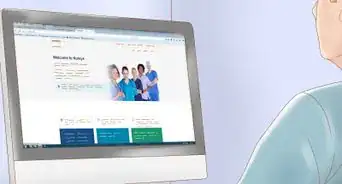
3Check public postings. The American College of Epidemiology has a comprehensive section of job postings for many different agencies. Check to see if these might be suitable for you.
-
4Attend professional conferences. You have the opportunity to make many connections at these kind of conferences, and you may even reconnect with friends or previous colleagues who might be able to recommend you for work. You should also use these events to learn of any shifts in the epidemiological community that might influence your research or job-seeking.
-
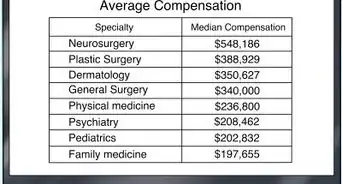
5Note research associated pharmaceuticals in your specialty. Some experts estimate that the highest paid jobs in epidemiology can be found in the fields of pharmaceuticals and medical manufacturing.[18] You may be able to get this kind of job through the knowledge of specific pharmaceuticals you gained over the course of your study.












References
- ↑ http://www.publichealthonline.org/epidemiology/#context/api/listings/prefilter
- ↑ http://epidemiology.phhp.ufl.edu/about/masters-of-science-in-epidemiology/
- ↑ http://med.stanford.edu/epidemiology/grad_programs/MS-overview/MS-apply.html
- ↑ http://www.innerbody.com/careers-in-health/becoming-epidemiologist.html
- ↑ http://money.usnews.com/careers/best-jobs/epidemiologist
- ↑ Gilovich, Thomas (2002). Heuristics and biases: the psychology of intuitive judgement. Cambridge, U.K. New York: Cambridge University Press
- ↑ http://med.stanford.edu/epidemiology/grad_programs/MS-overview.html
- ↑ http://www.publichealthonline.org/epidemiology/#context/api/listings/prefilter
- ↑ http://www.publichealthonline.org/epidemiology/#context/api/listings/prefilter
- ↑ Indrayan, Abhaya. Medical Biostatistics. Boca Raton: CRC, 2013. Print.
- ↑ http://www.hsph.harvard.edu/admissions/admissions/how-to-apply/application-requirements/
- ↑ http://sph.unc.edu/application-steps/?program=epid-msph-phd-r
- ↑ https://www.ohsu.edu/xd/education/student-services/registrar/registration-information/tuition-fees/
- ↑ http://www.publichealthonline.org/epidemiology/#context/api/listings/prefilter
- ↑ http://www.publichealthonline.org/epidemiology/#context/api/listings/prefilter
- ↑ https://www.mailman.columbia.edu/become-student/degrees/doctoral-programs/phd/epidemiology
- ↑ http://www.jhsph.edu/departments/epidemiology/degree-programs/
- ↑ http://mphprogramslist.com/careers/epidemiologist-career-salary-outlook/
- ↑ http://ocw.jhsph.edu/
About This Article
To become an epidemiologist, make sure you’re willing to work with highly contagious bacteria and viruses, since the main focus of your job is to prevent the outbreak of infectious diseases. Additionally, take advanced math and science courses in high school and college to prepare you for job-related tasks, like analyzing statistical data. After college, enroll in a graduate program for epidemiology, where you’ll learn to perform both research-related and clinical tasks. Once you complete your degree, look for jobs at hospitals, pharmaceutical companies, or government agencies, like the Centers for Disease Control. For more advice, like how to choose a reputable epidemiology program, keep reading!













































Medical Disclaimer
The content of this article is not intended to be a substitute for professional medical advice, examination, diagnosis, or treatment. You should always contact your doctor or other qualified healthcare professional before starting, changing, or stopping any kind of health treatment.
Read More...