wikiHow is a “wiki,” similar to Wikipedia, which means that many of our articles are co-written by multiple authors. To create this article, 17 people, some anonymous, worked to edit and improve it over time.
This article has been viewed 144,547 times.
Learn more...
Nobody likes getting stuck in a rut, but vocal range is rarely a rut! If you are unhappy with the parts you always get assigned, but you can't sustain the notes well enough to sing a different part. You should be able to teach yourself some easy vocal techniques to expand your range. Usually, you will be adding notes to your natural range, in other words, you will develop the ability to sing both alto and soprano, but sometimes you just need to stop singing one in favor of the other, at least until your singing muscles adapt. Just keep in mind that if you can't sing soprano, its ok everyone has a different vocal range. Let's find out how!
Steps
-
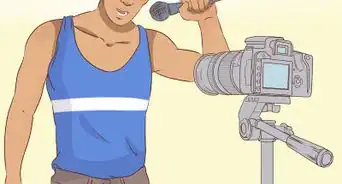
1Try to alter your normal speaking range. Listen carefully as you speak during the course of the first day. When we don't pay good attention to how we use our speaking voices, we usually default to our lower registers. To increase your range upwards, add a "lilt" to you speaking style, or you might mimic the voice of a person younger than yourself, or you could even pretend to yourself that you're in a very happy, giddy mood. Use whatever works to get yourself to speak in overall higher tones.[1]
-
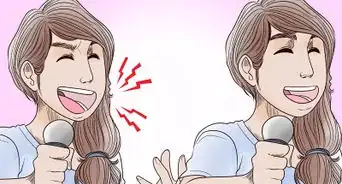
2Start working on your singing while speaking in a "higher voice", if you can. If you know how to do vocal exercises, start creeping up the scale a little every day. However, if you usually just sing regular songs, pick a song that is just a little uncomfortably high for you, and limit yourself to singing it gently and softly about 3 times per day. Remember that voices are made of muscle, and it will take time to teach your muscles a new trick.[2]Advertisement
-
3Avoid singing the low notes for a while during the adjustment process. Try not to lose your lower notes completely, but don't practice them too much, as that will strain your already hard-working new muscles.
-
4Ask to be moved from the alto section of the choir or group to the 2nd soprano parts. That's the lowest voiced sopranos, and a good place to start.
-
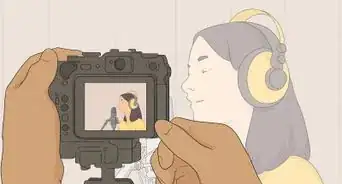
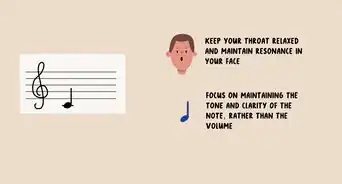
5Start singing high notes until eventually you can hit them.[3]Advertisement
-Step-1-Version-2.jpg)
-Step-2-Version-2.jpg)
-Step-3-Version-2.jpg)
-Step-4-Version-2.jpg)
-Step-5-Version-2.jpg)
Community Q&A
-
QuestionHow do I increase my range?
 Community AnswerYou can do vocal exercises every day, and keep pushing for higher notes. Make sure it comes from your diaphragm, or else it won't work as effectively.
 -
QuestionHow do I know if I'm hitting the notes?Community AnswerInstall a voice tuner app on your phone or tablet. Make sure its accurate.
-
QuestionHow can I keep from being embarrassed by my ability to sing tenor as a female?
 Community AnswerThat's not embarrassing! I know several females (myself included) who can sing tenor parts, and in musical theater, it comes in handy more often than you think. Just think of it as a wider vocal range.
 -
QuestionWhat's wrong with accepting who you are?
 Community AnswerNothing is wrong, some people wish to try new things or increase vocal ranges. There is nothing wrong with either.
 -
QuestionHow do I sing as high as Melanie Martinez?Community AnswerFollow the steps, but remember your voice is your own. Don't forget, she edits her voice to set the mood of her song. She also gets a lot of her sound through the shape of her mouth, so it's not her voice alone doing the work. Continue imitating her but dont try to make your voice just like someone else because your voice is unique and beautiful. Use it as you please.
-
QuestionWhat notes does a second soprano sing as opposed to alto and soprano?Community AnswerIt's very similar to soprano. Mainly, the seconds usually sing the same melody, but one or two notes lower.
-
QuestionHow do I train my voice to whistle sing if I am an alto singer, almost a mezzo soprano?Community AnswerWait until your voice has been trained enough as a Soprano 1, then try whistle notes. If that's too hard, try overtone singing.
-
QuestionHow do I sing soprano when I'm an alto?Community AnswerUse your stomach as opposed to your nose, and push out the notes using your head voice.
-
QuestionI used to be able to sing higher, but I can't any longer. How can I learn to hit these notes again without damaging my voice?
 Lord_TommoCommunity AnswerYou shouldn't try to belt higher than you can naturally without a proper singer training you. You can severely damage your vocal chords by trying to belt out of your comfort zone. If the sound sounds strained, stop.
 -
QuestionHow do I make my voice sound like 2017 singer?Community AnswerTry adding more runs and turns as you are singing. Be free with the music and really just do what feels natural.
Warnings
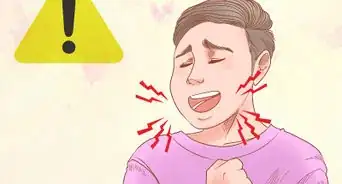
- If you get a cold, take a rest from the transition work. Be kind to your throat muscles by giving them a rest - it really won't set you back any.Thanks!
- Protect your voice. If you go to a sports event, amusement park, or any other time when you would find yourself screaming and laughing a a lot, especially outdoors, take at least a 2 week rest afterwards to let your voice box recover.Thanks!
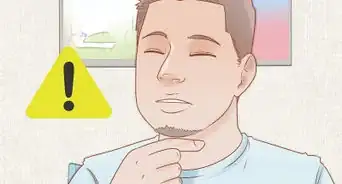
- You'll need to drink more water and less soda pop during this transition (soft drinks contain quite a bit of salt). The vocal chords need lots of "lubrication from within", and under stress, need even more. You can actually develop a vocal "node" during this process, which may prevent you from singing for months if it's a bad one.[5]Thanks!