This article was co-authored by Carlotta Butler, RN, MPH. Carlotta Butler is a Registered Nurse in Arizona. Carlotta is a member of the American Medical Writers Association. She received her Masters of Public Health from the Northern Illinois University in 2004 and her Masters in Nursing from the University of St. Francis in 2017.
There are 7 references cited in this article, which can be found at the bottom of the page.
This article has been viewed 63,480 times.
Psychiatric nurses are specialized registered nurses (RNs) who assess and help treat the mental health needs of individuals, groups, and communities in hospital, clinical, and other settings. If you're passionate about mental health and want to make a difference in people's lives, psychiatric nursing might be a good fit for you! Here, we've gathered answers to some of the most common questions about how to become a psychiatric nurse.[1]
Steps
Question 1
Question 1 of 8:What does a psychiatric nurse do?
-
1Psychiatric nurses assess, diagnose, and treat psychiatric disorders. Psychiatric nurses do many of the same things nurses do in other specialties—they just focus on mental health. As a psychiatric nurse, you'd develop your nursing diagnosis and plan of care for the patients, then work with psychiatrists and other nurses to care for them.[2]
- Many psychiatric nurses work in the psychiatric wards of large hospitals or in private practice.
- Some psychiatric nurses work closely with nonprofits and community outreach programs. For example, you might work with a local homeless shelter to assess the mental health needs of your local homeless population.
Advertisement

Question 2
Question 2 of 8:What education do psych nurses need?
-
1You need an associate's or bachelor's degree in nursing. Psychiatric nurses are all licensed registered nurses (RNs). To become an RN, get a 2-year associate's degree in nursing (ADN), a 3-year nursing diploma, or a 4-year bachelor's of science in nursing (BSN), then take the NCLEX-RN exam to become licensed as an RN.[3]
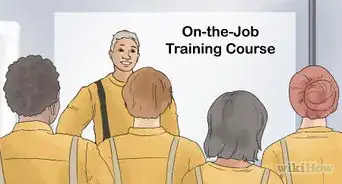
- Once you're licensed as an RN, look for a position as an RN at a place that addresses mental health needs. For example, you might work in the psychiatric ward of a local hospital. Through your work, you'll learn the specific knowledge and skills required to specialize in psychiatric nursing.

Question 3
Question 3 of 8:Are there degrees specific to psychiatric nursing?
-
1Yes, you can get a graduate degree in psychiatric nursing. With a master's or doctorate degree in nursing, you become a PMH-APRN (Psychiatric Mental Health-Advanced Practice Registered Nurse). Many schools have graduate programs focused specifically on psychiatric care.[4]
- US News & World Report ranks the psychiatric and mental health master's nurse practitioner programs at Duke University and Vanderbilt University as the best in the country, as of 2021. There are also numerous state schools with highly ranked graduate programs in psychiatric nursing.[5]
- The American Psychiatric Nurses Association (APNA) has a map you can use to find graduate programs in the state where you live. Go to https://www.apna.org/i4a/pages/index.cfm?pageid=3311 and click on your state to start exploring.
Advertisement

Question 4
Question 4 of 8:Do you need to get certified to be a psychiatric nurse?
-
1No, but the certification can open up new job opportunities. The American Nurses Credentialing Center (ANCC) offers a psychiatric-mental health nursing certification to eligible nurses who successfully complete the exam. The computer-based exam, offered year-round, is composed of 150 questions that you have 3 hours to complete. To register for the exam and access test prep resources, go to https://www.nursingworld.org/our-certifications/psychiatric-mental-health-nursing-certification/.[6]
- To be eligible, you must have practiced as an RN for at least 2 years, including 2,000 hours of clinical practice in psychiatric-mental health nursing within the past 3 years. You also need to complete at least 30 hours of continuing education in psychiatric-mental health nursing.
- As of 2021, the certification exam is $395 for non-members. If you're a member of the American Nurses Association (ANA), you'll get a $100 discount.

Question 5
Question 5 of 8:Can you switch to psych nursing from a different specialty?
-
1Yes, you can switch simply by taking a job as a nurse in mental health. Some nurses opt to go back to school and get a graduate degree in psychiatric nursing, then return to the workforce—but this certainly isn't required! All you really have to do is find a new job as a nurse in mental health.[7]
- In some situations, you might not even have to change employers. For example, if you work in a hospital, you might be able to simply move from your current position to a position in the psychiatric ward.
Advertisement

Question 6
Question 6 of 8:Where can you find good psych nurse jobs?
-
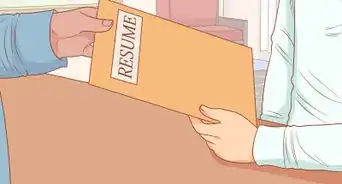
1Online job boards and hospital career pages are good places to start. Smaller clinics and nonprofits are more likely to post openings on general job boards, such as Indeed. You could also look at job boards that cater specifically to nursing jobs. If you're interested in a particular hospital or mental health facility, check their website to see if they have any openings.[8]
- If you know doctors or nurses in the mental health field, network with them to help find a position. They might also be able to introduce you to other professionals in the field who can point you to openings.
- Nursing schools frequently have career fairs, so you might also be able to get some leads there. The school you graduated from, in particular, will likely have job search resources available exclusively for students and alumni.

Question 7
Question 7 of 8:How much do psychiatric nurses make?
-
1As of 2021, psychiatric nurses make between $53,000 and $90,000 on average.[9] With a graduate degree, you can expect to earn between $91,000 and $167,000.[10] Pay depends on a lot of different variables, including how long you've been an RN, your geographic location, and the size of the office or hospital where you work.[11]Advertisement

Question 8
Question 8 of 8:Are psych nurses in high demand?
-
1Yes, there is a shortage of nurses in mental health as in all other specialties. This shortage extends to both advanced and entry-level nurses, so finding available positions shouldn't be very difficult. As baby boomer nurses retire, demand is only expected to increase.[12]
- The use of APRNs in mental health is expanding, so there's also a lot of need for nurses with graduate degrees and advanced training in psychiatric nursing.[13]

Warnings
- This article discusses how to become a psychiatric nurse in the US. In other countries, the process might be different.Thanks!





References
- ↑ https://www.apna.org/i4a/pages/index.cfm?pageid=3292
- ↑ https://www.apna.org/i4a/pages/index.cfm?pageid=3292
- ↑ https://www.apna.org/i4a/pages/index.cfm?pageid=3292
- ↑ https://www.apna.org/i4a/pages/index.cfm?pageid=3292
- ↑ https://www.usnews.com/best-graduate-schools/top-nursing-schools/nurse-practitioner-mental-health-rankings
- ↑ https://www.nursingworld.org/our-certifications/psychiatric-mental-health-nursing-certification/
- ↑ https://www.apna.org/i4a/pages/index.cfm?pageid=3292
- ↑ https://nurse.org/resources/psychiatric-nurse/
- ↑ https://www.payscale.com/research/US/Job=Psychiatric_Nurse_(RN)/Hourly_Rate
- ↑ https://www.payscale.com/research/US/Job=Psychiatric_Advanced_Registered_Nurse_Practitioner_(ARNP)/Salary
- ↑ https://www.apna.org/i4a/pages/index.cfm?pageid=3292
- ↑ https://www.apna.org/i4a/pages/index.cfm?pageid=3292
- ↑ https://www.healthecareers.com/ddw/article/career/7-things-you-should-know-about-mental-health-nursing
About This Article
To become a psychiatric nurse, first you'll need to graduate from high school and obtain a nursing degree through a two-year or four-year program. Then, once you earn your degree and get licensed as an RN, you can start working in the mental health field to start gaining experience and the hours you'll need to become a certified psychiatric nurse. Although getting certified isn't required, you may want to pursue a certification since it will improve your chances of finding a job. To learn how to decide between a two-year or four-year nursing program, keep reading!













































Medical Disclaimer
The content of this article is not intended to be a substitute for professional medical advice, examination, diagnosis, or treatment. You should always contact your doctor or other qualified healthcare professional before starting, changing, or stopping any kind of health treatment.
Read More...