wikiHow is a “wiki,” similar to Wikipedia, which means that many of our articles are co-written by multiple authors. To create this article, 23 people, some anonymous, worked to edit and improve it over time.
This article has been viewed 90,518 times.
Learn more...
Musicianship is not something that can be measured. Sure it means you can play your instrument well but in no way means you are a musician. A musician is someone who can not only play, but someone who can understand, write, perform, and feel music. Musicians also can play with other musicians due to their knowledge and ability. A musician must be well-rounded in every aspect of music. They must also have the ability to listen. Playing over someone else or playing the wrong harmony can be catastrophic. Listening cannot be over stated.
Steps
-
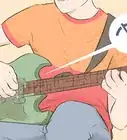
1Learn music theory. [1] Music theory can change the way you write/play music. It opens up your mind to all the different possibilities and options you have. Music theory is also universal, most musicians should know it. It will make things easier to explain. For example, telling someone to play a C major chord is easier than telling them where to put each finger.
-
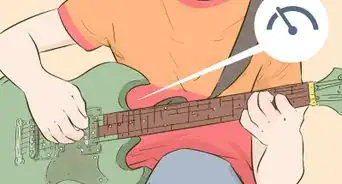
2Improve your rhythm.[2] Keeping time is very important whether your playing with other people, or playing by yourself. Having bad rhythm will make the piece of music sound bad even if you are playing the right notes. You don't have to be metronomic, but as long as you can keep a tempo without speeding up or slowing down that's OK.
-
3Play with other people. Playing with other people will force you to stay on time. It will also give you experience and make you more confident in your abilities. And above all playing with other people is a lot more fun then playing by yourself. Joining a band will also be very beneficial.[3]
-
4Learn more than one instrument.[4] This will help broaden your horizons. If a guitar player was to start playing bass guitar, the guitarist would then start to realize the role of bass guitar. So the next time the guitarist has to write a bassline, the guitarist will have a better understanding of how to write a more effective one.
-
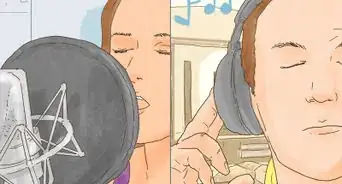
5Perform.[5] Performing requires you to know the music that you are playing inside out in the event that something goes wrong. Most performances require you to memorize your pieces. Having a good memory will benefit you because you always know what to play. It will also allow you to have more confidence in your talents and music.
-
6Be expressive. It's one thing to learn the notes and rhythm, but it's another to express the music. This is probably the hardest thing to do, because expression is different for everyone. Try picking a slow song; they tend to have a lot of hidden meaning within the notes. After you get used to slow songs, try faster ones; they're a little harder because you need good speed, timing, and accurate articulation. But remember, too much expression will make you sound a little corny.


Community Q&A
-
QuestionIf I join a band, would it help me to perform better?
 Community AnswerIt can. You're more likely to practice your instrument and improve your skills if you know that others are counting on you to play well.
 -
QuestionHow do I improve my songwriting and singing abilities?
 Community AnswerPractice. Listen to other people's songs and determine what you think works and what doesn't. Consider taking singing lessons and signing up for a creative writing/poetry class. But again, practice makes perfect. These things take time.
 -
QuestionHow can I become a better musician?
 Community AnswerTake lessons, and practice, practice, practice. Don't be discouraged by constructive criticism, and take any tips anyone gives you. Listen to music made by the best artists that play your instrument, and watch YouTube videos showing them performing. Try to imitate their techniques.
 -
QuestionHow do I find melodies? How do I improve my timing when being a good musician?
 Adam MusmarCommunity AnswerYou can try using a metronome. Over time, your timing will become better naturally too.












References
- ↑ http://thevault.musicarts.com/importance-of-learning-music-theory/
- ↑ https://didgeproject.com/musicianship/rhythm-timing-metronome-exercises/
- ↑ https://blog.sonicbids.com/5-benefits-of-joining-a-band-for-a-solo-artist
- ↑ https://www.elephantjournal.com/2012/09/eight-benefits-of-learning-to-play-multiple-instruments-suzy-st-george/
- ↑ https://www.tsc.nsw.edu.au/tscnews/six-benefits-of-performing-in-musical-ensembles