X
wikiHow is a “wiki,” similar to Wikipedia, which means that many of our articles are co-written by multiple authors. To create this article, 18 people, some anonymous, worked to edit and improve it over time.
wikiHow marks an article as reader-approved once it receives enough positive feedback. In this case, 96% of readers who voted found the article helpful, earning it our reader-approved status.
This article has been viewed 54,053 times.
Learn more...
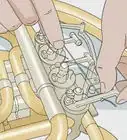
It may seem simple, but these are delicate instruments and it's easy to get wrong! Little mistakes can cause huge problems and be massively expensive to fix, so it's best to avoid the mistakes in the first place.
Steps
-
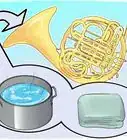
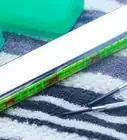
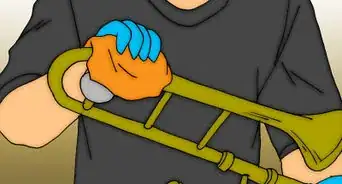
1Find a bath big enough to comfortably take your horn and line it with an old sheet or towels. (This prevents damage to horn and bath.)[1]
-
2Fill the bath with lukewarm water.Advertisement
-
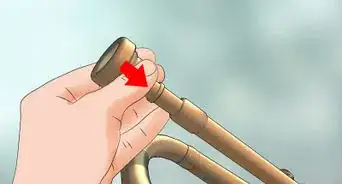
3Remove all slides, mouthpiece and any other moving parts from the horn. (If it has a detachable bell, remove this.)[2]
-
4Submerge the horn completely in water and press down all valves to open them (just a couple of times, you don't need to keep them down.)
-
5Leave the horn for an hour to around three hours (only if it is an instrument that hasn't been bathed in a very long time, or if the valves are stuck down.)[3]
-
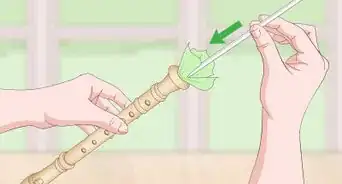
6Get a snake to clean the horn. While the horn is soaking, use a pull-through (snake) to clean out all your slides in a separate sink. If the pull-through is too wide to get round the bends in the slide, don't force it. It will get stuck and just cause damage. Try a trumpet or clarinet-style pull through instead. Use a mouthpiece brush to clean out your mouthpiece just now as well - no point in blowing all your mouthpiece gunk down into your nice clean horn![4]
-
7Finish cleaning. Now for the nasty bit. When bath-time is almost up, put your pull-through through your lead-pipe (from mouthpiece end to tuning slide) and then use either the end of your pull-through or a similar smaller brush to clean out all the valve-slides.
-
8Remove your horn carefully from the bath and tip all the water sitting inside of it out. You should be able to hear any water sloshing around inside but if you are having trouble getting it out try depressing all the valves and tipping the horn round 360 degrees towards the bell - any water should come out of the bell!
-
9Dry the horn. After making sure you have gotten rid of any water sitting in the valves, lay your horn on some towels or another clean sheet to dry. Remove any surface water with a clean cloth or towel and then leave the horn, preferably in a room with some circulating air for a few hours to dry out.[5]
-
10Wait a few hours then tip your horn out again to remove any water that has settled.
-
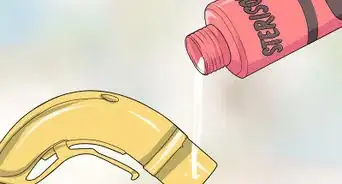
11Pour some low-viscosity valve oil down the slides into the valves, and oil all the bearings and rotors.
-
12Re-grease all slides and replace them.[6]
-
13If you have a detachable bell, use graphite from a pencil as lubricant for the threads.Advertisement


Community Q&A
-
QuestionHow often do I have to clean my French horn?
 Community AnswerWipe it down every week. Rinse/snake out the slides every month, and bathe it about every 2-3 months. Get it professionally cleaned once a year. Also, make sure you grease the slides once a week and oil the valves every two days.
 -
QuestionDo I soak the slides and valves as well?
 Community AnswerYou definitely soak the slides. You will need to reapply grease though. You can soak the valves, but make sure that after you finish cleaning, you spin it around as many times as you can while pumping the valves (without slides put in) to make completely sure there is no water left.
 -
QuestionWhat happens if I don't reapply grease after bathing my French horn?Community AnswerIt will be harder to move the slides if you don't reapply grease. If you're returning it to school you don't need to do it, though, just put all the slides in a plastic bag.
-
QuestionWhen I use hot water, the finish on my French horn gets cloudy. Is there any way to remove this?Community AnswerYou may be stripping of the lacquer. If this is true, you should take it to a pro. If not, you could have raw brass. In the future ypu should only use lukewarm water.
-
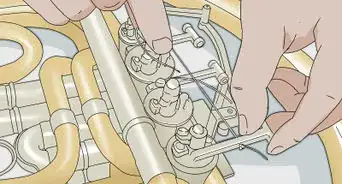
QuestionCan the strings tied to the valves allowed go into the tub as well?Community AnswerI would not take those off, because it’s not easy to put them back. They can stand water.
-
QuestionIs water bad for brass?Community AnswerWater isn't bad for brass. So your brass instrument will survive but if you have a brass instrument with pistons you will want to take the pistons out before you bathe the instrument.
-
QuestionDo I need valve oil before I wash my French horn?
 RubyTop AnswererYou should generally wash your instrument first and then oil your valves. If you oil the valves first, the oil will just wash off.
 -
QuestionWhat should I do if I get water stuck in my French horn? I tried turning it around several times but it's still there.RubyTop AnswererA French horn should have one or two water keys, usually on a tuning slide. Press down your valves and water key and blow into the instrument with your lower lip underneath the mouthpiece. It should make a little puffing noise and water should come out. If you can't release the water key, take the tuning slides out one by one and shake out the water. That should get out most of the water within the instrument.
-
QuestionShould I get help from a teacher or brass instrument-playing friend if I just switched from clarinet to French horn?Community AnswerYes, unless you are comfortable and understand how to clean your instrument.
-
QuestionDo I need to take off the caps of my rotary valves when bathing my french horn?
 Community AnswerYes. It will help clean the rotors and make them move faster. This will improve your playing and sound, and also help the horn last longer.
Warnings
- Avoid using water hotter than lukewarm. On older horns, hot water will cause the lacquer to bubble and peel off. With newer horns this shouldn't be a problem, but it may not be worth the risk.Thanks!
Advertisement

References
- ↑ http://www.lutherhigh.org/documents/arts/les_band/maintenance/french_horn_maintenance.pdf
- ↑ http://www.northmacschools.org/vimages/shared/vnews/stories/54bfdeef07b97/french%20horn%20care.pdf
- ↑ http://www.lutherhigh.org/documents/arts/les_band/maintenance/french_horn_maintenance.pdf
- ↑ http://www.northmacschools.org/vimages/shared/vnews/stories/54bfdeef07b97/french%20horn%20care.pdf
- ↑ https://www.youtube.com/watch?v=OO7xYjav-y4
- ↑ https://www.youtube.com/watch?v=OO7xYjav-y4
About This Article
Advertisement