This article was co-authored by Damaris Vega, MD. Dr. Damaris Vega is a board certified Endocrinologist. She graduated Magna Cum Laude from the Pontifical Catholic University of Puerto Rico with a BS in General Science and subsequently earned an MD from the Ponce School of Medicine, Ponce, PR. During medical school, Dr. Vega served as president of the Alpha Omega Alpha Medical Honor Society and was selected as her school's representative for the American Association of Medical Colleges. She then completed a residency in Internal Medicine and a fellowship in Endocrinology, Diabetes, Mineral, and Metabolism at The University of Texas Southwestern Medical School. Dr. Vega has been recognized for excellent patient care multiple times by the National Committee for Quality Assurance and received the Patients' Choice Award in 2008, 2009, and 2015. She is a fellow of the American College of Clinical Endocrinologists and is an active member of the American Association of Clinical Endocrinologists, the American Diabetes Association, and the Endocrine Society. Dr. Vega is also the founder and CEO of Houston Endocrinology Center as well as a principal investigator for multiple clinical trials at Juno Research, LLC.
There are 19 references cited in this article, which can be found at the bottom of the page.
This article has been viewed 1,245 times.
If your thyroid is out of whack, there are all kinds of effects it can have on your body. There are 2 main issues your thyroid might have: hypothyroidism means that your thyroid produces too few hormones, and hyperthyroidism means that it produces too many. Don't worry, because both conditions are completely treatable! Medication is the best option, so see your doctor if you think you have any problems with your thyroid. After getting medical care, you can make some dietary and lifestyle changes to support your treatment.
Steps
Method 1
Method 1 of 2:Hypothyroidism
Hypothyroidism means that your thyroid gland is underactive and not producing enough hormones. There are a few reasons this could happen, ranging from an autoimmune disease to an iodine deficiency.[1] The only proven way to fix this problem is with medication, so it’s important to see your doctor if you think you have a thyroid issue.[2] There are also some natural steps you can take to support your thyroid health and regulate its function.

-
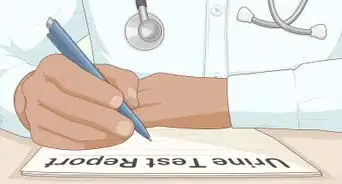
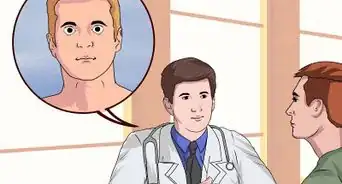
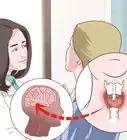
1See a doctor if you feel fatigued, weak, or depressed. These are some of the main symptoms of hypothyroidism. You might also put on weight, feel constipated, and notice aches around your body. If you feel these symptoms, see your doctor for a checkup and treatment options.[3]
- Your doctor will do a blood test to check your thyroid function and confirm if you have an underactive thyroid.
- Even if you don’t have hypothyroidism, these symptoms could mean something serious. It’s best to see your doctor no matter what.
-
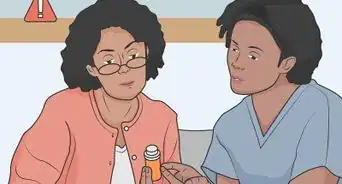
2Take levothyroxine to replace thyroid hormones. This is a hormone medication that affects your body the same way as thyroid hormones do, and it’s the most common treatment for an underactive thyroid. Your doctor will probably prescribe this medication, since it’s the most successful treatment option. After you start taking it, you should start feeling better within a few weeks.[4]
- It might take some time to find the right dose for your medication, so don’t be worried if your doctor wants you to come in for blood tests regularly.[5] This is important for checking your hormone levels and adjusting your medication if necessary.
- Usually the best time to take your medication is on an empty stomach, but follow your doctor’s instructions.[6]
- If you have a goiter, or enlarged thyroid, from hypothyroidism, then taking your medication should help shrink it.[7]
Advertisement -
3Avoid soy so your body absorbs all your medication. Soy can prevent your body from absorbing thyroid medication, so it won’t work as well. If you’re on thyroid medication, it’s best to avoid soy products so your medication works the way it’s supposed to.[8]
- You might be able to eat some soy as long as you wait a few hours after taking your medication. It depends on your doctor’s instructions.
-
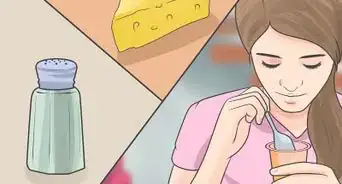
4Get 150 micrograms of iodine per day. Iodine deficiency is a main cause of hypothyroidism, though this is rare in most countries. You only need 150 mcg of iodine each day to stay healthy.[9] You can get this from about 1/4 tsp (1.5 g) of iodized salt, so it doesn’t take a big change to include enough iodine in your diet.
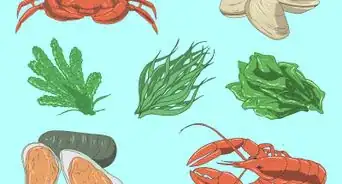
- Iodine also comes from seafood like fish, shellfish, kelp, and seaweed.
- Don't take iodine supplements without your doctor's orders. You probably don’t need them, and too much iodine could cause an overactive thyroid.[10]
-
5Eat fewer cruciferous vegetables so your body absorbs iodine. This family of vegetables includes broccoli, cauliflower, bok choy, brussels sprouts, cabbage, and collard greens. In high levels, they can reduce your body’s ability to absorb iodine, which is a problem if you have hypothyroidism. Cut back on these vegetables to avoid any problems.[11]
- These are still very healthy vegetables, so don’t cut them out altogether. Just don’t overdo it or take them at the same time as you take your medication.
-
6Exercise regularly to boost your thyroid function. Aerobic exercise tends to increase the amount of thyroid hormones in your body. This could help if you have and underactive thyroid.[12]
- The amount of thyroid hormones increases as your activity increases, so high-intensity exercises stimulate your thyroid more than less strenuous activity.
- Hypothyroidism can leave you very worn-out, so your doctor might recommend skipping exercise until you improve. Follow your doctor’s instructions.[13]
-
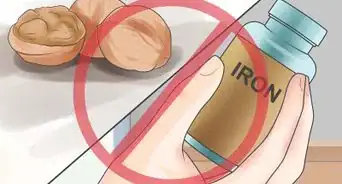
7Include plenty of iron in your diet to prevent anemia. Anemia is also associated with hypothyroidism, so an iron deficiency could be linked to the condition.[14] In general, you need 8-18 mg of iron per day to prevent anemia, so make sure you include some iron-rich foods in your diet.[15]
- Good sources of iron include red meat, poultry, seafood, beans, and fortified cereals.
- There are also iron supplements, but ask your doctor before you start taking these. You usually only need them if you’re prone to anemia.
-
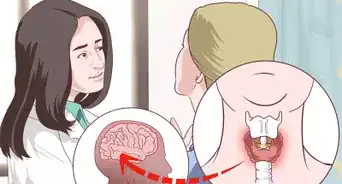
8
-
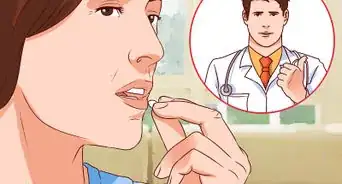
9Try probiotics to support your thyroid health. There isn’t a ton of evidence, but some research shows that unhealthy gut bacteria could interfere with thyroid function. If you want to see if probiotics work for you, try taking a daily supplement to support your gut health.[18]
- You can also get probiotics from fermented foods like sauerkraut, yogurt, pickles, kefir, kombucha, tempeh, and miso.
Advertisement


Method 2
Method 2 of 2:Hyperthyroidism
Hyperthyroidism is the opposite of hypothyroidism. It means that your thyroid is too active and produces more hormones than it should. This also has several causes, but usually happens because of some inflammation in your thyroid.[19] The only proven treatment for an overactive thyroid is medication to slow the gland down, so see your doctor if you think you have any problems with your thyroid. You can also regulate your thyroid with a few natural steps.
-
1See a doctor if you experience a rapid heartbeat, weight loss, or anxiety. Unlike with an underactive thyroid, an overactive thyroid makes you feel jittery and hyperactive. Your heart might beat hard or out of rhythm. You might also lose weight unexpectedly, feel anxiety, sweat often, and have difficulty sleeping. These are common symptoms of hyperthyroidism, so see your doctor for a checkup if you experience these symptoms.[20]
- Your doctor will ask you about your symptoms and run a blood test to see if your thyroid is overactive.
-
2Take anti-thyroid medications for minor cases. Thyroid-blocking medications prevent your thyroid from producing hormones. The two main ones are methimazole and propylithiouracil, so your doctor will probably try one of these first. In most cases, you’ll feel better within a few weeks, but you might have to take the medication on a long-term basis.[21]
- It’s common to take anti-thyroid medications for 1-2 years before your thyroid function is normal again.
- Beta-blockers are commonly prescribed for hyperthyroidism too. They don’t actually regulate your thyroid, but they reduce some of the symptoms until your thyroid function improves.[22]
- If you have a goiter from hyperthyroidism, then taking your medication as directed should help shrink it.[23]
-
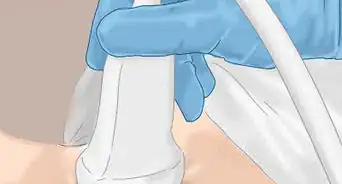
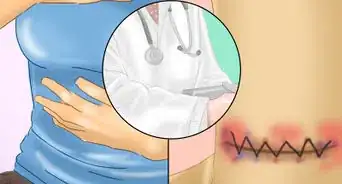
3Slow your thyroid down with radioactive iodine. Radioactive iodine is a prescription oral medication that shrinks your thyroid, slowing its function. It usually comes in pill form, which you'll take for a few weeks or a few months until your thyroid function slows.[24] This is a more permanent solution for hyperthyroidism since it actually shrinks the glad.[25]
- It’s possible for radioactive iodine to cause an underactive thyroid, especially if your dose is too high. In this case, you’ll have to take thyroid hormones to bring your thyroid function back up.
-
4Reduce iodine in your diet. Getting too much iodine can trigger hyperthyroidism or make it worse. If you have too much iodine in your system, cut out seafood like fish, shellfish, kelp, and seaweed to support your treatment regimen.[26]
- You can also switch to using non-iodized salt to reduce your intake.
- Don’t make big dietary changes without checking with your doctor first. You could end up with an iodine deficiency if you aren’t careful.
-
5Eat more cruciferous vegetables to block iodine. While you want to avoid vegetables like broccoli, cauliflower, bok choy, brussels sprouts, cabbage, and collard greens if you have hypothyroidism, you’ll want more of those if you have hyperthyroidism. These block your body from absorbing iodine, which is good to prevent your thyroid from producing too many hormones. Don’t be shy about adding more of these to your diet.[27]
-
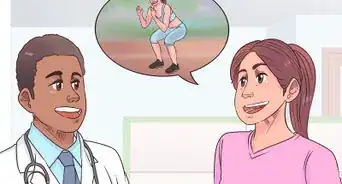
6
-
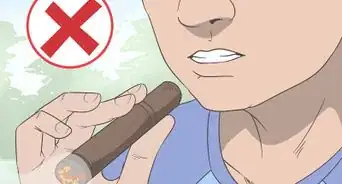
7Quit smoking. Smoking isn’t directly related to hyperthyroidism, but it can trigger Graves’ disease, an autoimmune disorder that often causes an overactive thyroid. If you smoke, then the best thing to do is quit as soon as possible. If you don’t then don’t start in the first place.[30]
- Secondhand smoke is also harmful, so don’t let anyone smoke inside your home either.
Advertisement


Medical Takeaways
You could develop an over or underactive thyroid, but the good news is that these are totally treatable conditions! Medication works best, and some home treatments can help support your recovery. With the right treatment, a healthy lifestyle, and a well-balanced diet your thyroid will stay regulated, and you'll start feeling better.[31]
Expert Q&A
-
QuestionHow can I regulate my thyroid?
 Damaris Vega, MDDr. Damaris Vega is a board certified Endocrinologist. She graduated Magna Cum Laude from the Pontifical Catholic University of Puerto Rico with a BS in General Science and subsequently earned an MD from the Ponce School of Medicine, Ponce, PR. During medical school, Dr. Vega served as president of the Alpha Omega Alpha Medical Honor Society and was selected as her school's representative for the American Association of Medical Colleges. She then completed a residency in Internal Medicine and a fellowship in Endocrinology, Diabetes, Mineral, and Metabolism at The University of Texas Southwestern Medical School. Dr. Vega has been recognized for excellent patient care multiple times by the National Committee for Quality Assurance and received the Patients' Choice Award in 2008, 2009, and 2015. She is a fellow of the American College of Clinical Endocrinologists and is an active member of the American Association of Clinical Endocrinologists, the American Diabetes Association, and the Endocrine Society. Dr. Vega is also the founder and CEO of Houston Endocrinology Center as well as a principal investigator for multiple clinical trials at Juno Research, LLC.
Board Certified EndocrinologistYou should take the appropriate medications, maintain a healthy lifestyle, and have a balanced diet to regulate your thyroid. -
QuestionHow often should I get my thyroid levels checked and when should I take my medication for hypothyroidism?Damaris Vega, MDDr. Damaris Vega is a board certified Endocrinologist. She graduated Magna Cum Laude from the Pontifical Catholic University of Puerto Rico with a BS in General Science and subsequently earned an MD from the Ponce School of Medicine, Ponce, PR. During medical school, Dr. Vega served as president of the Alpha Omega Alpha Medical Honor Society and was selected as her school's representative for the American Association of Medical Colleges. She then completed a residency in Internal Medicine and a fellowship in Endocrinology, Diabetes, Mineral, and Metabolism at The University of Texas Southwestern Medical School. Dr. Vega has been recognized for excellent patient care multiple times by the National Committee for Quality Assurance and received the Patients' Choice Award in 2008, 2009, and 2015. She is a fellow of the American College of Clinical Endocrinologists and is an active member of the American Association of Clinical Endocrinologists, the American Diabetes Association, and the Endocrine Society. Dr. Vega is also the founder and CEO of Houston Endocrinology Center as well as a principal investigator for multiple clinical trials at Juno Research, LLC.
Board Certified EndocrinologistIt is necessary to have your thyroid levels checked every 6 to 12 months. You should take your medication for hypothyroidism in the mornings on an empty stomach. -
QuestionIs there any connection between hypothyroidism and prolactin levels?Damaris Vega, MDDr. Damaris Vega is a board certified Endocrinologist. She graduated Magna Cum Laude from the Pontifical Catholic University of Puerto Rico with a BS in General Science and subsequently earned an MD from the Ponce School of Medicine, Ponce, PR. During medical school, Dr. Vega served as president of the Alpha Omega Alpha Medical Honor Society and was selected as her school's representative for the American Association of Medical Colleges. She then completed a residency in Internal Medicine and a fellowship in Endocrinology, Diabetes, Mineral, and Metabolism at The University of Texas Southwestern Medical School. Dr. Vega has been recognized for excellent patient care multiple times by the National Committee for Quality Assurance and received the Patients' Choice Award in 2008, 2009, and 2015. She is a fellow of the American College of Clinical Endocrinologists and is an active member of the American Association of Clinical Endocrinologists, the American Diabetes Association, and the Endocrine Society. Dr. Vega is also the founder and CEO of Houston Endocrinology Center as well as a principal investigator for multiple clinical trials at Juno Research, LLC.
Board Certified EndocrinologistUntreated hypothyroidism can lead to high prolactin levels. The addition of thyroid hormone can lower it. -
QuestionWhat is a goiter and how can it be cured?Damaris Vega, MDDr. Damaris Vega is a board certified Endocrinologist. She graduated Magna Cum Laude from the Pontifical Catholic University of Puerto Rico with a BS in General Science and subsequently earned an MD from the Ponce School of Medicine, Ponce, PR. During medical school, Dr. Vega served as president of the Alpha Omega Alpha Medical Honor Society and was selected as her school's representative for the American Association of Medical Colleges. She then completed a residency in Internal Medicine and a fellowship in Endocrinology, Diabetes, Mineral, and Metabolism at The University of Texas Southwestern Medical School. Dr. Vega has been recognized for excellent patient care multiple times by the National Committee for Quality Assurance and received the Patients' Choice Award in 2008, 2009, and 2015. She is a fellow of the American College of Clinical Endocrinologists and is an active member of the American Association of Clinical Endocrinologists, the American Diabetes Association, and the Endocrine Society. Dr. Vega is also the founder and CEO of Houston Endocrinology Center as well as a principal investigator for multiple clinical trials at Juno Research, LLC.
Board Certified EndocrinologistWhen the thyroid is abnormally enlarged, it is known as goiter. You can take medication to lower the TSH and shrink the thyroid. A thyroid ablation or surgery may be necessary in some cases.
Warnings
- If you think you have a thyroid problem, don’t ignore it. This requires medical attention.Thanks!
- Natural treatments have a very mixed record for treating thyroid problems, and medications or hormones are the only proven treatments. Don’t try to treat the problem on your own without consulting your doctor first.Thanks!


References
- ↑ https://www.mayoclinic.org/diseases-conditions/hypothyroidism/symptoms-causes/syc-20350284
- ↑ Damaris Vega, MD. Board Certified Endocrinologist. Expert Interview. 7 October 2020.
- ↑ https://www.mayoclinic.org/diseases-conditions/hypothyroidism/symptoms-causes/syc-20350284
- ↑ https://www.mayoclinic.org/diseases-conditions/hypothyroidism/diagnosis-treatment/drc-20350289
- ↑ Damaris Vega, MD. Board Certified Endocrinologist. Expert Interview. 7 October 2020.
- ↑ Damaris Vega, MD. Board Certified Endocrinologist. Expert Interview. 7 October 2020.
- ↑ https://www.mayoclinic.org/diseases-conditions/goiter/diagnosis-treatment/drc-20351834
- ↑ https://health.clevelandclinic.org/thyroid-issues-what-you-need-to-know-about-diet-and-supplements/
- ↑ https://ods.od.nih.gov/factsheets/Iodine-HealthProfessional/
- ↑ https://www.mayoclinic.org/diseases-conditions/hypothyroidism/expert-answers/hypothyroidism-iodine/faq-20057929
- ↑ https://lpi.oregonstate.edu/mic/food-beverages/cruciferous-vegetables#iodine-thyroid-function
- ↑ https://pubmed.ncbi.nlm.nih.gov/16380698/
- ↑ https://health.clevelandclinic.org/uncontrolled-thyroid-exercise-diet-risks/
- ↑ https://www.ncbi.nlm.nih.gov/pmc/articles/PMC6166193/
- ↑ https://ods.od.nih.gov/factsheets/Iron-HealthProfessional/
- ↑ https://www.ncbi.nlm.nih.gov/pmc/articles/PMC5307254/
- ↑ https://health.clevelandclinic.org/thyroid-issues-what-you-need-to-know-about-diet-and-supplements/
- ↑ https://www.ijem.in/article.asp?issn=2230-8210;year=2014;volume=18;issue=3;spage=307;epage=309;aulast=Patil
- ↑ https://www.mayoclinic.org/diseases-conditions/hyperthyroidism/symptoms-causes/syc-20373659
- ↑ https://www.mayoclinic.org/diseases-conditions/hyperthyroidism/diagnosis-treatment/drc-20373665
- ↑ https://www.mayoclinic.org/diseases-conditions/hyperthyroidism/diagnosis-treatment/drc-20373665
- ↑ https://medlineplus.gov/hyperthyroidism.html
- ↑ https://www.mayoclinic.org/diseases-conditions/goiter/diagnosis-treatment/drc-20351834
- ↑ https://www.thyroid.org/radioactive-iodine/
- ↑ https://www.mayoclinic.org/diseases-conditions/hyperthyroidism/diagnosis-treatment/drc-20373665
- ↑ https://www.niddk.nih.gov/health-information/endocrine-diseases/hyperthyroidism
- ↑ https://lpi.oregonstate.edu/mic/food-beverages/cruciferous-vegetables#iodine-thyroid-function
- ↑ https://www.ncbi.nlm.nih.gov/pmc/articles/PMC5307254/
- ↑ https://health.clevelandclinic.org/thyroid-issues-what-you-need-to-know-about-diet-and-supplements/
- ↑ https://www.mayoclinic.org/diseases-conditions/hyperthyroidism/diagnosis-treatment/drc-20373665
- ↑ Damaris Vega, MD. Board Certified Endocrinologist. Expert Interview. 7 October 2020.













































Medical Disclaimer
The content of this article is not intended to be a substitute for professional medical advice, examination, diagnosis, or treatment. You should always contact your doctor or other qualified healthcare professional before starting, changing, or stopping any kind of health treatment.
Read More...