This article was co-authored by Sari Eitches, MBE, MD. Dr. Sari Eitches is an Integrative Internist who runs Tower Integrative Health and Wellness, based in Los Angeles, California. She specializes in plant-based nutrition, weight management, women's health, preventative medicine, and depression. She is a Diplomate of the American Board of Internal Medicine and the American Board of Integrative and Holistic Medicine. She received a BS from the University of California, Berkeley, an MD from SUNY Upstate Medical University, and an MBE from the University of Pennsylvania. She completed her residency at Lenox Hill Hospital in New York, NY and served as an attending internist at the University of Pennsylvania.
There are 18 references cited in this article, which can be found at the bottom of the page.
This article has been viewed 4,043 times.
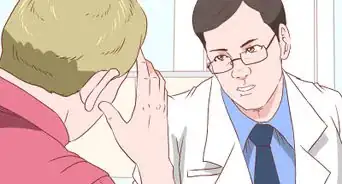
“Stress hormones,” primarily cortisol, are produced as part of your body’s response to tension, worry, or danger. This a natural part of your body’s stress response, but consistently high stress levels can lead to health and emotional problems. Luckily, there are many natural ways to balance your stress hormones and lower the stress and anxiety that you feel. This is a great benefit to your overall health and wellbeing. If you try lowering your stress by yourself and don’t notice a big difference, then you should visit a therapist for further guidance to reduce your stress levels. This way, you can stop stress from interfering with your daily life.
Steps
Method 1
Method 1 of 3:Stress-Fighting Foods
Your diet is a big part of your physical and mental health. While there isn’t a particular diet that will cure your stress, some dietary changes are associated with decreased stress hormone levels. In general, a healthy diet low in junk foods is good for your mental health. You should also cut out foods that can raise your blood pressure and stress levels.
-
1Maintain a consistent meal schedule to avoid mood crashes.[1] If you eat inconsistently or skip meals, then your blood sugar will crash. This makes you feel stressed and anxious. Try to eat your meals at regular times each day so your blood sugar stays consistent.[2]
- If you often get hungry or are on-the-go for work, plan ahead and bring some snacks with you. Nuts, seeds, and dried fruit are all great, healthy choices.
-
2Follow a balanced diet to stay well-nourished. While there isn’t a specific “stress-fighting” diet, a generally healthy diet is a good mood-stabilizer. A diet rich in fresh fruits and vegetables, lean proteins, whole grains, and healthy fats is overall best for your physical and mental wellbeing. Do your best to follow a healthy, balanced diet at all times to support your mental health.[3]
-
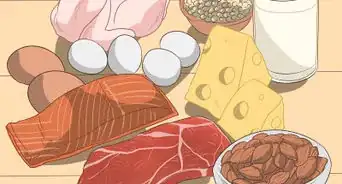
3Include protein in your breakfast to boost your blood sugar. Protein in the morning will help you feel full longer and prevent a blood-sugar drop early in the day. This is important for keeping your mood balanced until lunch.[4]
- Good morning protein sources are eggs, yogurt, peanut butter, cottage cheese, or a glass of milk.
-
4Eat complex carbohydrates for a consistent energy release.[5] Simple carbs, like from enriched flours, provide a quick and high energy boost followed by a crash. Eat complex carbs instead, because your body breaks them down slower for a more sustained energy release without the crash.[6]
- The best sources of complex carbs are whole-grain and whole-wheat products. Try switching from white bread, pasta, and rice to whole-wheat varieties.
-
5Cut back on caffeine to prevent spikes in stress hormones.[7] High caffeine levels can increase your blood pressure, making you feel more stressed. Caffeine also spikes stress hormones like cortisol.[8] Limit your caffeine intake to 400 mg per day to avoid any problems, which is about 3-4 caffeinated drinks.[9]
- If you’re especially sensitive to caffeine and often feel anxious after have any, then it’s best to cut it out of your diet altogether.
-
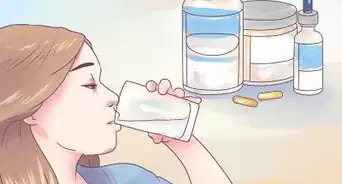
6Stay hydrated so dehydration doesn’t affect your mood. Dehydration could depress your mood and make you feel more stressed. Drink plenty of water to keep yourself hydrated throughout the day.[10]
- A general rule is to drink at least 8 glasses of water per day, but this could vary if you’re exercising or live in a hot climate. Drink enough so your urine stays light yellow and you don’t feel thirsty.[11]
-
7




Method 2
Method 2 of 3:Lifestyle Activities
In addition to dietary changes, there are many things you can do in your daily life to regulate your stress hormones. Staying active and doing stress-reducing activities are good ways you improve your mental health. You can also distract yourself from stress by socializing and practicing your hobbies.
-
1Exercise for at least 30 minutes per day to release endorphins. Regular physical activity is a powerful stress-reducer because it releases endorphins, hormones that raise your mood. Try to get at least 30 minutes of exercise each day, or on at least 5 days per week. This can reduce your stress hormones and improve your mood.[14]
- All exercise is good, but aerobic activity that raises your heart rate if most effective for reducing stress. Try to focus on running, walking, biking, or swimming for the best results.
- If you don’t have a lot of time, you can raise the intensity of your workouts. A 15-minute exercise session at higher intensity is as good as 30 minutes of moderate activity.
-
2Try stress-reducing activities like meditation or deep breathing.[15] Specific relaxation techniques can help lower your overall stress and avoid anxiety attacks. Meditation and deep-breathing are 2 of the most popular and effective, so you can try both or combine them for a powerful stress-reducing activity.[16]
- At its most basic, meditation is simply sitting quietly in a comfortable position and focusing on your thoughts. Try to do this for 10-15 minutes a day to help yourself relax.
- For an easy deep-breathing exercise, breathe in as deeply as you can and hold it for 10 seconds before slowly releasing it. Repeating this process for 5-10 minutes is a great way to lower your heart rate and stress levels.
- Yoga is also a popular stress-reducing activity that’s also a good exercise.
-
3Reduce your alcohol consumption. Alcohol might make you feel calmer initially, but it could increase your stress hormones later on after your body breaks it down.[17] It’s best to limit your drinking to 1-2 alcoholic drinks per day to avoid raising your stress levels.[18]
- You might be tempted to drink more if you feel overly stressed, but this is a harmful coping mechanism that could lead to addiction. Try to avoid using alcohol to handle your stress.
-
4Sleep for 7-8 hours each night so you feel less stressed during the day.[19] Sleep deprivation makes you feel much more stressed throughout the day. Go to bed early enough to get 7-8 hours each night so you can feel refreshed and stress-free during the day.[20]
- Stress can make sleeping more difficult. If you have trouble sleeping at night, try winding down before bed with some relaxing activities like reading or listening to soft music. You could also save your meditation session for before bed to help yourself relax.
- If you still have trouble sleeping, a melatonin supplement at night could help you fall asleep naturally.[21]
-
5Expose yourself to sunlight every day to lower cortisol. Sunlight is a great mood booster and also naturally lowers cortisol, the main stress hormone. If you can, try to get outside in the sun for at least 15 minutes each day to keep your cortisol levels down.[22]
- If you live in an overcast area, bright indoor lights can have a similar effect.
-
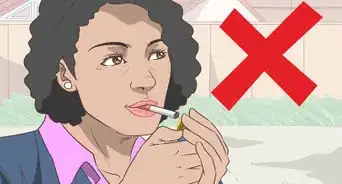
6Quit smoking and using other substances to lower your blood pressure. Smoking or any kind of illicit drugs could disturb your sleep rhythm and raise your blood pressure. It’s best to stop using any of these substances as soon as possible to avoid long-term health problems.[23]
- Nicotine is actually a stimulant, so smoking near bedtime could keep you awake.
-
7Socialize with others to boost your mood. While you may not feel like it, spending time with others is actually a great way to lower your stress levels. Try to make plans with people you enjoy spending time with to clear your head a bit. Even a quick meeting for lunch or coffee can boost your mood a lot.[24]
- If you can’t see someone in person, try giving them a call and having a good conversation with them instead.
- Try to say “yes” more often when people invite you to do things. Even if you’re busy, spending a few minutes with other people is a great way to recharge yourself.
- Joining local clubs and social groups is a great way to meet new people and socialize.
-
8Do something you enjoy every day. This is another proven way to reduce stress. Enjoyable activities naturally lower your stress levels and boost your mood, so make time for your hobbies every day. Even if you only have time for a few minutes, this quick escape can make you feel much better.[25]
- There’s no rule on what you have to do, as long as it’s something you enjoy. Watching a movie, reading, playing an instrument, knitting, or drawing all have the same effect if you like these activities.
- You can either do your hobbies alone or with others.


Method 3
Method 3 of 3:Supplements that Might Work
There are many supplements on the market that claim to reduce stress and anxiety. It's only natural to get your hopes up about these supplements, but many of these products don’t have much science supporting their claims. A few, however, might work for you. There’s no harm in trying these out if you want to, so see if they help you feel less stressed in your daily life.
-
1Drink herbal tea to help yourself relax. Herbal teas have a naturally-calming effect on the body and can lower your stress levels. Try having a few cups each day to see if this works for you.[26]
- All teas have a calming effect, but some of the best choices are chamomile, valerian, mint, and passionflower.[27]
- Make sure the tea you drink is decaffeinated to avoid raising your stress levels.
-
2Use probiotics to support your mental health. There is increasing evidence that probiotic supplements could have a positive effect on your mental health and stress levels. Try getting a probiotic supplement and taking it as directed to see if this helps reduce your stress.[28]
- Different probiotic brands have different dosing instructions, so always follow the directions given.
- You could also eat more foods high in probiotics like yogurt, miso, kombucha, tempeh, and sauerkraut.
-
3Take valerian root supplements to lower your stress. Valerian root shows some success in lowering stress and anxiety levels, so you can try it for yourself to see if it works. You can take it as a supplement or brew it in tea.[29]
- Valerian is generally safe, but ask your doctor before using it. It hasn’t been studied with long-term use, so it’s unclear if there are any long-term side effects.
-
4Try aromatherapy to set a calming environment. Aromatherapy helps some people relax and de-stress, so you can see if this helps you. Add some essential oil to a diffuser, or simply sniff the scents right from the bottle for a more pleasant feeling.[30]
- Any scents can calm you down, but oils that are more effective in lowering stress include lavender, lemon or lemongrass, orange, or grapefruit.


Medical Takeaways
While stress can be a major hindrance to your daily life, the good news is that there are many ways to control it. There is no single way to reduce your stress, but a combination of dietary and lifestyle changes can regulate your stress hormones and improve your mood overall. Try making these adjustments to see if they help you. If not, then don’t hesitate to speak with a professional therapist to learn more strategies for managing your stress.
Expert Q&A
-
QuestionWhat can I do to reduce stress levels?
 Sari Eitches, MBE, MDDr. Sari Eitches is an Integrative Internist who runs Tower Integrative Health and Wellness, based in Los Angeles, California. She specializes in plant-based nutrition, weight management, women's health, preventative medicine, and depression. She is a Diplomate of the American Board of Internal Medicine and the American Board of Integrative and Holistic Medicine. She received a BS from the University of California, Berkeley, an MD from SUNY Upstate Medical University, and an MBE from the University of Pennsylvania. She completed her residency at Lenox Hill Hospital in New York, NY and served as an attending internist at the University of Pennsylvania.
Integrative InternistDo your best to practice mindfulness exercises, such as deep breathing, meditating, or journaling.

-Step-22.webp)

References
- ↑ Sari Eitches, MBE, MD. Integrative Internist. Expert Interview. 3 April 2020.
- ↑ https://campushealth.unc.edu/health-topics/nutrition/nutrition-and-stress
- ↑ https://www.mayoclinic.org/diseases-conditions/generalized-anxiety-disorder/expert-answers/coping-with-anxiety/faq-20057987
- ↑ https://www.mayoclinic.org/diseases-conditions/generalized-anxiety-disorder/expert-answers/coping-with-anxiety/faq-20057987
- ↑ Sari Eitches, MBE, MD. Integrative Internist. Expert Interview. 3 April 2020.
- ↑ https://www.health.harvard.edu/blog/nutritional-strategies-to-ease-anxiety-201604139441
- ↑ Sari Eitches, MBE, MD. Integrative Internist. Expert Interview. 3 April 2020.
- ↑ https://u.osu.edu/emotionalfitness/2017/04/19/study-caffeine-stress-and-brain-function/
- ↑ https://www.mayoclinic.org/healthy-lifestyle/nutrition-and-healthy-eating/in-depth/caffeine/art-20045678
- ↑ https://www.mayoclinic.org/diseases-conditions/generalized-anxiety-disorder/expert-answers/coping-with-anxiety/faq-20057987
- ↑ https://www.mayoclinic.org/healthy-lifestyle/nutrition-and-healthy-eating/in-depth/water/art-20044256
- ↑ Sari Eitches, MBE, MD. Integrative Internist. Expert Interview. 3 April 2020.
- ↑ https://www.health.harvard.edu/blog/nutritional-strategies-to-ease-anxiety-201604139441
- ↑ https://adaa.org/living-with-anxiety/managing-anxiety/exercise-stress-and-anxiety
- ↑ Sari Eitches, MBE, MD. Integrative Internist. Expert Interview. 3 April 2020.
- ↑ https://www.helpguide.org/articles/stress/stress-management.htm
- ↑ https://www.mayoclinic.org/diseases-conditions/generalized-anxiety-disorder/expert-answers/coping-with-anxiety/faq-20057987
- ↑ https://www.cdc.gov/alcohol/faqs.htm
- ↑ Sari Eitches, MBE, MD. Integrative Internist. Expert Interview. 3 April 2020.
- ↑ https://www.helpguide.org/articles/stress/stress-management.htm
- ↑ https://www.mayoclinic.org/drugs-supplements-melatonin/art-20363071
- ↑ https://www.ncbi.nlm.nih.gov/pmc/articles/PMC3686562/
- ↑ https://www.helpguide.org/articles/stress/stress-management.htm
- ↑ https://www.mayoclinic.org/healthy-lifestyle/stress-management/in-depth/stress-relievers/art-20047257
- ↑ https://www.helpguide.org/articles/stress/stress-management.htm
- ↑ https://pubmed.ncbi.nlm.nih.gov/17013636/
- ↑ https://exploreim.ucla.edu/nutrition/eat-right-drink-well-stress-less-stress-reducing-foods-herbal-supplements-and-teas/
- ↑ https://www.ncbi.nlm.nih.gov/pmc/articles/PMC4410136/
- ↑ https://www.mayoclinic.org/diseases-conditions/generalized-anxiety-disorder/expert-answers/herbal-treatment-for-anxiety/faq-20057945
- ↑ https://health.clevelandclinic.org/stressed-out-aromatherapy-can-help-you-to-feel-calmer/
- ↑ https://www.helpguide.org/articles/stress/stress-management.htm
- ↑ https://www.mayoclinic.org/healthy-lifestyle/stress-management/in-depth/stress-relievers/art-20047257










































Medical Disclaimer
The content of this article is not intended to be a substitute for professional medical advice, examination, diagnosis, or treatment. You should always contact your doctor or other qualified healthcare professional before starting, changing, or stopping any kind of health treatment.
Read More...