This article was co-authored by wikiHow Staff. Our trained team of editors and researchers validate articles for accuracy and comprehensiveness. wikiHow's Content Management Team carefully monitors the work from our editorial staff to ensure that each article is backed by trusted research and meets our high quality standards.
There are 10 references cited in this article, which can be found at the bottom of the page.
This article has been viewed 3,129 times.
Learn more...
A balance of electrolytes in your body is integral for your overall health. If you notice symptoms of an electrolyte imbalance, visit your doctor to get tested as soon as possible. You can raise your electrolyte levels by adjusting your diet or by taking supplements. If you need to lower your electrolyte levels, you may need to cut back on certain foods or change your medication to get things back on track.
Steps
Method 1
Method 1 of 3:Identifying an Imbalance
-
1Seek medical attention if you show signs of low electrolyte levels. Stay in tune with your body to identify any signs that your electrolyte levels may be abnormal. In serious cases, low levels of sodium and other electrolytes may cause nausea, vomiting, confusion, seizures, or loss of consciousness. If you experience any of these symptoms, seek immediate medical assistance.[1]
- A doctor can determine the cause of your low electrolyte levels and replace them with intravenous fluids or with medication.
- Less serious symptoms of an electrolyte balance could include changes in blood pressure, lethargy, numbness, or muscle spasms.[2]
-
2Ask your doctor if they can run an electrolyte panel test. Talk to your doctor about your electrolyte levels concerns. Your doctor may run a blood or urine test if you are taking some form of medication that may affect your electrolyte levels, such as diuretics or ACE inhibitors. If your levels are imbalanced, your doctor will likely monitor them with regular tests until your levels are normal again.[3]
- Doctors sometimes run electrolyte panels as part of regular physical exams.
Advertisement -
3Visit your doctor annually to regulate problems affecting your electrolytes. Medical problems can cause your electrolyte levels to fluctuate up or down. Visit your doctor at least once a year to keep an eye on your health. Doctors will be able to identify and treat any illnesses that you may have that could cause an electrolyte imbalance.[4]
- For instance, liver or kidney problems can wreak havoc on your electrolyte levels.
-
4Ask your doctor if your medications are causing an electrolyte excess. Certain prescription medicines, over-the-counter treatments, and herbal supplements may produce high levels of certain electrolytes that your body can't process. Give your doctor a list of all the medications and supplements that you are taking so they can identify potential causes for the excess levels. Your doctor may reduce your dosage or suggest alternative treatment options to regulate the issue.[5]
- For instance, frequent consumption of certain antacid medications may cause an increase in calcium or magnesium.
Advertisement


Method 2
Method 2 of 3:Increasing Your Electrolytes
-
1Consume salt to increase your sodium and chloride levels. To boost your sodium levels, eat salty snacks like dill pickles or pre-made soups. Add table salt to your meals as a seasoning to get more sodium without changing your diet. Most sauces and tomato juices are also high in salt.[6]
- The average adult should have an intake of 1,500 mg of sodium per day, or 1,300 mg if they are over 50.
- Table salt is also known as sodium-chloride, meaning that it will provide your body with both of those electrolytes.
- Sports drinks like Gatorade are also a quick source of sodium. Or, you could make your own electrolyte water with refreshing ingredients such as ginger, lime and coconut water.
-
2Drink water in moderation when hydrated to avoid losing too much sodium. If you are already adequately hydrated, drink water minimally. Excessive water consumption can dilute the sodium in your body. Start drinking more water if your thirst returns and your urine starts to darken in color.[7]
- When your body is hydrated, your urine will be light yellow and you will stop feeling thirsty.
-
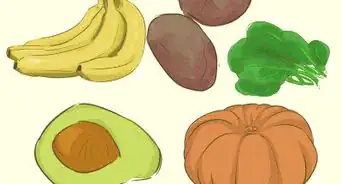
3Eat bananas and spinach to raise your potassium levels. Make a point to eat potassium-rich vegetables like potatoes, sweet potatoes and spinach. Fruits such as bananas and raisins are also excellent sources of potassium. Drinking orange juice or coconut water will also help to increase the levels of this electrolyte in your body.[8]
- Ideally, adults should consume 4,700 mg of potassium each day.
-
4Increase your calcium levels with dairy or other calcium-rich foods. Consume cheese, yogurt, and milk for excellent sources of calcium. Non-dairy options like kale, spinach, and other leafy green vegetables will also raise your calcium levels. Alternatively, you can look for calcium-fortified vegan foods like tofu, soy milk, and cereal. [9]
- The average adult should get 1,000-1,200 mg of calcium each day.
-
5Eat meat or other protein-rich foods to increase your phosphate levels. While phosphate can be found in both plant and animal foods, the body absorbs it more efficiently from meat, poultry and fish. If you don't have any other dietary restrictions, aim to consume animal protein at least once a day to boost your phosphate levels. If you are following a meat-free diet, get phosphates from things like:[10]
- Nuts
- Beans
- Dairy products
- Pre-made foods with phosphorous additives
-
6Consume nuts, seeds, and uncooked greens to get magnesium. Avoid cooking magnesium-rich foods as this electrolyte is depleted by heating and processing. Instead, eat kale, spinach, and other healthy green vegetables raw for a magnesium boost. Snacking on unprocessed nuts and seeds will also help to raise your magnesium levels.[11]
- Adult should get about 400 to 600 mg of magnesium per day.
-
7Ask your doctor about taking supplements to raise your electrolyte levels. Calcium, potassium, and magnesium supplements can help boost the amount of these electrolytes that you get from food and drink. Talk to your doctor about supplements to see if they would be right for you. Do not exceed the recommended daily dose, which could result in an over-concentration of electrolytes.[12]
- Your doctor may advise against taking supplements if they will interfere with any prescription medications you are taking.
Advertisement


Method 3
Method 3 of 3:Lowering Electrolyte Levels
-
1Reduce your consumption of electrolyte replacement products. Drink and eat electrolyte-replacement sports drinks, gels, and candies in moderation. Over-consumption of these supplements may cause an excess of electrolytes in your body. As a general rule, aim to have only one serving of these products after exercise to make up for lost sodium and potassium.[13]
- One serving would refer to one small bottle of a sports drink or one small package of gel or candy.
- These products also contain high levels of sugar, which should also be consumed in moderation.
-
2Start a low-salt diet if you have an excess of sodium. Reduce your sodium levels by steering clear of fast food, processed foods, and soups and sauces. Cook from scratch as much as possible to control how much salt is added to your food. Read nutrition labels while shopping to avoid high sodium products.[14]
- When cooking, you can substitute spices, herbs, and salt-free blends for salt.
-
3Avoid foods with phosphorous additives if your phosphate levels are too high. Read food labels when shopping for pre-made foods to steer clear of products with a high-phosphate content. Phosphorous additives are identified by many different names, but will all be absorbed easily by your body and send your phosphate levels skyrocketing. These additives include:[15]
- Dicalcium phosphate
- Disodium phosphate
- Monosodium phosphate
- Phosphoric acid
- Sodium hexameta-phosphate
- Trisodium phosphate
- Sodium tripolyphosphate
- Tetrasodium pyrophosphate
Advertisement








References
- ↑ https://www.mayoclinic.org/diseases-conditions/hyponatremia/diagnosis-treatment/drc-20373715
- ↑ https://www.medicalnewstoday.com/articles/153188.php
- ↑ https://www.medicalnewstoday.com/articles/153188.php
- ↑ https://medlineplus.gov/fluidandelectrolytebalance.html
- ↑ https://www.medicalnewstoday.com/articles/153188.php
- ↑ https://www.medicalnewstoday.com/articles/153188.php
- ↑ https://www.mayoclinic.org/diseases-conditions/hyponatremia/symptoms-causes/syc-20373711
- ↑ https://www.foodnetwork.com/healthyeats/2012/07/staying-hydrated-electrolytes-101
- ↑ https://www.foodnetwork.com/healthyeats/2012/07/staying-hydrated-electrolytes-101
- ↑ https://www.kidney.org/atoz/content/phosphorus
- ↑ http://www.kumc.edu/school-of-medicine/integrative-medicine/health-topics/the-benefits-of-magnesium.html
- ↑ https://www.medicalnewstoday.com/articles/153188.php
- ↑ https://www.medicalnewstoday.com/articles/153188.php
- ↑ https://health.usnews.com/health-news/diet-fitness/heart/articles/2011/08/11/9-surprisingly-simple-ways-to-cut-salt
- ↑ https://www.kidney.org/atoz/content/phosphorus













































Medical Disclaimer
The content of this article is not intended to be a substitute for professional medical advice, examination, diagnosis, or treatment. You should always contact your doctor or other qualified healthcare professional before starting, changing, or stopping any kind of health treatment.
Read More...