This article was co-authored by Better Business Bureau and by wikiHow staff writer, Hannah Madden. The Better Business Bureau, also known as the BBB, is a private, nonprofit organization focused on advancing marketplace trust. Founded in 1912, the BBB is a collection of 106 independently incorporated local BBB organizations in the United States and Canada coordinated under the International Association of Better Business Bureaus (IABBB) in Arlington, Virginia. The BBB provides direct services such as information about a company before you do business with it and with helping resolve a complaint you might have against a firm. The BBB also provides indirect services such as monitoring selling practices and alerting consumers to bad business and advertising practices. The BBB also provides accreditation to businesses, increasing their visibility and standards of integrity and excellence.
There are 8 references cited in this article, which can be found at the bottom of the page.
This article has been viewed 1,167 times.
If you’re searching for a new dog, going online might be your first instinct—but puppy scams are on the rise. People online may be trying to take your money without giving you a puppy in return (and they might not even have a dog for sale at all). Fraudulent breeders can be tough to spot, but there are a few surefire ways you can double check that you’re getting the right dog for your money. We’ve compiled a list of things to watch out for and questions to ask so you can bring your new puppy home safely.
Steps
Method 1
Method 1 of 12:Get a referral for a responsible breeder.
-
1If your friends know them, they’re probably safe to buy from. Ask your close friends, family members, or even your vet if they know of a responsible breeder you could purchase from. Finding a breeder on your own can be tough, and it’s much easier to fall for puppy scams that way.[1]
- You should always try to find a breeder that’s local. That way, you can visit the puppy in person before making a purchase.
- Remember, there are always dogs for adoption at your local shelter, too! Even if you’re after one particular breed, try checking animal shelters in your area first to potentially give a puppy its forever home.

Method 2
Method 2 of 12:Look up the breeder online.
-
1If they’re reputable, they should have a website or webpage. Look through their information carefully—if there are a lot of spelling or grammatical mistakes, be wary about making a purchase. If you can’t find any information on them or they’ve been lying about their certifications, don’t buy a puppy from them.[2]
- Some breeders are certified through the American Kennel Club. If they are, they should have their certificate posted online somewhere.
- Some breeders may advertise their puppies on Facebook marketplace or Craigslist. While this is a fine place to start, you should always double check their information on a website to make sure they’re legitimate.

Method 3
Method 3 of 12:Do a reverse Google image search.
-
1If you find photos of the puppy on other websites, it could be a scam. To do a reverse search, head to images.google.com and click on the photo icon. Paste the image URL or upload the image from your computer, then hit search.[3]
- If the image doesn’t show up on any other websites, it’s most likely legitimate. That means that the breeder took the photos themselves, which is a great sign!

Method 4
Method 4 of 12:Check the puppy scammer list.
-
1There is a website that has compiled names of notorious scammers. You can search through this list or type in a specific breeder name to double check that this person is legit. Keep in mind that they could be using a false name so don’t take this list as 100% accurate. However, it’s a great place to get some reassurance if you’re having doubts.[4]
- To look up a breeder’s name, visit https://petscams.com/category/puppy-scammer-list/.

Method 5
Method 5 of 12:Research prices for the breed.
-
1If the price is too good to be true, it’s probably a scam. Do a quick search of the breed you’re looking at to find out how much they usually sell for. Be wary of people offering free or discounted dogs online since those are almost always a scam.[5]
- For example, the price for a purebred Golden Retriever is usually between $500 and $3,000. If you find a puppy online for $150, it’s probably not legitimate.

Method 6
Method 6 of 12:Talk to the breeder on the phone.
-
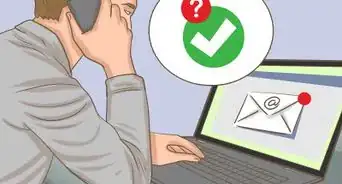
1A reputable breeder will always chat with you before you buy. If a seller refuses to talk with you over the phone or they only want to text and email, that’s a red flag. Before you make any purchases talk to them over the phone or via video chat.[6]
- Scammers who live outside of your home country may be using an app to disguise their phone number. If they won’t call or video chat with you it’s probably because they don’t want you to know what they sound or look like.

Method 7
Method 7 of 12:Ask the breeder questions.
-
1They should be happy to chat with you about your potential puppy. If they seem hesitant or can’t answer any questions about the dog, that’s a red flag. You can ask for details on the puppy’s parents, too. Try questions like:[7]
- “How do the puppy’s parents compare to the official breed standards?”
- “What do the puppy’s parents look like?”
- “How long have you been breeding this particular dog?”
- “Have the puppy’s parents received any awards or certificates from the American Kennel Club?”
- “Is the puppy vaccinated?”
- “Have you taken the puppy in for a vet visit yet?”

Method 8
Method 8 of 12:Visit the puppy in person.
-
1Always see the puppy before you buy. If you’re too far away to visit the puppy, have the seller video chat with you so you can see the puppy. Never rely on photos alone, since they could be fake.[8]
- If the breeder makes constant excuses as to why they can’t video chat that's a red flag.
- Visiting the puppy in person before you buy is always a good idea, even if you know it’s not a scam. That way, you can get a feel for the puppy's personality and make sure the puppy is a good fit for your family.

Method 9
Method 9 of 12:Don’t pay any surprise expenses.
-
1Once you agree to a price, stick to it. Scammers will sometimes email you asking for additional money for things like airline travel, crates, insurance, or veterinary expenses. You should never pay any amount that you didn’t agree to.[9]
- Some scammers will even threaten to harm the animal if you don’t pay up. While this can be scary, don’t give in—they’re just trying to trick you into sending more money.

Method 10
Method 10 of 12:Pay using a credit card.
-
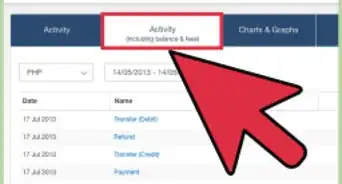
1It’s the only way to protect yourself when you pay online. Never pay for a puppy via a money transfer or with gift cards. Always use a reputable site like PayPal or your credit card to purchase a puppy.[10]
- Even money transferring apps like Venmo and CashApp aren’t the best, since it’s harder to get your money back if you don’t get what you paid for.

Method 11
Method 11 of 12:Pick up the puppy yourself.
-
1Don’t rely on a breeder to send you the dog after you’ve paid. Instead, select a breeder who’s close enough that you can drive to and pick up your pet. Transporting a puppy via air travel is dangerous, and scammers sometimes use it as an excuse to get more money out of you.[11]
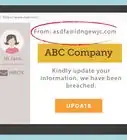
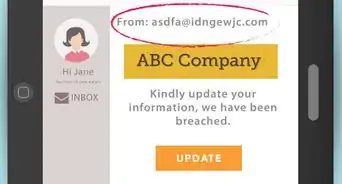
- If your puppy is arriving on an airplane, watch out for fraudulent emails from the “airline.” Scammers will sometimes set up fake email addresses asking for more money to ensure the safe travel of your pet.

Method 12
Method 12 of 12:Stay away from pet stores.
-
1Many pet stores still get their puppies from puppy mills. Hundreds of local and state governments prohibit pet stores from selling animals from puppy mills, but some still do. They’ll try to tell you that you’re buying a purebred, but that’s usually not the case. If they can’t tell you specific information about the breeder or where the puppy came from, they’re probably trying to swindle you.[12]
- If you’re looking for a specific breed, visit a shelter instead. Shelters have many dogs who need homes, and adoption is much cheaper than buying a dog from a breeder.









References
- ↑ https://www.humanesociety.org/resources/how-find-responsible-dog-breeder
- ↑ https://www.trust-bbb.org/torchtalk/6-tips-to-avoid-puppy-scams
- ↑ https://www.consumer.ftc.gov/blog/2014/11/new-dogand-scammers-old-tricks
- ↑ https://petscams.com/category/puppy-scammer-list/
- ↑ https://www.akc.org/expert-advice/news/spot-puppy-scam/
- ↑ https://www.akc.org/expert-advice/news/spot-puppy-scam/
- ↑ https://www.akc.org/expert-advice/news/spot-puppy-scam/
- ↑ https://www.trust-bbb.org/torchtalk/6-tips-to-avoid-puppy-scams
- ↑ https://www.ipata.org/current-pet-scams
About This Article