This article was co-authored by Clinton M. Sandvick, JD, PhD. Clinton M. Sandvick worked as a civil litigator in California for over 7 years. He received his JD from the University of Wisconsin-Madison in 1998 and his PhD in American History from the University of Oregon in 2013.
This article has been viewed 37,196 times.
Most couples give a great deal of thought to their wedding ceremony. There’s the bride’s dress, the flowers, a great location. But probably the most important element of a wedding is the one you’re least likely to think about—the marriage license. Without it, there is no wedding. So it’s important to know the procedures for applying for a license in the state where you plan to marry. In Tennessee, that involves working with a county clerk's office.
Steps
Part 1
Part 1 of 3:Getting Your Information Ready
-
1Make sure you have proof of your date of birth. Since you have to be 18 years of age or older to get married in Tennessee (without parental consent), you’ll have to provide proof of age. A certified birth certificate or government issued photo identification (such as a driver’s license) is acceptable.[1]
-
2Have your social security number available. This is another requirement for obtaining the marriage license. It’s a good idea to have the social security card itself in hand. If you’re not a US citizen, and don't have a social security card, then you’ll need a valid passport.Advertisement
-
3Gather important facts. There’s certain information you’ll need for the application, such as:
- Your parents’ full names (including mother’s maiden name)
- Your parents’ state of birth and address (if living)
- The number of your prior marriages
- The date your last marriage ended (if applicable).
-
4Obtain a certified copy of your divorce decree. If you're the prospective bride, and you had your name changed in a divorce, you should also have changed your name on your driver's license. If you didn't, you’ll need to provide a certified copy of your divorce decree. It’s probably wise for both the bride and groom to have any divorce decrees available, just in case any issues concerning the divorce come up during the application process.
-
5Get a certified copy of your former spouse’s death certificate. If either the bride or groom is a widow or widower, having a certified copy of the deceased spouse’s death certificate is a good idea, again in case the county clerk has any questions.Advertisement


Part 2
Part 2 of 3:Obtaining the Application
-
1Contact the county clerk's office where you plan to apply for the marriage license. The clerk’s office is where you’ll be able to get your application. Most, if not all, county clerk offices have a website. A listing of the counties and their contact information can be found at www.tncountyclerk.com.
-
2Complete a pre-application form online. In order to save time, many county clerks provide an online form that allows you to submit much of the necessary application information in advance. Check with the clerk’s office to see if they offer this service. [2]
-
3Determine the fee. There’s a charge to apply for a marriage license in Tennessee. It varies from county to county, but it’s usually around $100. Look on the clerk's website, or call. Also, find out if you need to bring cash, in case some clerks don’t accept checks or credit/debit cards. [3]
-
4Consider taking a 4 hour premarital preparation course. If you take this course within a year prior to the date you apply for the license, the county clerk will deduct $60 from the application fee. You'll need to get a Certificate of Completion when you finish the course. Again, the clerk’s office can give you more information about this. [4]Advertisement


Part 3
Part 3 of 3:Completing the Application Process
-
1Call the county clerk to see when you can come in. The clerk’s office will tell you the days and times when they process marriage license applications. They’ll set up a specific date and time for you if they work by appointment. They may also have this information online.
-
2Bring the fee and the necessary documentation with you. If you forget the fee or any of the needed documents (referred to in Part 1), you’ll have wasted a trip to the clerk's office. Check to make sure you have everything you need, before you leave home, including the Certificate of Completion for the premarital preparation course, if you took it.
-
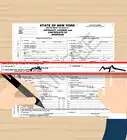
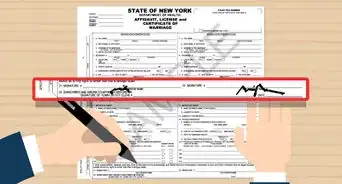
3Plan to appear at the clerk’s office together. Under Tennessee law, both the bride and groom need to sign the application and swear to the truth of the information it contains. To speed the process, it’s best to arrange your schedules so that you can go to the clerk’s office at the same time.[5]
-
4Make sure your parents or guardian are with you if you’re between 16 and 18 years old. If either applicant for the marriage license is 16 or 17 years old, his or her parents, guardian, next of kin, or person having custody has to join in the license application, under oath. They have to state that the applicant is 16 or over, and that the applicant has their consent to marry. [6]
-
5Use the license within 30 days. The marriage license is only valid for 30 days. If you don’t get married within that 30 day period, you’ll basically have to start the application process from scratch. [7]Advertisement


Warnings











References
- ↑ http://www.knoxcounty.org/clerk/marriagelicense.php
- ↑ https://secure.tncountyclerk.com/marriageform/marriageform.php?countylist=17
- ↑ http://www.usmarriagelaws.com/search/united_states/tennessee/#counties
- ↑ http://www.knoxcounty.org/clerk/marriagelicense.php
- ↑ http://www.lexisnexis.com/hottopics/tncode
- ↑ http://www.lexisnexis.com/hottopics/tncode
- ↑ http://www.knoxcounty.org/clerk/marriagelicense.php
- ↑ http://www.lexisnexis.com/hottopics/tncode
- ↑ http://www.lexisnexis.com/hottopics/tncode
About This Article

Before applying for a marriage license in Tennessee, see if you can complete a pre-application form online from your county clerk’s office, to save you some time by submitting a lot of the necessary information ahead of visiting the clerk’s office. If not, complete the usual form from the clerk’s office. Gather the necessary documents, including your birth certificate, social security card or passport if you’re not American, and any divorce papers or death certificates if you were married before. Book an appointment with the county clerk’s office, making sure both of you can attend at the same time because this makes processing quicker. Bring your fee, relevant documents and completed forms with you. Once you’ve got your licence, make sure to use it within 30 days. For more tips from our Legal co-author, including how to reduce your application fees by doing a premarital preparation course, read on!