This article was co-authored by Michelle Shahbazyan, MS, MA. Michelle Shahbazyan is the Founder of The LA Life Coach, a concierge life, family, and career coaching service based in Los Angeles, California. She has over 10 years of experience with life coaching, consulting, motivational speaking, and matchmaking. She has a BA in Applied Psychology and an MS in Building Construction and Technology Management from Georgia Tech University, and a MA in Psychology with an emphasis on Marriage and Family Therapy from Phillips Graduate University.
There are 10 references cited in this article, which can be found at the bottom of the page.
This article has been viewed 22,365 times.
Conflict between you and another person can be painful and confusing. During the heat of an argument, you may have said or done some things that you regret and that you wish to apologize for. It can be difficult to apologize after an argument; you may feel like you have lost if you say that you are sorry. However, it is important to keep in mind that repairing the relationship is often more important than being right. They key aspects of an apology are showing the other person your sense of remorse over your actions, acknowledging the damage your actions have done to that person, and suggesting ways to fix the problem in the future.[1]
Steps
Part 1
Part 1 of 3:Expressing Regrets
-
1Wait for the dispute to die down. Let a little time go by before you apologize. This will allow both of you to cool off some while giving you time to think about how to make the best apology that you can.
- Try to get a sense of whether the other person is upset still. Although you will probably recognize it when you see it, expressions of anger may involve clenching of the face or fists, yelling, throwing objects, etc. [2]
-
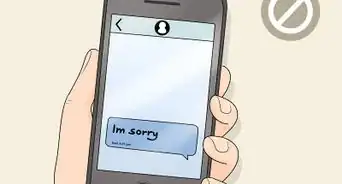
2Apologize in person. One surefire way to seem insincere is if you do not take the time to apologize face-to-face after your dispute. In addition, much of the information you convey about how you feel is done through your nonverbal communication channels (i.e., through your body).[3]
- The only time it is acceptable to not apologize in person is if it would be a great inconvenience to either person to have to meet. For example, if who you wish to apologize to lives very far away, it is not practical to meet in person.
Advertisement -
3Say what you regret. There's a good chance that after a dispute, you will regret some of the things that you said or did. Be sure to say what each of this is; don't leave anything out. Be sure to include how your actions impacted the person you are apologizing to so this person knows that you know how he felt.
- If you want to make sure you don't leave anything out, it can be helpful to write down on paper what you regret so that you can study it before you make your apology and/or refer to it in the moment.
-
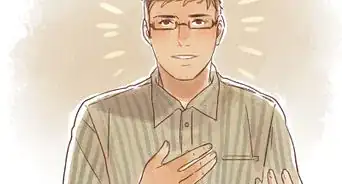
4Be sincere. After a dispute, it is important to state your regrets sincerely. You can express sincerity with your body language. As you state your regrets, make steady eye contact with whomever you were disputing with. In addition, try to maintain a relaxed body posture, while leaning slightly towards this person. [4]
- Above all though, make sure your words are sincere. You can do this by only saying what you mean.
Advertisement


Part 2
Part 2 of 3:Taking Responsibility For Your Actions
-
1Own up to what you did. Taking responsibility for your actions involves stating what you did in or before the dispute, while avoiding mentioning what the other person did.[5] Avoid saying "you" in your apology as it can sound attacking and put whomever you are apologizing to on the defensive.
- For example, rather than saying "you made me really angry" you might say, "I was really angry."
-
2Accept responsibility for any mean things you said.[6] While it is important to acknowledge your actions that led to the dispute, it is also important to apologize for how you acted and what you said during the actual dispute. This is an important part of having someone accept your apology. You must truly take responsibility for your actions and be honest in your apology for it to be most effective.
- For example, you might say "I sincerely regret calling you those names last night. Me hurting your feelings was a terrible thing to do and I feel awful about it." In this way, you are making it clear that your words caused emotional pain and that you regret your words and what they caused.
-
3Use excuses the right way. It is ok to use an excuse as long as you first and foremost admit that you did something that requires an apology and that hurt the other person and that you also acknowledge that you feel bad for what you did. Sometimes it is true that you didn't get a lot of sleep the night before or that you were stressed out at work and that genuinely may have contributed to you losing your temper during the dispute and saying things that you regret.[7]
- Only use excuses if you truly think they contributed to making you do whatever you did that requires an apology.
-
4Avoid justifications. When you try to justify your actions you will only make your apology seem insincere. This will most likely just further annoy whomever you were in a dispute with. So, do your best to avoid trying to justify your actions. [8]
- Examples of justifications include things like "it really wasn't that bad what I did" or "you've done that to me before."
Advertisement




Part 3
Part 3 of 3:Fixing the Problem in the Future
-
1Forget being "right" about the dispute. Most of the time, what you argue about with someone else is subjective and therefore there is no right answer. This is because people can interpret the same thing differently. Recognizing the truth in their feelings is an important part of preparing an apology.[9]
-
2Make a plan to fix the situation. To try to ensure that in the future disputes with this person don't happen in the problematic manner that they did, offer a way to improve your dynamic going forward. Doing so will make your apology more effective and sincere and will offer a way past the dispute by putting the emphasis of the conversation on the future rather than the past.[10]
-
3Be patient. Depending on how serious your offense was, and how offended the person you hurt is, it may take some time for him to forgive you. Try to do your best to remain patient and calm as the person processes the situation and your apology.[11]
- It can help to give the person some space so they have time to cool off and gain some distance from the situation.
-
4Avoid future conflict. Think of ways to minimize conflict in the future. Once whomever you offended has had some time to forgive you, work with him to come up with ways to reduce your conflict in the future.
- This can be as simple as taking more time to listen and empathize with this person in the future to coming up with compromises such that you meet each other halfway.[12]
Advertisement


Community Q&A
Did you know you can get expert answers for this article?
Unlock expert answers by supporting wikiHow
-
QuestionHow can I make sure my apology is sincere?
 Michelle Shahbazyan, MS, MAMichelle Shahbazyan is the Founder of The LA Life Coach, a concierge life, family, and career coaching service based in Los Angeles, California. She has over 10 years of experience with life coaching, consulting, motivational speaking, and matchmaking. She has a BA in Applied Psychology and an MS in Building Construction and Technology Management from Georgia Tech University, and a MA in Psychology with an emphasis on Marriage and Family Therapy from Phillips Graduate University.
Matchmaker, The LA Life CoachThe most important part of apologizing is being genuine and being able to tolerate the other person's wave of hurt coming your way, whatever that may look like. Continue to stay apologetic for however long it takes for the other person to get over it. As they calm down, hopefully they will appreciate your apology.
Support wikiHow by unlocking this expert answer.
-
QuestionHow do you apologize after an online fight with a stranger?
 Community AnswerApologize sincerely for whatever mistake you made and tell them that you would like to continue chatting with them.
Warnings
- Don't lie to make him/her feel better.Thanks!
- Don't blame him/her.Thanks!
- Be honest. Don't apologize unless you mean it.Thanks!










References
- ↑ https://www.mindtools.com/pages/article/how-to-apologize.htm
- ↑ http://www.apa.org/helpcenter/recognize-anger.aspx
- ↑ http://www.helpguide.org/articles/relationships/nonverbal-communication.htm
- ↑ http://www.bodylanguageexpert.co.uk/conveyingsincerityfamiliarityandwarmth.html
- ↑ Michelle Shahbazyan, MS, MA. Life Coach. Expert Interview. 18 March 2020.
- ↑ Michelle Shahbazyan, MS, MA. Life Coach. Expert Interview. 18 March 2020.
- ↑ Greene, J. O., & Burleson, B. R. (Eds.). (2003). Handbook of communication and social interaction skills. Psychology Press.
- ↑ Greene, J. O., & Burleson, B. R. (Eds.). (2003). Handbook of communication and social interaction skills. Psychology Press.
- ↑ http://www.wsj.com/articles/the-best-way-to-make-up-after-any-argument-1405379667
- ↑ http://greatergood.berkeley.edu/article/item/what_an_apology_must_do
- ↑ Michelle Shahbazyan, MS, MA. Life Coach. Expert Interview. 18 March 2020.
- ↑ https://www.psychologytoday.com/blog/let-their-words-do-the-talking/201301/simple-way-reduce-conflict-in-relationships














































Medical Disclaimer
The content of this article is not intended to be a substitute for professional medical advice, examination, diagnosis, or treatment. You should always contact your doctor or other qualified healthcare professional before starting, changing, or stopping any kind of health treatment.
Read More...