This article was co-authored by Inge Hansen, PsyD. Dr. Inge Hansen, PsyD, is the Director of Well-Being at Stanford University and the Weiland Health Initiative. Dr. Hansen has professional interests in social justice and gender and sexual diversity. She earned her PsyD from the California School of Professional Psychology with specialized training in the area of gender and sexual identity. She is the co-author of The Ethical Sellout: Maintaining Your Integrity in the Age of Compromise.
There are 8 references cited in this article, which can be found at the bottom of the page.
wikiHow marks an article as reader-approved once it receives enough positive feedback. In this case, 80% of readers who voted found the article helpful, earning it our reader-approved status.
This article has been viewed 319,089 times.
Finding out that your son or daughter is gay, lesbian or bisexual can come as a shock, but it is important that you can learn to understand and accept your child for who they are. This is very important because it can knock your child's confidence if you don't support their views.
Steps
-
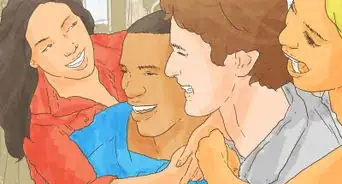
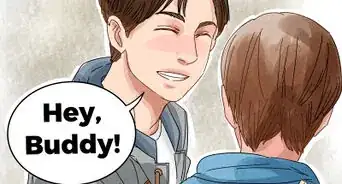
1Be sure your child knows that you love them. They've faced struggles too and suffered from internal turmoil—don't make them feel any worse. Imagine their internal struggle when these confusing feelings arose.[1]
-
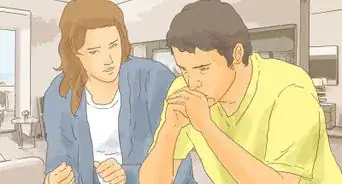
2Talk to your child.[2] Be proud that they trusted you enough to tell you. Today's society is not always accepting. Have an open dialogue where you can both ask questions and share concerns. Remember, your child probably feels a little confused and very nervous also. Focus on being non-judgmental, rather than accusatory, even if the subject makes you uncomfortable. The most reassuring thing you can say is,"I love you, and I am proud of you for telling me."
- Se sure to listen to your child as well so you're able to understand and support them.[3]
Advertisement -
3Remember that this is just who your child is. Whether you believe they were born like that or not, you still want your child to feel comfortable enough to feel that they can be true to themselves around you. It's part of their identity, just like their freckles or their laugh. They haven't changed—they're the same person they were yesterday.
-
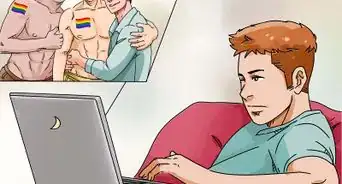
4Make an effort to learn about sexuality. You will be able to better understand your child's thoughts and feelings. This will also give you something to talk about. Maybe you can try catching up with LGBT+ news and pop culture.[4]
-
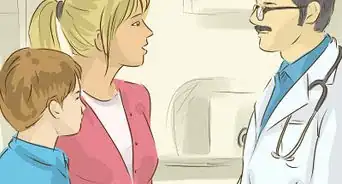
5Try to accept your child. If you have trouble accepting your child's sexuality, consider joining a group geared towards parents where you can talk to your peers about your feelings. Talking to a counselor is another option.
- Remember that many LGBT+ stereotypes are untrue.[5] Bisexual or homosexual people are not necessarily more promiscuous than heterosexual people, nor are they any more likely to be pedophiles or rapists.
- Ask yourself: if somebody is gay or bisexual, whom are they hurting? Is a consenting relationship causing any actual harm?
- Consider what your prejudices (if any) might reflect upon yourself. Why do you feel the way you do? Are you projecting your own fears or hatred onto others?
-
6Become an advocate to family and friends.[6] If you present your child with shame or belittle them, your family may echo your attitude. Foster acceptance by showing your family and friends you respect and understand your child. Even acting like you accept something can be a positive step toward opening your mind and true acceptance.
-
7Be calm. Don't get angry or tell them that what they have "decided/accepted" is wrong or suggest that it's just a phase and will go away. Remember that your child may be frightened to tell you, or get the feeling that you would disown or hate them. If you believe that your child "chooses" the lifestyle they are living, and could just as well choose a heterosexual lifestyle, ask yourself: Who would voluntarily choose a life marked by fear of discovery, discrimination, and isolation by classmates, friends, colleagues, and family? Would you choose to live in circumstances that made your life a lot more difficult and keep it that way just for the heck of it?[7]
-
8Ask your child what their sexuality means to them. For some people, it is not a big deal. It is just one aspect of who they are. For other people, it is fundamental to who they are. It is important for you to understand where your child is coming from. If it is just one aspect of who they are, repeatedly encouraging them to date and talking about their orientation may upset them. If on the other hand, it is fundamental to who they are, being more of an LGBT+ activist and inquiring into your child's dating life may be more appreciated.Advertisement


Community Q&A
-
QuestionAt what age would a child know for sure she's homosexual?
 Community AnswerSome people find out when they're children, some when they're teenagers, and some when they're adults. There isn't an exact age when it comes to finding out that you're sure about your sexuality. If your child says she's homosexual, regardless of her age, be accepting and show love and support. Don't get mad at your child if she says she's not completely sure.
 -
QuestionMy daughter has come out as bisexual and I accept her but she's scared to come out to her friends or her father (my ex-husband). What should I do to help her?Community AnswerBe there for her and love her. Assure her that her true friends will accept her and love her regardless and friends who do not accept her, weren't friends to begin with. Depending on your relationship with your ex-husband, you can help her in a few ways. If you feel prepping him for her announcement will help her, talk with him. If you feel you have an idea how to approach him to keep his mind open, talk with her. Regardless of how he responds, give her emotionally, spiritually, and mentally what she needs to get through this brave step.
-
QuestionMy 11-year-old son just told me he is bisexual. We haven't even had "the talk" with him yet so I am not even sure he knows what "bisexual" means. Other then having "the talk" what should we do? He has only told me, not my husband. Should I tell or wait until our son is ready?
 PreuxFoxTop AnswererOf course an 11 year old knows what bisexual means. I hate to break it to you, but you waited too long if you were intending to have "the talk." He could probably still benefit from a level-headed discussion of sexuality, but he almost definitely knows all the basics already from his peers and from research online. I would advise against telling your husband without your son's permission, but there's no harm in asking your son if it's okay.
 -
QuestionMy daughter is 13 and we recently found out she is having a relationship with her best friend. How do we address our concerns with them? I feel they are both too young to understand this.PreuxFoxTop Answerer13 is a very common age to begin feeling attraction to other people. Consider whether you would be fine with it if her best friend were a boy? And take a look around even just WikiHow - see how many people your daughter's age or younger know they are gay but are terrified to tell their parents. The best thing you can do is be supportive - if you tell her you think she is too young and that you know her better than she knows herself, you might damage your relationship with her irreparably.
-
QuestionI'm scared to come out because my family is homophobic. They make fun of gay, lesbian, and bi people. What should I do?
 Amber splashpawsCommunity AnswerIf your family is very homophobic; don't come out to them. If you want to come out to someone; come out to a trusted friend or a school counselor (assuming that you are in school), and explain your situation.
 -
QuestionIt's been three years since my daughter left us to love a girl; months ago we had a huge fight about her girlfriend and since then we haven't seen each other. I want to accept her, but I still hope she is only going through a phase. What should I do?
 Community AnswerShe is your daughter. If you don't accept her, you could lose her forever, so just accept her for who and what she is.
 -
QuestionMy 13-year-old son has been distant lately. I went through his phone and saw messages to his friends saying he is bisexual. His friends have recently came out. Is he saying this because he wants to fit in? He said no.Community AnswerIf your son is bisexual, then your son is bisexual. You can't change that, and you shouldn't try to. Often people struggling with things such as their sexuality surround themselves with people going through similar things. It sounds like this is what your son is doing, whether he realizes it or not. Despite slight improvements of late, it's still not a pleasant situation to be openly LGBTQ, most people would not choose to identify as such just for fun.
-
QuestionI currently like boys, but feel as if I would like someone based off their character, not their gender. What sexuality am I?
 CaeiiaTop AnswererIf you can see yourself being comfortable with anyone (provided they're nice!), you may be pansexual/panromantic. This encompasses all gender identifications.
 -
QuestionMy 16-year-old daughter has come out as being bi. At this point, I decided that she wouldn't be permitted to have sleepovers at boys' or girls' houses to be fair. Any ideas?
 Community AnswerThat could really take away from her social life, perhaps you could come to another agreement. Your daughter is not being attracted to all guys and all girls, only certain people. If she is 16 years old, and she hasn't given you any reason not to, trust that she can make appropriate decisions about who she will see and what she will do. Tell her that you'd prefer she didn't spend the night with potential romantic partners and you're trusting her to be honest with you.
 -
QuestionI found out my son was gay when I read his text to his friend. I am not talking to him anymore. Is there something I can do to make him straight, like counseling?Community AnswerNo. Your son is gay, and cannot be turned straight. He is still your son, and nothing will change that. Although there is nothing you can do to make your son straight, counseling could go a long way toward helping you deal with your own issues about this.
Warnings
- Don't kick them out, or use hateful words against them, this also could ruin your relationship with them forever.Thanks!
- Don't berate your child about the dangers that homosexual and bisexual people face in society due to discrimination. Your child probably already knows first-hand at least some of this discrimination, and by berating your child about it, you are only going to make them feel worse.Thanks!
- Don't try to change your child's sexuality. They can't become straight any more than you can become gay.Thanks!






References
- ↑ https://www.psychologytoday.com/us/blog/peaceful-parents-happy-kids/201403/5-secrets-love-your-child-unconditionally
- ↑ https://www.cbc.ca/parents/learning/view/what-i-wish-my-parents-had-said-when-i-came-out-as-gay
- ↑ Inge Hansen, PsyD. Clinical Psychologist. Expert Interview. 19 November 2019.
- ↑ Inge Hansen, PsyD. Clinical Psychologist. Expert Interview. 19 November 2019.
- ↑ https://www.algbtical.org/2A%20STEREOTYPES.htm
- ↑ https://nccc.georgetown.edu/documents/LGBT_Brief.pdf
- ↑ https://kidshealth.org/en/parents/sexual-orientation.html
- ↑ https://www.healthychildren.org/English/ages-stages/teen/dating-sex/Pages/Birth-Control-for-Sexually-Active-Teens.aspx
- https://www.cdc.gov/lgbthealth/youth-resources.htm
About This Article

To accept that your child is homosexual or bisexual, the first and most important thing is to make sure your child knows that you love them. Focus on being non-judgmental and calm instead of accusatory, and let them know you’re proud of them for trusting you enough to tell you. Have an open dialogue where you both can express your questions and concerns. Also, remember that your child is still the same person you loved yesterday, and that you want them to feel comfortable enough to continue being true to themselves around you. Make an effort to learn more about sexuality and what it means to your child’s identity. If you’re still having troubles accepting your child’s sexuality, consider joining a group of parents in a similar situation, or seeing a counselor. Finally, try to help your child gain acceptance by other people in their lives by becoming their advocate to family and friends. For more information on how to talk your child after learning they are homosexual or bisexual, see below.