Sailing 10,000 Nautical Miles Using the Stars, Moon and Sun

Te-aurere-wakaA group of intrepid Māori sailors from New Zealand will take on the world’s biggest ocean, the Pacific, in an attempt to sail to Easter Island, the most remote inhabited place on Earth, without GPS, charts, maps, or even a compass.

Instead the group will be guided by the traditional techniques that helped the Polynesian people traverse the wide expanses of the Pacific and settle the islands of Hawaii, New Zealand and Tonga, to name just a few – techniques like the movement of the stars, the sun and moon, oceanic currents and bird and animal life.

The sailing odyssey is part of an effort by Polynesian academic and cultural groups to reclaim the navigational knowledge of their forebears, much of which was lost after European colonization.” Read more (official website). Previously: Polynesian stick charts / Satellite navigation in the 18th century / Developed nations dangerously over-reliant on GPS.
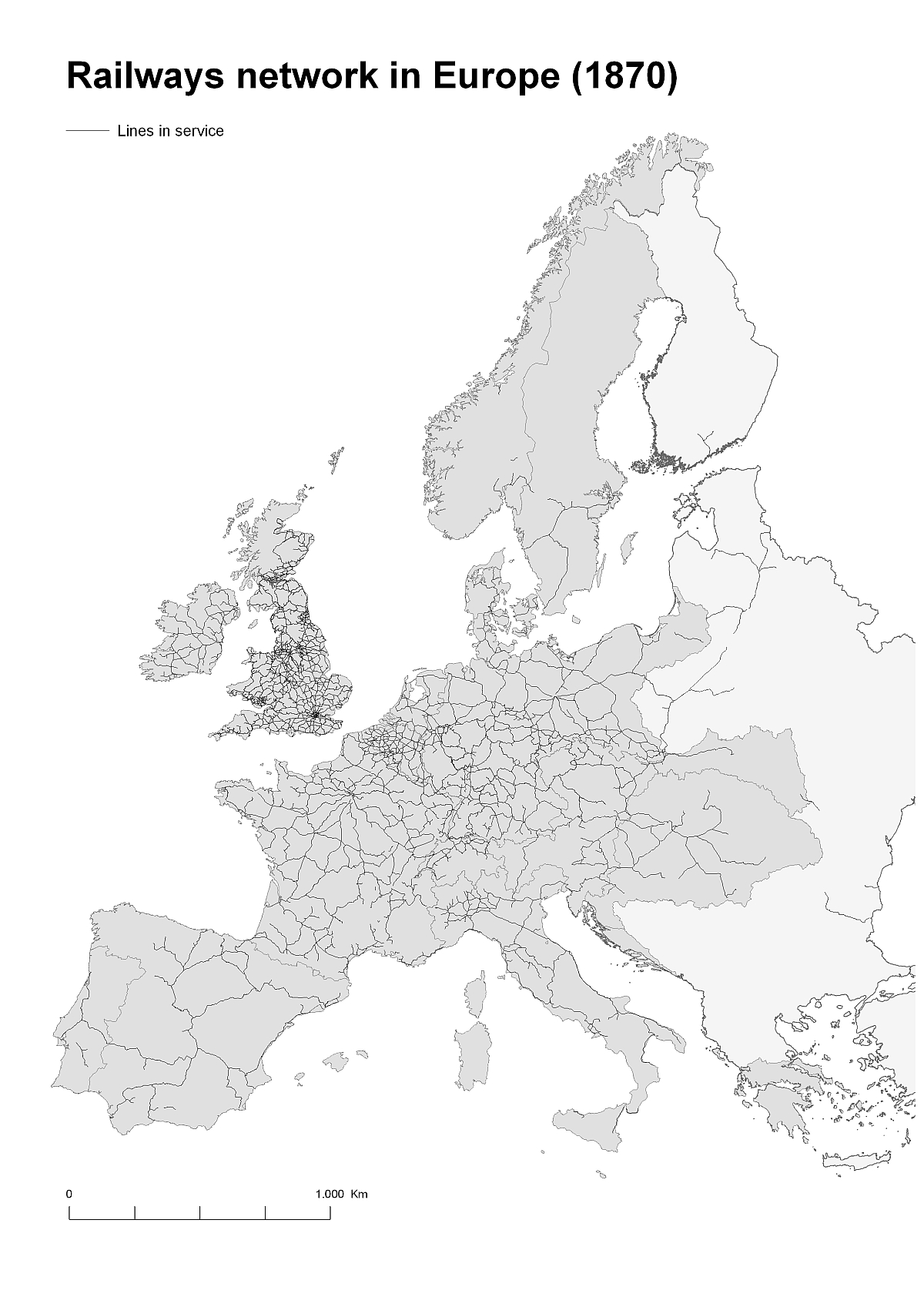
The European Railways Network 1870 – 2000

These five maps, based on GIS data and made by the Department of Geography and Sociology of the University of Lleida (Spain), show the evolution of the European railways infrastructure in the 19th and 20th centuries.

[Read more…]

Siemens Rediscovers The Trolleytruck

siemens rediscovers the trolleytruck

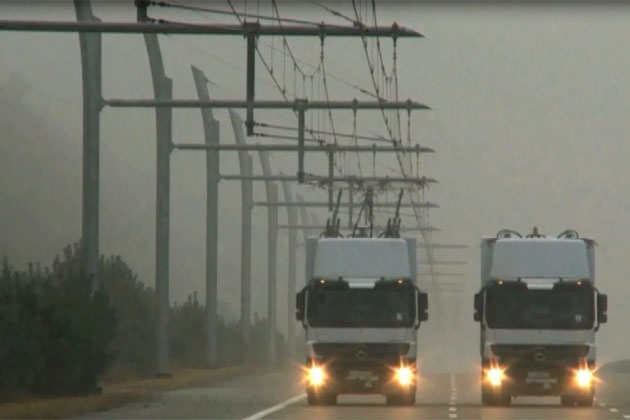
In Los Angeles, at the Electric Vehicle Symposium, German engineering company Siemens announced that it is conducting pilot projects using trolleytrucks:

“The eHighway concept is the electrification of trucks and select highway lanes via overhead electrified wires similar to how modern day trolleys or streetcars are powered on many city streets.”

Trolleybuses and trolleytrucks offer sustainable electric transportation for a bargain. Trolleylines are relatively cheap to build and can be very easily integrated into existing highways and infrastructures. Furthermore, the vehicles do not require large batteries, which means that trolleybuses and trolleytrucks do not have the disadvantages of electric cars. Trolleybuses are still around in many countries, especially in Central and Eastern Europe, but trolleytrucks have become very rare.

Siemens uses hybrid diesel electric freight trucks with built-in technology and software to connect to overhead electrified wires. “The trucks are designed to use both electricity and diesel power and will automatically switch to electric mode when they detect and attach to the overhead lines.

Once the truck leaves the lines, it switches back to diesel. As the technology becomes more widely adopted, the company believes every truck equipped with an electric drive system will be able to use the eHighway regardless if it’s a diesel electric, pure battery, fuel cell range extended or CNG combustion engine vehicle.”

Previously: “Get wired (again): trolleybusses and trolleytrucks“.

Hat tip to Stefan van der Fange.

Velomobiling

A fifteen minute ride in a velomobile. Previously: The velomobile: high-tech bike or low-tech car?

Dog Sulkies: Pet Powered Mobility

dog sulkies

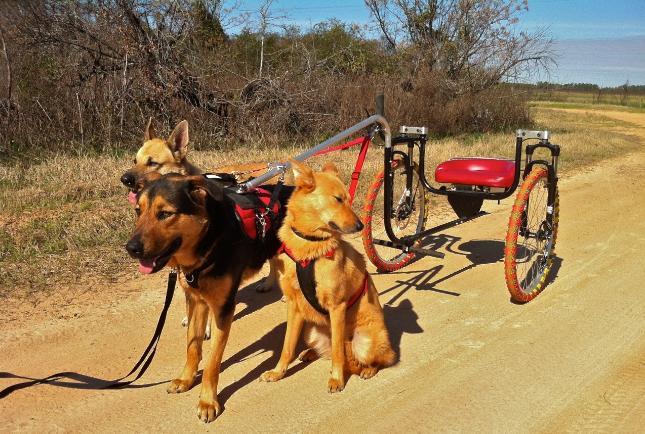
Dog owners looking for a more sustainable means of personal transportation should not look any further: the dog sulky is the answer. Dog powered vehicles have been used for the transport of goods and passengers in some European countries during the nineteenth and early twentieth centuries. Compared to those vehicles, the modern dogcarts offered by ChaloSulky promise to deliver a much smoother ride. The carts benefit greatly from the use of bicycle wheels, suspension and brakes. Moreover, the dogs are not confined between two shafts. Instead, only one shaft goes over the animals’ back, making the vehicle lighter and giving the dogs more freedom of movement.

[Read more…]

Japanese Tub Boats

japanese tub boats

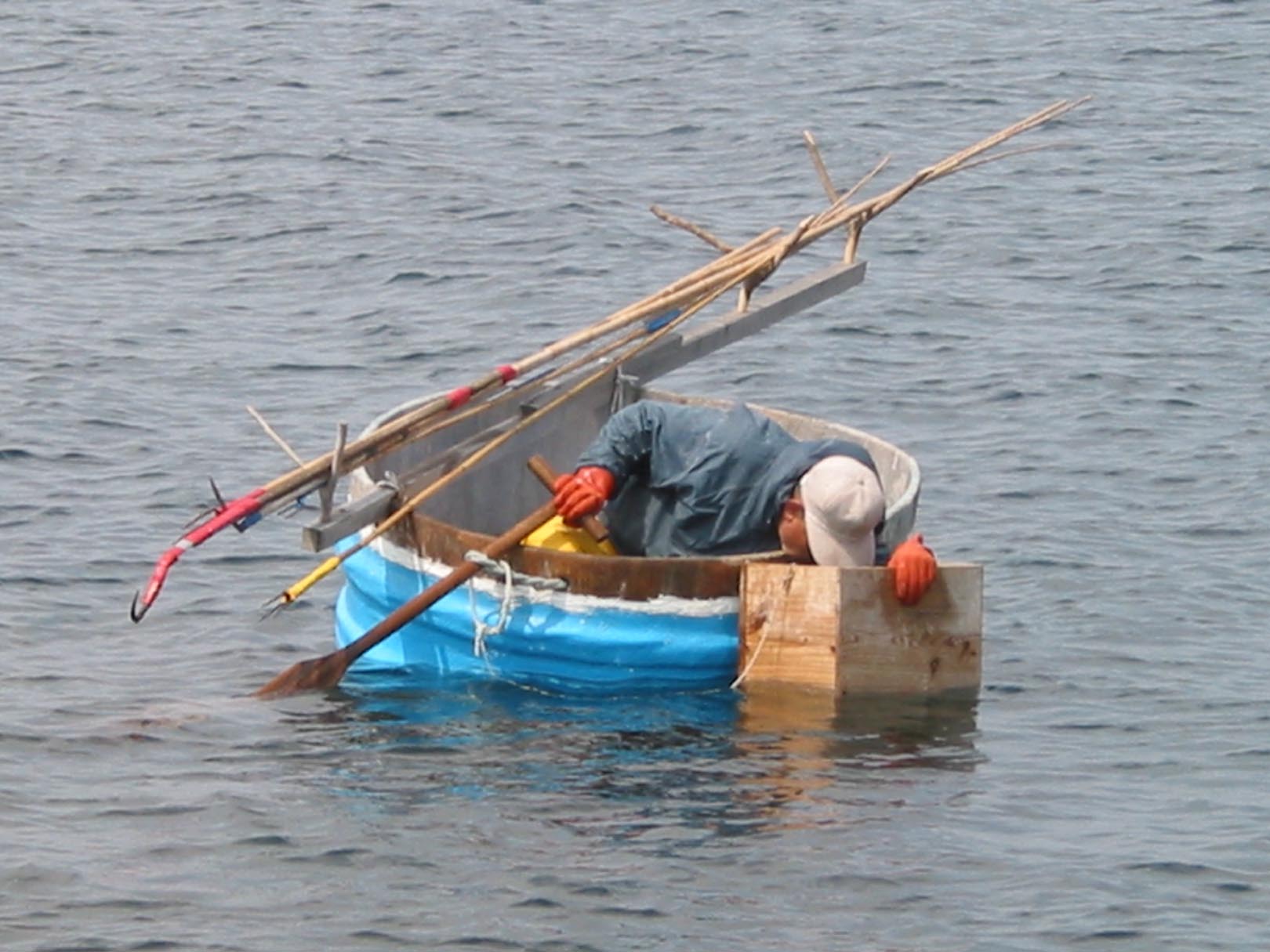
“Taraibune (tub boats) were once found along the Echigo coast of the Sea of Japan and on Sado Island. Now they are used only in six small fishing villages on Sado Island. They have survived to the present because of their low cost and durability.”

“Tub boats are made of local sugi (Japanese cedar) and madake (timber bamboo). The woodwork in a tub boat is not at all beyond the skills of an experienced carpenter, but the braiding of the hoops is now an extremely rare skill.”

“Japanese tub boats are used for nearshore fishing and seaweed collecting. A key tool of the taraibune angler is the glass-bottomed box which is floated alongside the boat. This enables him (or more frequently, her) to clearly see the bottom in shallow water to identify likely prey or harvest. A variety of long-handled tools is trailed behind the boat — to collect the fish, shellfish, or vegetation at hand. Tub boats are propelled facing forward with a paddle, though in one village the men use outboard motors.”

Tub boat“In spite of their ancient appearance, they date from only the middle of the 19th century. Prior to that, dugouts and plank-built boats were used to collect the rich shallow-water sea life around the southern tip of Sado Island, but in 1802 an earthquake changed the area’s topography, opening up a multitude of narrow fissures in the rocks along the shore into which it was impractical or dangerous to take long, narrow boats. Derived directly from the barrels in which miso is brewed, tub boats proved to be adept at navigating these narrow waterways. Indeed, they can be easily spun in their own length.”

More at Douglas Brooks Boatbuilder & Indigenous boats. Previously: The woorden work boats of Indochina.