Zane Middle School solar station
| Keywords | solar charging station, renewable energy demonstration, repurposed materials |
|---|---|
| Uses | education, energy |
| Authors | Jesse Cody |
| Status | Deployed |
| Made? | Yes |
| Replicated? | No |
| Designed in | United States |
| Affiliations |
Engr215 Introduction to Design Humboldt State University Zane Middle School |
| Materials |
cart solar panels battery regulator fuse charge controller |
| Cost | USD $ 246.60 |
| SDGs |
SDG04 Quality education SDG07 Affordable and clean energy |
| Documentation data | |
| Language | English |
| Manifest data | |
| Language | English |
| Updated | 2020-06-04 |
| Author | Kathy Nativi |
| Author affiliation | Appropedia |
| Author email | info@appropedia.org |
Abstract
The AC Team consists of: Jesse Cody, Jack Gates, Alec Howard, and Jeremy Potter. We worked with Zane Middle School to create a portable charging station that can charge robots, and it can also be used to light up an area at school events. The name given to this awesome contraption is the solar station. We started the design process with a brainstorming session, then moved onto more specific areas of the project. Watch our video!
Background
In 2015, in Engineering 215 at Humboldt State University, the AC Team was assigned to make a solar outdoor lighting system. Our original objective was to design a safe, reliable, energy efficient solar powered, outdoor lighting system at Zane Middle School that functions as an educational resource for students. That project was soon to be altered into a more educational, more purposeful, more inspiring project. It was decided through a series of steps that it would be more useful to make the solar station. If you want more information about the AC Team you can click on this:
- Jesse Cody
- Jack Gates
- Alec Howard
- Jeremy Potter
Criteria
We had nine different criteria that had an effect on how we built the solar station. We rated these criteria on a scale of 1-10; 1 being the lowest, less important criteria and 10 being the highest, most important criteria. If you click on the arrows on the right of "Criteria, Constraint, Weight" it will rearrange the table.
| Criteria | Constraint | Weight |
|---|---|---|
| Safety | Meets school policy guideline | 10 |
| Ease of Maintenance | Janitor serviceable | 5 |
| Reproducibility | 8th graders can make it | 8 |
| Durability (Long Lasting) | Vandal proof | 5 |
| Aesthetics | Pleasing to the eye | 8 |
| Educational | Middle school understanding | 9 |
| Inspirational | Makes students think | 7 |
| Cost | Will not exceed 400 dollars | 3 |
| Ease of Implementation | Will not have to get third party approval | 8 |
Description of final project
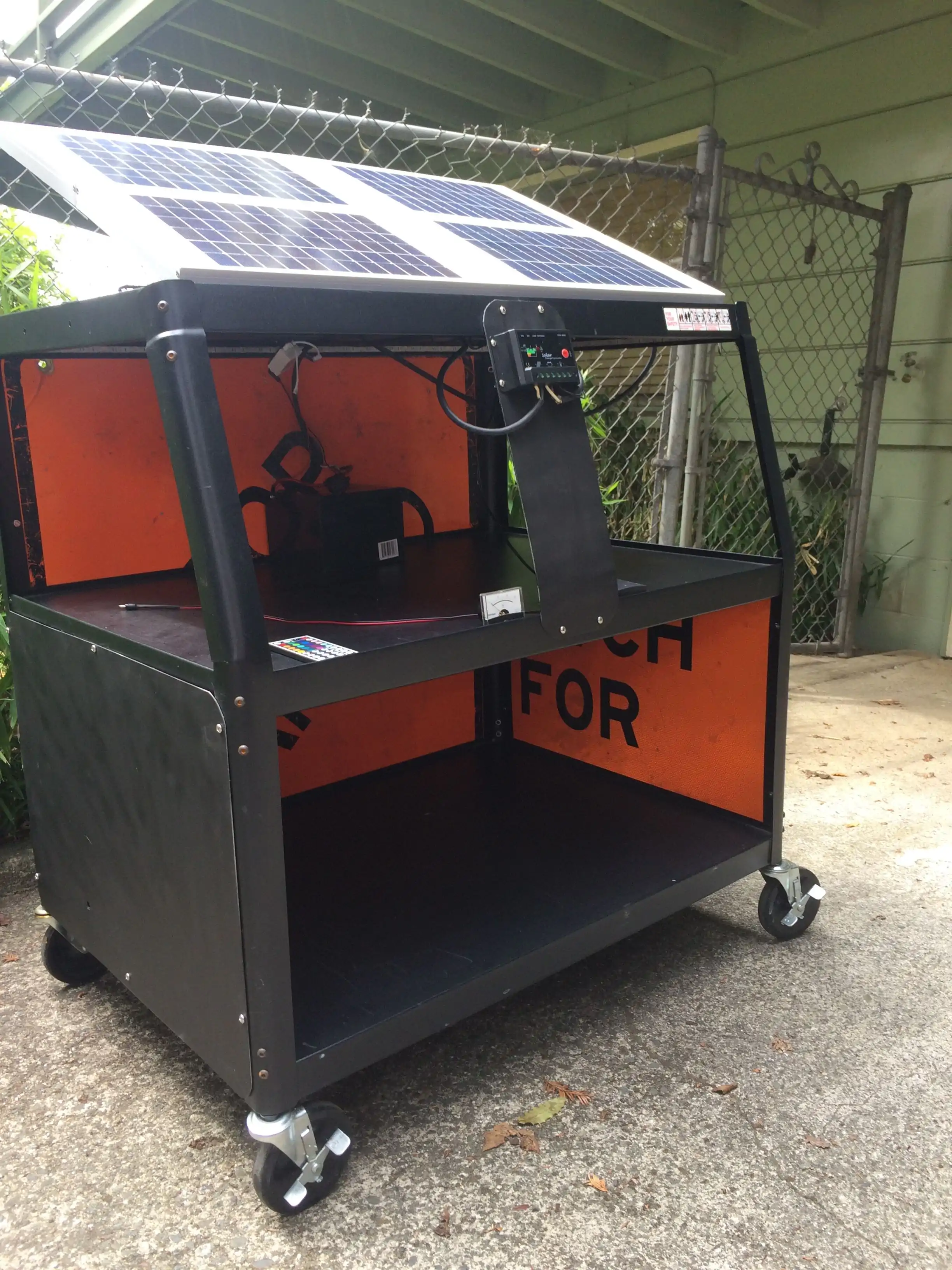
The final project consists of nine major components. If you click on the picture it will enlarge to the original picture. First, we have four 0.6 Amp hour, 12 Volt solar panels connected in parallel. The power then runs through the charge controller, which analysis the charge going to the battery, and it also analysis the charge coming out of the battery. The battery is a 12 Volt, 26 Amp hour deep cycle lead acid battery (it does a very good job of charging everything it needs to charge). There is a fuse on the battery that protects the whole system if there is too much current (flow of energy, also called the "load" of an electrical system) coming from the battery. The current then passed through the charge controller again and goes to a 12 Volt and a 10 Volt bus (The bus bar has one input of power that has multiple power outputs). The 10 Volt bus bar has one purpose, to charge the robots. The 12 Volt bus powers the multicolored programmable LED lights, and also the USB charger. The LED lights are to be used at school events when it gets dark, but they also happen to make a very cool lighting effect. The USB charger has different Amp settings, so you can charge anything that is powered by a USB port.
- Completed cart with painted sides
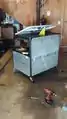 Cart without painted sides
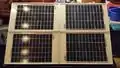 The solar panels on the cart
 The connected battery
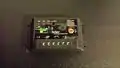 The charge controller
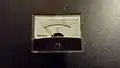 The volt meter
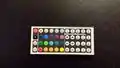 The controller for the LED lighting
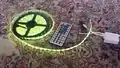 Multicolored Programmable LED Lighting (Yellow)
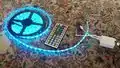 Multicolored Programmable LED Lighting (Blue)
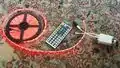 Multicolored Programmable LED Lighting (Red)
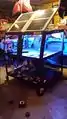 Cart with the lights on
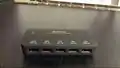 The USB charger
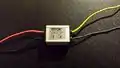 Adjustable Buck (Voltage regulator, drops it down to 10 volts to charge the robots)
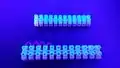 10V and 12V bus bars (One input, multiple outputs)
Costs
Below are the cost in materials, and the cost in hours.
.jpg.webp)
| Item | Quantity | Retail price per item ($) | Total | Team price per item ($) | Total |
|---|---|---|---|---|---|
| Battery | 1 | 63.99 | 63.99 | 63.99 | 63.99 |
| TV Cart | 1 | 60.00 | 60.00 | Donated | 0.00 |
| Fuse Holder | 1 | 3.45 | 3.45 | 3.45 | 3.45 |
| Fuse | 1 | 3.80 | 3.80 | 3.80 | 3.80 |
| USB Charger | 1 | 16.99 | 16.99 | 16.99 | 16.99 |
| Charge Controller | 1 | 21.99 | 21.99 | 21.99 | 21.99 |
| Voltage Regulator | 1 | 9.32 | 9.32 | 9.32 | 9.32 |
| Solar Panels | 4 | 60.00 | 240.00 | Donated | 0.00 |
| Street Signs | 3 | 8.33 | 25.00 | 8.33 | 25.00 |
| Velcro Tape | 1 | 7.99 | 7.99 | 7.99 | 7.99 |
| Silicon Calking | 1 | 5.99 | 5.99 | 5.99 | 5.99 |
| Flexible Wire Conduit | 1 | 4.49 | 4.49 | 4.49 | 4.49 |
| Heat Shrink | 2 | 3.99 | 7.98 | 3.99 | 7.98 |
| Plastic Wire Cover | 1 | 6.99 | 6.99 | 6.99 | 6.99 |
| Piano Hinge | 1 | 9.99 | 9.99 | 9.99 | 9.99 |
| Aluminum 3/8" Rod | 1 | 7.99 | 7.99 | 7.99 | 7.99 |
| 8mm Screw | 48 | 0.17 | 8.16 | 0.17 | 8.16 |
| 8mm Nut | 48 | 0.27 | 12.96 | .027 | 12.96 |
| 8mm Lock Washer | 18 | 0.09 | 1.62 | 0.09 | 1.62 |
| 127 Piece Heat Shrink | 1 | 4.99 | 4.99 | 4.99 | 4.99 |
| Wire | 3 | 1.19 | 3.57 | 1.19 | 3.57 |
| 11/64" Drill Bit | 1 | 2.49 | 2.49 | 2.49 | 2.49 |
| Black Primmer | 1 | 4.99 | 4.99 | 4.99 | 4.99 |
| Chalkboard Paint | 1 | 7.49 | 7.49 | 7.49 | 7.49 |
| 220 Grit Sandpaper | 1 | 1.49 | 1.49 | 1.49 | 1.49 |
| 5" Wire Stipper | 1 | 2.99 | 2.99 | 2.99 | 2.99 |
| Titanium Step Drill | 1 | 7.99 | 7.99 | 7.99 | 7.99 |
| Total Cost | $246.60 | ||||
Testing Results
Testing results will be entered soon.
How to build
A How-To will be uploaded soon. Use Template:How_to