CCAT yurt/OM
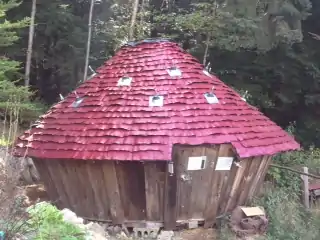
This is the Operation and Maintenance (O&M) manual for CCAT yurt. Please refer to it regularly and keep it up to date with any O&M changes.
Operation
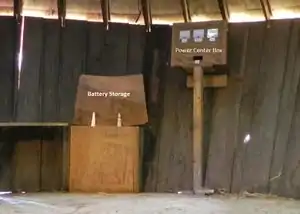
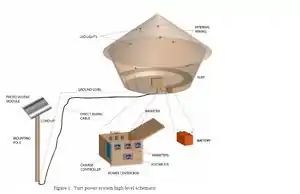
The operation of the CCAT yurt is straightforward when all components have been well maintained. There is little that needs to be done in order for the retaining wall, roof, and Liter-of-Lights to operate. However, the photovoltaic system does require some further explanation.
- PV System
- The LED lights powered by the PV system and can be turned on and off using the switches on the side of the power center box that houses the inverter, charge controller, and spare fuses.
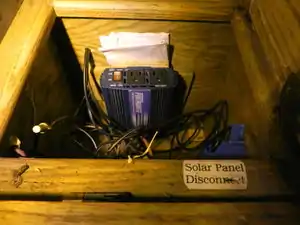
- The option to plug in AC loads, however, is more complex. First, the loads must be plugged into the inverter, and then the inverter must be turned on. Be sure to turn off the inverter when loads are not in use. Finally, users must understand that AC power is limited, and may be completely unavailable during the darkest three months of the year.
Maintenance
To ensure the yurt lives a long productive life, regular maintenance of its different components is essential.
Schedule
- Daily
- Check state-of-charge reading on charge controller monitor
- Weekly
- Clean solar panel
- Inspect power center box for corrosion, debris, or loose/exposed wires
- Monthly
- Check electrolyte levels of battery (Eye and Hand Protection Required)
- Inspect battery terminals for corrosion, debris, or loose/exposed wires
- Clean/dust Liter-of-Light bottles
- Every 3 months
- Equalize battery
- Inspect retaining wall for weeds, debris, and weakened or damaged structures, especially after heavy rains
- Inspect roof for loose or rusty shingles
- Inspect Liter-of-Light flashings for leaks
- Yearly
- Conduct IV curve to assess health of PV panel
- Every 5 years
- Replace the water/bleach solution in the Liter-of-Light bottles
Instructions
Below are instructions from manuals regarding the maintenance of different CCAT yurt projects. Those regarding the CCAT yurt roof were developed in the SALIRAJA Yurt Project and those describing the PV system were adopted from the 2006 Humboldt State University ENGR 535 class CCAT Yurt Solar PV System Users Manual.
How to Replace Loose or Rusty Shingles:
- Identify loose or rusty shingle
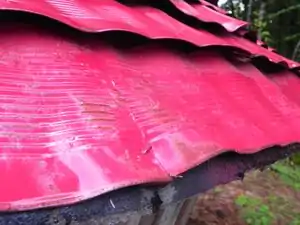 Rusty Shingle
 - Remove rusty single using small crowbar or similar lever
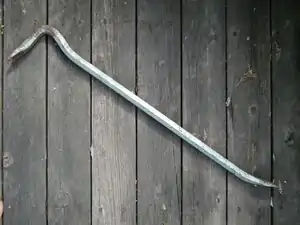 Flickr crowbar
 - Scrub the rust off with steel wool. Or, if beyond repair, cut a clean tin can using tin snips and flatten
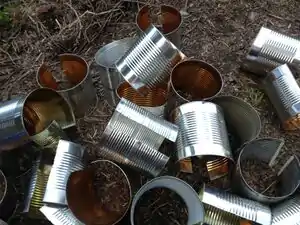 Cut cans
 - Use pliers to bend the edges of the cans so they are less dangerous to work with
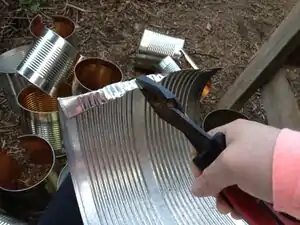 Bend cans
 - Spray cans with rust resistant paint (Eye and respiratory protection required)
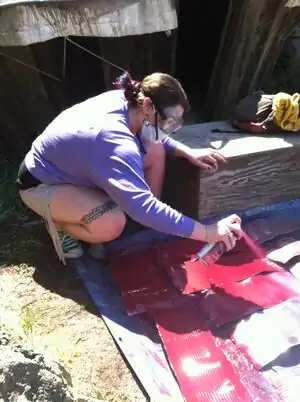 Spraying Cans
 - After drying, attach the refreshed shingle using a staple gun
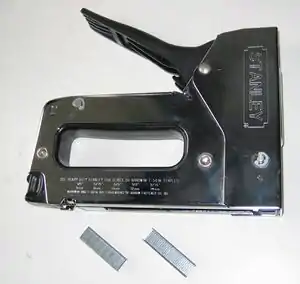 Attach Fresh Shingle
How to Conduct an IV Curve on the CCAT Yurt's PV Panel (Proper training required):
- Disconnect the battery
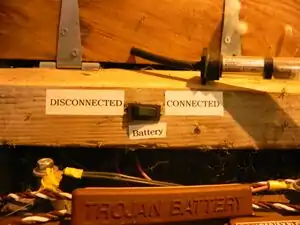 Deep cycle battery
 - Disconnect the leads from the back of the panel
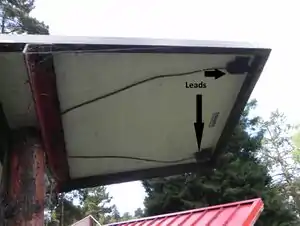 Back of PV Panel
 - Test the open circuit voltage (Voc) by setting the multimeter to test DC Voltage (don’t forget to check the placement of the cables) and then holding the probes across the input and output terminals of the panel
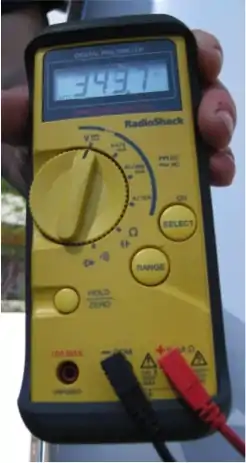 Multimeter Diagram
Step 4 : Test the short circuit current (Isc) by setting the multimeter to test DC current, and again hold the probes across the terminals
- Record the readings for each panel and the ambient conditions (time, cloud cover, wind) in the comments section of the maintenance log. If the panels vary by more than 20% in either voltage or current, contact a solar technician
 Record Values
 - The readings should be taken as quickly as possible for minimizing the effect of the outside conditions and angle of the incoming sunlight. Ideally, readings will be taken on a day with either no cloud cover, or no moving clouds so that the available solar radiation stays constant
 No Clouds
How to Conduct Specific Gravity Measurements on CCAT Yurt's Deep-Cycle Battery (Proper training required):
- Disconnect the batteryDeep cycle battery
- Clean off specific gravity hydrometer to ensure no foreign material could be introduced into the battery (Eye protection required)
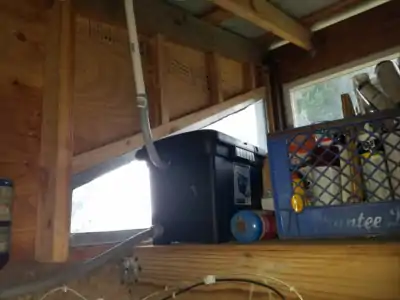 Hydrometer
Step 3 : Open battery box and ensure door is secure.
Step 4 : Open left-most cell door
- Depress hydrometer ball.
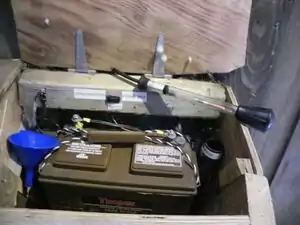 Hydrometer
Note: Never depress ball while hydrometer tube is in battery cell!
Step 6 : Insert hydrometer tube into the cell completely and release
- Note and record the level of the hydrometer float in the tube.Record Values
Step 8: Record fluid level of cell
- Repeat for all cells

- With the help of the funnel add distilled water to any cell below the full line (approx. ¼ to ½ inch below bottom of battery vent) on the battery
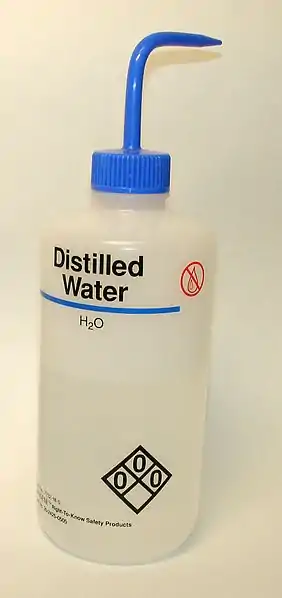 DI Water
 - Ensure all cell doors are securely closedBattery Cell
Step 12 : Close battery box
Step 13 : Perform battery equalization if specific gravity of any of the cells varies from the mean by 0.025 or greater
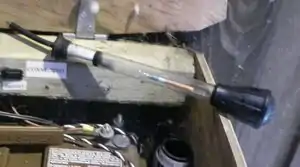
- Rinse the hydrometer thoroughly and return to hydrometer holder. The
 Hydrometer
hydrometer holder should also be removed occasionally and rinsed to prevent corrosion
How to Conduct a Battery Equalization on CCAT Yurt's Deep-Cycle Battery (Proper training required):
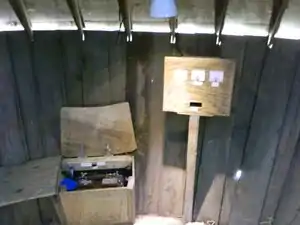
- Lift the lid of the battery box (the section of the bench)
 Battery box and power center box
 - Disconnect the battery from the system by turning the switch off within the battery box.Hydrometer
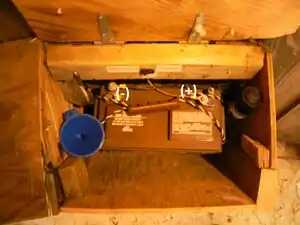
- Identify positive (red) and negative (black) battery terminals
 Deep cycle battery
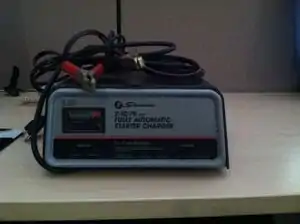
 - Connect corresponding positive (red) and negative (black) clips of battery charger to charging tabs
 Battery charger
Step 5 : Plug in and turn on battery charger
- Monitor battery display every hour
 Battery Display
Step 7 : Note time when display shows battery is full
- Battery should be allowed to remain charging at a low current (approx. 5% of battery’s 20 hr capacity in amps) for 1-2 hours after it is full
 Time
TimeCaution: Leave yurt door open for maximum ventilation. If battery becomes heated over 125°F, the battery should be disconnected and equalization continued after battery cools.
- If two specific gravity readings taken within ½ hour are equal, equalization is complete
- Turn off and unplug battery chargerDI Water
- Disconnect clips from battery terminalsBattery Cell
- Record date of equalization and specific gravity measurements of each cell before and after equalizationEqualization
Troubleshooting
The following table outlines potential problems and possible solutions that one may find when operating the yurt PV system.
| Problem | Suggestion |
|---|---|
| LED lights do not turn on | Inspect PV panel, battery, and power center box for corrosion debris or loose/exposed wires |
| Battery does not charge | Inspect PV panel, battery, and power center box for corrosion debris or loose/exposed wires |
| Battery only partially charges | Inspect the electrolyte level in battery cells. Add DI water. Conduct battery equalization. |
For a more in depth trouble shooting key, please see HSU's 2006 Engr-535 report: CCAT Yurt Solar PV Users Manual located at http://techjoey.com/resources/Report-AT-SolarPoweredLighting.pdf
Suggestions for future changes
Implementation of a CCAT yurt sign up sheet will help to maximize the yurt's potential as a gathering space and make it more accessible to different groups. The sign up sheet could be held by a CCAT co-director, or tacked near the door outside of the yurt.